A Practical Guide to Choosing the Right LED Bulb Wattage for Every Room

Selecting the correct LED bulb wattage is key to creating the perfect ambiance and ensuring functionality in your home. This guide will help you determine the ideal wattage for each room, with easy-to-follow recommendations and calculations.
Understanding Wattage vs. Brightness
Wattage (W) measures the energy a bulb consumes. Historically, with incandescent bulbs, a higher wattage meant a brighter light. However, with energy-efficient LEDs, this is no longer the case. Lumens (LM) are the true measure of light output (brightness).
Key Conversion: You can replace a 60W incandescent bulb with a 9W LED to achieve the same brightness while using significantly less energy. Always check the lumens on the packaging to compare brightness levels accurately.
Recommended LED Wattage by Room
The ideal wattage depends on the room's size, function, and desired atmosphere. The following table provides a clear guideline based on standard room sizes.
| Room | Recommended Traditional Bulb Wattage (per sq ft) | Typical Room Size | Optimal Traditional Bulb Wattage | Equivalent LED Wattage |
|---|---|---|---|---|
| Bathroom | 3W | 50 sq ft | 150W | ~23W |
| Kitchen | 2.8W | 150 sq ft | 419W | ~63W |
| Dining Room | 1.8W | 150 sq ft | 279W | ~42W |
| Living Room | 1.8W | 300 sq ft | 558W | ~85W |
| Bedroom | 1.2W | 180 sq ft | 223W | ~34W |
Room-by-Room Lighting Guide
Bathroom: Requires a balance of functional, clear light for tasks like shaving or applying makeup, and a comfortable atmosphere. A brighter, cool-toned LED is often preferred.
Kitchen: Demands bright, functional lighting for safety and food preparation. You will likely use multiple light sources (ceiling, under-cabinet, spotlights), making efficient LEDs an excellent choice for reducing overall energy consumption.
Dining Room: The mood should be comfortable and inviting. A dimmable LED bulb is highly recommended, allowing you to adjust the light from bright for family meals to soft for a dinner party.
Living Room: This multi-purpose space benefits from layered lighting. Combine ambient lighting with lamps and wall lights to create a versatile and comfortable environment.
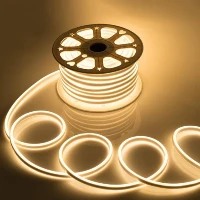
Bedroom: The goal is relaxation. Opt for soft, warm light. Many people choose dimmable LEDs or colour-changing LED strips for their customisable, calming effects.

How to Calculate Your Exact Needs
You can use a simple formula to calculate the total wattage required for any room.
Calculate Total "Traditional" Wattage: Multiply your room's square footage by a value between 1.5 and 2.5.
Use 1.5 for rooms needing softer light (e.g., bedrooms, dining rooms).
Use 2.5 for rooms needing brighter, task-oriented light (e.g., kitchens, workshops).
Formula: Room Area (sq ft) x 1.5/2.5 = Total Traditional Wattage
Convert to LED Wattage: Since a 60W incandescent is equivalent to a 9W LED, the conversion ratio is approximately 1:6.7.
Simplified Formula: Total Traditional Wattage ÷ 10 = Approximate LED Wattage
Example for a 200 sq ft Living Room:
Total Traditional Wattage = 200 sq ft x 1.8 = 360W
Approximate LED Wattage = 360W ÷ 10 = 36W
This could be achieved with one strong bulb or multiple bulbs adding up to ~36W.
Pro Tips for Perfect Lighting
Mix Wattages in One Room: This is not only possible but recommended. Use higher-wattage bulbs for general ambient light and lower-wattage bulbs in lamps for accent or mood lighting.
Prioritize Lumens Over Watts: When shopping, look for the lumens value. To replace a 100W incandescent, look for an LED bulb with about 1600 lumens.
Always Check Fixture Maximums: Never exceed the maximum wattage rating specified on your light fixture to avoid safety hazards.
The Simple Test: The best test is your own comfort. Turn on the lights. If it's harsh and glaring, the wattage is too high. If the room feels dim and gloomy, the wattage is too low.
Find Your Perfect LED Solution
We hope this guide helps you make an informed decision. For a wide range of high-quality, energy-efficient LED bulbs and accessories, feel free to browse our collection or contact our lighting experts for personalised advice.
Please note: These calculations are for guidance. Your specific needs may vary based on ceiling height, wall colours, and personal preference.