A Practical Guide to Light Bulb Shapes and Bases

Selecting the right light bulb involves more than just wattage and brightness. Understanding the coding system for bulb shapes and base types is essential to ensure a perfect fit for your fixture and achieve your desired lighting effect. This guide will demystify these codes, providing you with the knowledge to make informed decisions.
Part 1: Understanding Light Bulb Shapes
Light bulb shapes are identified by a letter or series of letters followed by a number. The letter indicates the general shape, while the number refers to the diameter at the bulb's widest point in eighths of an inch.
Common Household Bulb Shapes:
A-Series (Arbitrary): This is the classic "standard" bulb shape. The most common size is the A19, frequently used in table lamps, ceiling fixtures, and hallways. The number "19" means its diameter is 19/8 inches (approximately 2.4 inches).
BR-Series (Bulged Reflector): These bulbs have a wide, flared shape that creates a soft, broad beam of light. They are ideal for recessed downlights in ceilings. Common sizes include the BR30 and BR40, where the numbers denote diameters of 30/8 inches and 40/8 inches, respectively.

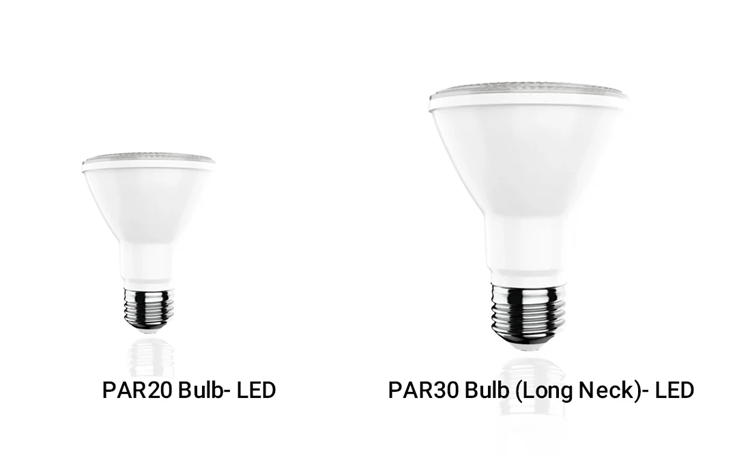
PAR-Series (Parabolic Aluminized Reflector): PAR bulbs feature a hard-glass lens and a precise parabolic mirror, producing a strong, focused beam. They are excellent for outdoor spotlights, track lighting, and accent lighting. Popular sizes are PAR38 for outdoor floods and PAR20 or PAR30 for indoor accents.
G-Series (Globe): As the name suggests, these are spherical bulbs. They are primarily used in decorative applications, such as bathroom vanities, pendant lights, and open fixtures where the bulb is visible. The G25 is a common size.
T-Series (Tubular): These are cylindrical bulbs, commonly found in pendant lights, vanity mirrors, and appliance lighting (like ovens or refrigerators). A T6 bulb, for instance, has a diameter of 6/8 inches.
Decorative and Specialty Shapes:
C & CA-Series (Candle & Candle Angular): Designed to resemble a candle flame, these bulbs are used in chandeliers, wall sconces, and decorative fixtures. CA bulbs have a bent tip for a more elegant, flickering effect.


F-Series (Flame): Similar to candle bulbs but with a more detailed, flickering flame shape, often used in period-style or luxury decorative fixtures.
MR-Series (Multifaceted Reflector): These are low-voltage reflector bulbs, with the MR16 being the most popular. They are the standard for track lighting, display case lighting, and recessed low-voltage spots. They use a pin base (like GU5.3 or GU10) rather than a screw base.

Linear Fluorescent Tubes (T-series): These are the long tubes used in shop lights and office ceilings. The "T" here also stands for tubular, with the number indicating the diameter in eighths of an inch. A ubiquitous size is the T8, with a 1-inch diameter.
Part 2: A Guide to Light Bulb Bases
The base is the part of the bulb that connects it to the electrical socket. Using a bulb with the wrong base is the most common reason for a failed installation.
Screw-in Bases (Edison Screw):

This is the most widespread base type, denoted by an "E" followed by the diameter in millimeters.
E26 (Medium): The standard base for household bulbs in North America. Used with A19, PAR, BR, and many other bulb shapes.
E27 (Medium): The standard in Europe and most other parts of the world. E26 and E27 are often interchangeable but not officially rated to be so.
E12 (Candelabra): A smaller screw base used for chandelier bulbs, night lights, and decorative fixtures.
E14 (Small Edison Screw): The European equivalent of the E12, commonly found on smaller appliances and fixtures.
E39 (Mogul) & E40 (Goliath): Large screw bases used for high-wattage bulbs in industrial or street lighting applications.
Pin Bases:
These bases use two or more pins to connect the bulb to the socket.
Bi-pin Bases (G#): The "G" stands for glass, as the original bulbs using this base had glass pins. The number indicates the distance in millimeters between the pins.

GU5.3: The standard base for low-voltage MR16 bulbs. It has two pins and plugs directly in.
GU10: The standard base for mains-voltage MR16 bulbs. It has two fat pins with rounded ends; you insert and twist to lock it in place.
G4 & GY6.35: Tiny bi-pin bases used in small, low-voltage halogen or LED bulbs for cabinet lighting, pendant lights, and RVs.
Twist-and-Lock Bases (GU24): This base has two pins and is designed for energy-efficient fixtures. You insert the pins and twist the bulb to lock it, preventing the use of older, less efficient bulbs.
Fluorescent Pin Bases:

Single-Pin: Common in instant-start T8 and T12 fluorescent tubes.
Bi-pin (Recessed Double Contact): The standard for T8 and T5 fluorescent tubes. The most common is the G13 base for T8 bulbs.
Specialty Bases:
Bayonet (B#): Common in the UK, Australia, and other Commonwealth countries. These bulbs have pins on the side that lock into place with a push and twist. Example: B22d.
Wedge (W#): The wires from the bulb are bent up onto the base, forming a "wedge." Common in low-voltage applications like automotive lighting and Christmas lights.
How to Choose the Right Bulb
Check the Old Bulb: The simplest method is to remove the old bulb and note the shape and base codes printed on it.
Examine the Fixture: If you don't have an old bulb, look at the socket. A screw socket requires an E-style base, while a socket with two small holes requires a pin base.
Consider the Application:
General Lighting: A19 or G25 bulbs.
Recessed Ceiling Lights: BR30 or BR40 bulbs.
Track or Accent Lighting: PAR20, PAR30, or MR16 bulbs.
Chandeliers: C, CA, or F-style bulbs with an E12 or E14 base.
Vanity Mirror: G25 or T6 bulbs.

By understanding these simple codes, you can confidently navigate the lighting aisle and select the perfect bulb for every need. When in doubt, bring the old bulb or a photo of the fixture to the store to ensure a perfect match.