1.What makes LED grow lights a notable choice for indoor horticulture?
LED grow lights are notable for offering effective, adaptable, and environmentally friendly lighting options, which have completely transformed indoor horticulture.
2.Who tends to choose 1000 watt LED grow lights?
1000 watt LED grow lights are a popular option for both serious hobbyists and commercial producers in indoor horticulture.
3.In conventional lighting systems, what was wattage directly tied to?
In conventional lighting systems, wattage was directly tied to power usage and light output.
4.What does the "1000 watt" specification usually mean for LED grow lights, different from conventional ones?
For LED grow lights, the "1000 watt" specification frequently refers to the comparable power consumption when compared to more traditional lighting systems like metal halide (MH) or high-pressure sodium (HPS) lamps. A 1000 watt LED grow lamp usually uses less actual power (usually 400 to 600 watts) while producing light output on par with or better than a 1000 watt HPS fixture.
5.Why is the distinction between the "1000 watt" label and actual power consumption of 1000 watt LED grow lights important?
This distinction is important because it highlights the efficiency improvements that LED technology offers. Growers benefit from lower heat output and electricity costs, which have a significant impact on the lighting system's sustainability and effectiveness.
6.Can the light spectrum of 1000 watt LED grow lights be adjusted? If so, what's the advantage?
Yes, the light spectrum of 1000 watt LED grow lights can be adjusted to suit the unique requirements of different plant stages (from seedling to flowering). Many models are full-spectrum, able to replicate natural sunlight and provide the ideal wavelengths for photosynthesis. This not only improves plant growth but also allows gardeners to nurture a wider range of plants with a single lighting system, potentially leading to healthier plants and larger yields.
7.What advanced features do 1000 watt LED grow lights often come with besides adjustable light spectrum?
Besides adjustable light spectrum, 1000 watt LED grow lights frequently come with advanced features like dimming settings and programmable timers.
8.How do the advanced features (dimming settings and programmable timers) of 1000 watt LED grow lights help gardeners?
With dimming settings and programmable timers, gardeners can design specific light cycles that match their plants' natural growth patterns. For instance, plants may need longer light durations in the vegetative stage, and a change in light duration and intensity in the flowering stage. This precise lighting management not only promotes optimal plant growth but also aids in energy conservation, allowing growers to adjust systems to reduce waste and increase productivity.
Power Consumption and Energy Efficiency
Lower Energy Use
The reduction of energy consumption is one of the biggest effects of using 1000 watt LED grow lights. Compared to conventional lighting systems, LEDs transform a larger proportion of electrical energy into useable light. A 1000 watt LED grow light may only use about 500 watts of power, which is essentially half of what a 1000 watt HPS light does.
Over time, this efficiency results in significant cost savings, particularly in large-scale enterprises where lighting can contribute significantly to electricity expenses. For instance, compared to conventional lighting configurations, a commercial grower using several 1000 watt LED bulbs can anticipate a 40–60% reduction in energy expenses.
Effects on the Production of Heat
Reduced power usage also results in decreased heat production. In order to maintain ideal growing temperatures, extra cooling systems are necessary because traditional 1000 watt HPS lamps generate a significant quantity of heat. On the other hand, 1000 watt LED grow lights produce far less heat, which means that less ventilation and cooling equipment is required.
In addition to lowering operating expenses, this heat decrease improves the stability of the growth environment. Heat stress, which can impair growth rates and yields, is less likely to impact plants. Additionally, producers can place LED lamps closer to plants due to the reduced heat emission, which improves photosynthetic efficiency and light intensity.
Optimizing Plant Growth and the Light Spectrum
Adaptable Light Spectrum
The capacity to customize the light spectrum to meet the unique requirements of plants is a crucial benefit of 1000 watt LED grow lights. LEDs can be designed to produce specific wavelengths that maximize photosynthesis, flowering, and vegetative growth, in contrast to conventional lighting systems that emit a predetermined spectrum.
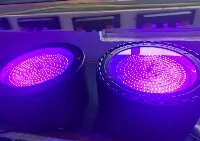
Numerous 1000-watt LED grow lights combine blue, red, white, and occasionally ultraviolet (UV) and infrared (IR) wavelengths to provide full-spectrum capability. Red light stimulates flowering and fruiting, while blue light supports vegetative growth and robust leaf development. By boosting the formation of secondary metabolites, UV and IR light can improve the flavor, aroma, and potency of crops like cannabis and herbs.
Enhanced Photon Flux Density (PPFD) of Photosynthetic
The quantity of photosynthetically active radiation (PAR) that reaches the plant surface is measured by the Photosynthetic Photon Flux Density (PPFD), which is measured in micromoles per square meter per second (µmol/m²/s). For plants to grow and maximize photosynthesis, high PPFD values are necessary.
High PPFD levels are effectively and uniformly distributed over the grow area by 1000 watt LED grow lights. In addition to ensuring that plants receive the ideal amount of light, their directed light output reduces photon waste. Compared to less effective lighting systems, this tailored illumination accelerates growth rates and may result in higher yields.
Considerations for Longevity and Maintenance
Extended Lifespan
LED grow lights, including 1000 watt models, usually have 50,000 to 100,000 hours of lifespan. Compared to conventional HPS or MH bulbs, which frequently need to be replaced after 10,000 to 20,000 hours of use, this longevity is significantly greater.
Growers may concentrate more on cultivation and less on equipment management because of the longer lifespan, which lowers maintenance expenses and downtime. Furthermore, while conventional light bulbs deteriorate over time, reducing light intensity and spectrum quality, LED fixtures continue to produce light consistently.
Reduced Upkeep Needs
LED grow lights are typically more robust and less likely to fail because they produce less heat and don't include any brittle filaments or gasses. Because of its durability, the lighting system will require fewer replacements and repairs, increasing its dependability.
Additionally, a lot of 1000 watt LED grow lights have modular designs that make cleaning and component replacement simple, which simplifies maintenance chores. This easy-to-use method is very beneficial in business environments where labor cost reduction is essential.
Economic and Environmental Effects
Decreased Carbon Emissions
1000 watt LED grow lights help reduce the carbon footprint of indoor growth operations by using less energy and lasting longer. Particularly in areas that depend on fossil fuels, the reduced demand for electricity lowers greenhouse gas emissions related to power generation.
Additionally, fewer energy-intensive cooling systems are required due to the decreased heat output, which increases the environmental advantages. Purchasing high-efficiency LED lighting supports producers that are dedicated to sustainable methods and more general environmental stewardship objectives.
ROI (return on investment)
Even though 1000 watt LED grow lights are frequently more expensive up front than conventional lighting, their longer lifespan, lower maintenance requirements, and energy savings usually yield a positive return on investment. Depending on scale and electricity pricing, several growers claim to have recovered their initial investment in 1-2 years.
Profitability can also be increased by the enhanced plant quality and yield potential linked to optimum LED lighting. In competitive marketplaces, healthier plants with superior terpene, nutritional, or cannabinoid profiles might fetch higher prices.
Obstacles and Things to Think About When Utilizing LED Grow Lights with 1000 Watts
Budgeting and the Initial Investment
Even with all of the benefits, some growers may find the initial expense of 1000 watt LED grow lights prohibitive. High-end fixtures with full-spectrum capability and cutting-edge technologies are frequently more expensive.
To make sure that the investment is in line with operational objectives and available funds, careful planning and cost-benefit analysis are crucial. To strike a compromise between price and performance, some farmers might choose hybrid lighting systems or phased upgrades.
Interoperability with Current Systems
It could be necessary to modify the electrical infrastructure, mounting hardware, and environmental controls in order to integrate 1000 watt LED grow lights into already-existing grow rooms. LEDs usually require suitable drivers and wiring since they run on different voltage and current standards than conventional bulbs.
Growers may also need to adjust their HVAC systems due to the potential impact of the decreased heat output on humidity and temperature management tactics. These difficulties can be lessened with careful preparation and advice from lighting specialists.
Distribution and Coverage of Light
Even though 1000 watt LED grow lights are strong and effective, it's crucial to make sure that the light is distributed evenly across the grow space. If not positioned correctly, the narrow beam angles of some LED lamps might result in hotspots or inconsistent coverage.
To maximize light distribution, growers should think about fixture placement, height, and the use of reflectors or diffusers. By using light meters or sensors, it is possible to maximize growth potential by ensuring that all plants have constant PPFD values.
Upcoming Developments and Trends in 1000 Watt LED Grow Lighting
The LED grow light market is still developing quickly, with new developments always being made to improve user experience and performance. The incorporation of smart controls, including wireless dimming and spectrum tuning, is one of the emerging innovations that enables growers to remotely alter lighting schedules.
Even more compact and potent 1000 watt LED lighting are now possible because to developments in thermal management and semiconductor technologies that are pushing the limits of efficiency and power density. Furthermore, the use of sensors to track environmental factors and plant health is opening the door for completely automated precision agriculture systems.
With these advancements, the effects of 1000 watt LED grow lights on lighting system performance should be further enhanced, increasing the sustainability, productivity, and accessibility of indoor production.
With their many advantages that improve lighting system performance, 1000 watt LED grow lights are a major leap in horticultural lighting technology. Healthier plants, cheaper operating costs, and higher environmental sustainability are all facilitated by their superior energy efficiency, adjustable light spectrum, decreased heat output, and longer lifespan.
The long-term benefits of 1000 watt LED grow lights make them an appealing option for farmers looking to maximize their indoor growing spaces, even while the initial investment and system integration need careful thought. These fittings will probably become more and more important in the future of controlled environment agriculture as technology develops.


https://www.benweilight.com/professional-lighting/led-grow-light/t8-plant-grow-lights-dimmable.html
Our address
No. 5-3 Niujiao Road, Yanchuan Community, Yanluo Street, Bao'an District, Shenzhen
Phone Number
+86 18659785153
bwzm04@ledbenweilighting.com