Are there financial subsidies for LED lighting products?
It is reported that the LED lighting product financial subsidy program jointly drafted by the Development and Reform Commission and the Ministry of Finance may be announced before the end of the year at the earliest. According to industry insiders, the financial subsidy for LED lighting products will follow the form of subsidies for energy-saving lamps, and bidding to select manufacturers and supply prices. Only the products of the manufacturers that have won the bid are eligible to enjoy a certain degree of financial subsidies on the basis of the negotiated price of the bid.
The subsidy objects may still be divided into two categories: bulk users and urban and rural residents. Among them, subsidies for urban and rural residents will exceed those for bulk users. The person said that the subsidy is limited, and the total amount of subsidy is not as good as that of energy-saving lamps.
The financial subsidy program for LED lighting products began to solicit opinions from LED lighting product manufacturers from July to August. At present, the domestic LED lighting market is sluggish, and the industry hopes to introduce subsidy policies before the off-season in the first quarter of next year to boost the market.
The "Interim Measures for the Management of Financial Subsidy Funds for the Promotion of High-Efficiency Lighting Products" promulgated in 2008 stipulates that high-efficiency lighting product promotion enterprises and agreed supply prices are generated through bidding. The state implements unified bidding, and according to the results of the bidding, publicizes the bid-winning enterprises, high-efficiency lighting products and their bid-winning contract supply prices. Among them, for each high-efficiency lighting product for bulk users, the central government will provide a subsidy at 30% of the contract-winning supply price; for urban and rural residents, each high-efficiency lighting product will be subsidized by the central government at 50% of the contract-winning supply price.
Chen Yansheng, chairman of the Lighting Electrical Appliances Association, believes that subsidies for LED lighting products will be a gradual development process. Choosing to introduce a subsidy policy for LED lighting products at this moment is more of a guiding role for the industry. The subsidy will not be too strong at the beginning. Relevant departments should gradually expand the scope and intensity of subsidies based on the implementation effects of subsidy policies.
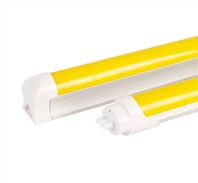
Zhang Xiaofei, dean of the Industrial Research Institute, suggested that before the introduction of subsidy policies, which products are encouraged, which products have technical requirements and other standards should be announced to the public, so that subsidies become more transparent. The scope of subsidies for LED lighting products should include LED downlights, spotlights and LED fluorescent tubes. The brightness of the entire lamp should be 80lm lumens, and the photoelectric efficiency should also exceed 80lm/w, which is more conducive to ensuring the overall quality of the product.
The industry has basically reached a consensus on the subsidy policy to be introduced before the end of the year and early next year at the latest, but the specific time for the policy has not yet been determined.
After the reporter revealed that the first round of government product subsidies amounted to approximately RMB 8 billion, the person disclosed recently that the Ministry of Finance, together with the Development and Reform Commission and other competent departments, will subsidize semiconductor lighting products, and will give priority to product subsidies for indoor lighting and commercial lighting. , Such as downlights, spotlights, and fluorescent lamps, and then gradually expand the subsidy intensity and scope.
In recent years, domestic energy-saving and emission-reduction calls have been on the rise. Commercial companies have become more sensitive to electricity costs, and the government has become more stringent in their energy-saving and emission-reduction requirements. The commercial sector has become more active in using energy-saving lighting products.
At the same time, the current product cost per lumen ($/lm) has fallen by about 20% per year, and from the data in recent years, the brightness increase and cost reduction have an accelerated trend. According to the forecast of the US Department of Energy, the lumen cost of white light LED packages will drop from 25$/klm in 2009 to 2$/klm in 2015. The average annual cost will drop by more than 30%, while the average annual cost from 2010 to 2012 The drop is close to 40%. Some analysts believe that 2011-2012 will be the time period during which the price difference between LEDs and traditional lighting falls the fastest, and the penetration rate will increase by leaps and bounds during this period.
"The replacement of products first occurred in the commercial field, and after getting good indications, it was gradually popularized in the home lighting field. At present, there is still a gap in the domestic response of replacing traditional fluorescent lamps, but with government support projects, the commercial field has shown rapid development momentum. situation.