Can 365nm Mercury Lamps in Old Sterilization Chambers Be Directly Replaced with 395nm LEDs?
Replacing an old sterilization chamber's 365nm mercury lamps with 395nm LEDs is not a straightforward swap. The two light sources differ significantly in spectral properties, electrical requirements, and operational characteristics, necessitating careful modifications to ensure functionality, safety, and sterilization efficacy.
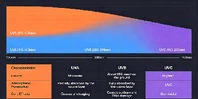
First, the spectral discrepancy is critical. 365nm falls within the UVA range (320–400nm), while 395nm is near the UVA-visible light boundary. Traditional mercury lamps emit intense UV radiation with peaks at specific wavelengths, including 365nm, which is effective for certain sterilization and disinfection tasks due to its ability to damage microbial DNA. In contrast, 395nm LEDs produce longer-wavelength UV light with lower energy, reducing their germicidal efficiency. This means even with proper electrical modifications, the 395nm LEDs may not achieve the same sterilization performance as the original 365nm mercury lamps, depending on the application's requirements.
Electrical system modifications are unavoidable. Mercury lamps rely on ballasts (inductive or electronic) to regulate current and initiate arc discharge. LEDs, however, require direct current (DC) and constant current drivers to operate efficiently and prevent overheating. The existing ballast must be removed and replaced with an LED driver compatible with the 395nm diodes' voltage and current specifications. Wiring configurations will also need adjustment: mercury lamps typically use AC input with ballast-dependent wiring, while LEDs require the driver to convert AC to DC, necessitating rewiring to connect the driver to the LED array and mains power.
Reflector design is another key consideration. Mercury lamps emit light omnidirectionally, and their reflectors are engineered to redirect this broad radiation pattern toward the target surface. 395nm LEDs, by contrast, have directional emission (narrower beam angles), requiring reflectors optimized for their specific light distribution. Without redesigning or replacing reflectors, UV intensity may be uneven, leaving shadowed areas and reducing disinfection effectiveness. Reflective materials must also be checked for compatibility with 395nm light, as some coatings designed for 365nm may absorb or scatter longer wavelengths inefficiently.
Thermal management systems may need upgrades. While LEDs are more energy-efficient than mercury lamps, they still generate heat, which can degrade performance and lifespan if not dissipated. Mercury lamps dissipate heat primarily through radiation and convection, but high-power 395nm LED arrays often require heat sinks, fans, or passive cooling systems. The sterilization chamber's enclosure may need modifications to accommodate these components, ensuring ambient temperatures remain within the LED manufacturer's recommended range.
Safety and regulatory compliance are final hurdles. Mercury lamps contain toxic mercury vapor, requiring specialized handling during replacement, but 395nm LEDs pose different risks: prolonged exposure to their UV radiation can still damage eyes and skin. Interlock systems, protective shielding, and warning labels must be verified or updated to align with safety standards for LED-based UV systems. Additionally, some industries (e.g., healthcare) mandate specific germicidal wavelengths; switching to 395nm may require revalidation to meet regulatory requirements.
In summary, direct replacement is infeasible. Successful conversion requires replacing ballasts with LED drivers, redesigning reflectors, upgrading thermal management, and validating sterilization efficacy. Users must weigh these modifications against the benefits of LEDs (longer lifespan, lower energy use) and ensure the 395nm wavelength meets their disinfection needs.