As lighting technology continues to advance, homeowners, business owners, and facility managers are increasingly asking themselves, "Can I replace downlights with LED?" The transition to LED downlights has become a hot subject as worries about energy use, illumination quality, and cost-effectiveness increase. The answer is unquestionably affirmative, and this change has several advantages that may improve the lighting in any area while also promoting long-term savings and environmental sustainability.
The technical viability of using LEDs
in place of downlights One of the main reasons this change is feasible is the technical compatibility of LED downlights with current fixtures. The majority of conventional downlight configurations, which may employ fluorescent, halogen, or incandescent bulbs, may be modified to accept LED substitutes. Standard interfaces, such screw-in (E26 or E27) or pin-based (GU10, MR16) connections, are built into LED downlights so they fit easily into downlight sockets. This implies that changing a lightbulb is frequently as simple as removing the old one and replacing it with an LED equivalent.
Retrofit kits are on the market for older or more complicated downlight systems. These kits include all the parts required to transform an existing downlight into an LED-friendly arrangement, such as mounting hardware, drivers, and LED modules. These kits provide a somewhat easy way to upgrade lighting systems, although their installation could need for a little more technical know-how. Furthermore, ultra-thin LED downlight panels that are particularly made to fit into narrow ceiling cavities have been developed as a result of improvements in LED technology. This means that these panels may be used in a variety of architectural types.
Energy Efficiency: A Significant Benefit
Due to their exceptional energy efficiency, LEDs are one of the strongest arguments for replacing downlights. Only around 10% of the electrical energy used by traditional incandescent downlights is converted into visible light; the other 90% is wasted as heat. This makes them incredibly inefficient. Even while halogen downlights are marginally more efficient, they still consume a lot of electricity. Although they offer a higher energy-to-light conversion ratio, fluorescent downlights are still far from ideal. LED downlights, on the other hand, are incredibly effective; they can turn up to 80% of electrical energy into light. This indicates that LED downlights use a quarter of the energy of conventional bulbs for the same level of light production. For instance, an 8–12 watt LED downlight may be used to produce the same amount of lighting as a 60 watt incandescent downlight. These energy-saving measures have the potential to accumulate over time and result in notable drops in electricity costs. The total annual energy savings in commercial buildings with several downlights can reach the thousands of dollars.
Increased Durability and Lower Maintenance
Another significant benefit of LED downlights is their long lifetime. Halogen lamps may last anywhere from 2,000 to 4,000 hours, whereas incandescent bulbs usually last between 1,000 and 2,000 hours. Even if fluorescent lamps last longer, LEDs are still far superior. LED downlights have an incredible lifespan of 25,000 to 50,000 hours, or longer. Because of their longer lifespan, LED downlights require much fewer replacements than conventional bulbs. When there are hundreds or even thousands of downlights in a commercial context, such a major office building or a retail mall, the decreased requirement for bulb replacements results in considerable labor and material cost savings. In a household context, homeowners will experience less inconvenience since they won't have to bother about changing burned-out lightbulbs all the time. LED downlights' extended lifespan also benefits the environment since fewer bulbs wind up in landfills, which lowers waste and the resulting environmental damage.
Better Quality Lighting
When it comes to illumination quality, LED downlights are better than their conventional counterparts. Because they are available in a variety of color temperatures, users may alter the lighting atmosphere to suit their requirements and tastes. Warm white (about 2700K to 3000K) color temperatures produce a warm and welcoming ambiance akin to that of incandescent light bulbs, whereas cool white (approximately 5000K to 6500K) color temperatures are best suited for task-oriented spaces like restrooms, workplaces, and kitchens. Additionally, the color rendering index (CRI) of LEDs is high. When an LED downlight has a high CRI, it can faithfully capture the colors of the items it illuminates. In places like restaurants, art galleries, and apparel stores, where precise color representation may improve the aesthetic appeal of goods and the atmosphere overall, this is crucial. Accurate color rendering, for instance, guarantees that clients in a clothes store can see the actual colors of the apparel, which may affect their choice to buy.
Advantages for Safety and the Environment
One important argument in favor of LED downlights is safety. They significantly lower the likelihood of fire dangers related to overheating since they generate very little heat. This is particularly important for downlight fixtures that are enclosed or in locations where the downlights are situated near combustible objects like wooden beams or insulation. Furthermore, dangerous materials like mercury, which is found in some fluorescent bulbs, are absent from LED lights. Mercury is a poisonous material that, if discharged into the environment, may seriously endanger both human and environmental health. Since there is no chance of mercury contamination in the event of breaking, LED downlights are safer for the environment and human health because they don't contain mercury.
Versatility in Style
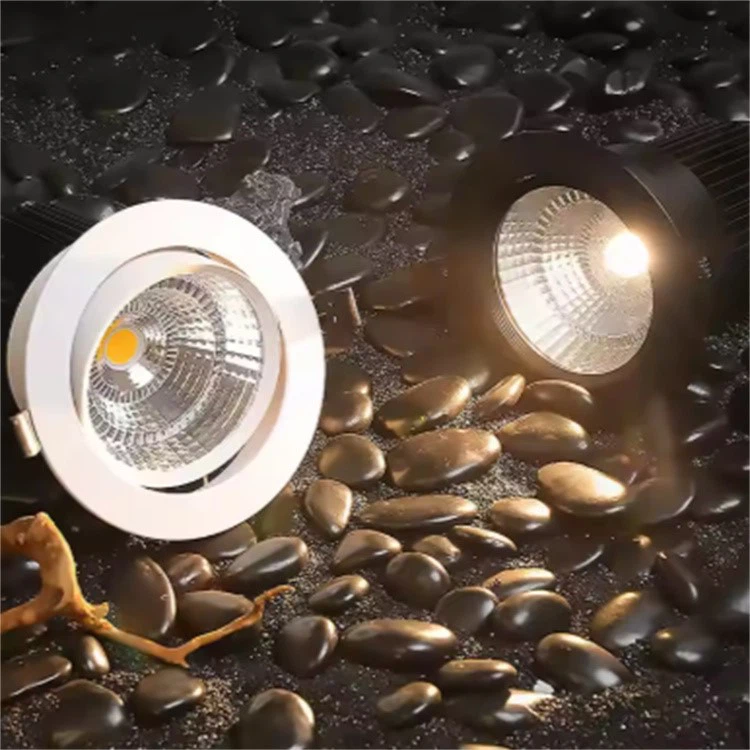
LED downlights provide a great deal of visual adaptability. They may fit in well with a variety of interior decors since they come in a variety of forms, including as recessed, surface-mounted, and semi-flush alternatives. Because they produce a sleek and inconspicuous appearance, recessed LED downlights are a popular option for contemporary, minimalist designs. Conversely, surface-mounted LED downlights may provide enough lighting while also adding a beautiful touch to a space. Certain LED downlights are made to be quite thin, which makes them appropriate for ceilings with little room. Additionally, dimmable LED downlights are readily accessible and allow customers to customize the brightness to suit their needs. Throughout the day, several lighting moods may be created thanks to this function. For instance, a bright light could be preferred in the morning to encourage alertness, but a softer, darker light might foster a calming environment in the evening.
Things to Take Into Account When Using LEDs in Place of Downlights
Although switching to LED downlights has many advantages, there are a few things to think about. An essential consideration is compatibility with current dimmer switches. Since LED downlights need a different kind of electrical control, certain older dimmer switches could not function correctly with them. In certain situations, it could be necessary to install a dimmer switch that is compatible with LEDs. LED downlights are typically more expensive initially than conventional bulbs. However, the investment in LED downlights is well worth it when you take into account the long-term energy consumption reductions, lower maintenance costs, and longer lifespan. Additionally, the cost of LED downlights is steadily declining in tandem with the growing demand for LED lighting, making them more affordable for a larger spectrum of customers. The caliber of the LED downlights is an additional factor. Selecting goods from reliable producers is crucial since not all LED downlights are made equal. Better performance, longer lifespan, and more constant illumination quality are all benefits of high-quality LED downlights. You can be sure you're getting the greatest deal by reading product reviews, looking for certifications, and buying from reliable vendors.
Real-World Case Studies and Examples
Let's examine a few actual cases to demonstrate the advantages of switching to LED downlights. Five hundred halogen downlights in a huge corporate office building were swapped out with LED alternatives. Over $15,000 was saved annually as a consequence of the lighting system's 70% reduction in energy use. Additionally, the firm saved thousands of dollars annually on labor expenditures due to the decreased maintenance requirements. In a household environment, a homeowner installed LED downlights in place of the 20 incandescent downlights in their kitchen and living room. They no longer had to bother about changing lightbulbs on a regular basis, and they could see the energy savings on their monthly power bill. Their home's general appearance and atmosphere were also improved by the better lighting.
Detailed Installation Procedure
Here is a more thorough instruction for individuals who are curious about the replacement procedure itself. To be safe, first switch off the downlights' power source at the circuit breaker. After that, gently take out the old fixture or bulb. Install the LED module, driver, and any additional parts according to the manufacturer's instructions if you're using a retrofit kit. Verify that every connection is safe. Install the new LED downlight by screwing it in if you are only changing the bulb. After the installation is finished, make sure the new LED downlights are functioning correctly by turning the power back on and testing them. In conclusion, switching to LED downlights is not only a practical choice, but also a very advantageous one. LED downlights are a great option for updating any lighting system because of their extended lifespan, energy economy, greater illumination quality, increased safety, aesthetic diversity, and long-term cost savings. Making the move to LED downlights has many benefits, whether your goal is to save your energy costs, enhance the atmosphere of your room, or help create a more sustainable future. LED downlights are expected to become even more effective, reasonably priced, and adaptable as technology develops, therefore consolidating their status as the preferred lighting option for the contemporary world.