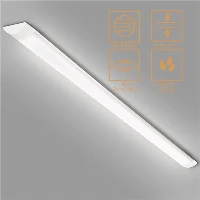
Because of their energy efficiency and stylish appearance, LED panel lights are becoming more and more popular. Many people want to know if these lights can be turned down. Let's investigate this question further.
An Introduction to LED Panel Lighting
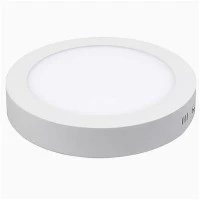
Light-emitting diodes (LEDs) are used as the light source in LED panel lights. When an electric current flows through these semiconductor diodes, light is released. LED panel lights are made to evenly disperse light over a flat surface, creating a gentle and cosy illumination that is perfect for a range of settings, including homes and offices.
LED Panel Light Dimming Technology
It is possible to dim LED panel lights, however doing so calls for particular parts and technologies. For LED panel lights, there are primarily three popular dimming techniques:
Dimming via Pulse-Width Modulation (PWM)
PWM dimming is among the most used techniques. It operates by quickly turning the LED's power source on and off at an extremely high frequency, usually between 100 Hz and 20 kHz. The average power given to the LED can be changed by adjusting the duty cycle, or the ratio of the "on" to "off" period. For instance, the LED is on half the time and off the other half if the duty cycle is 50%. As the duty cycle drops, the LED appears darker to the human eye, which is unable to recognise these quick on-off cycles. PWM dimming provides a smooth and natural dimming experience with high-quality dimming and little colour shift or flicker.
Dimming in analogue
Modifying the voltage or current applied to the LED is known as analogue dimming. The LED's brightness can be reduced by lowering the voltage or current. This approach does, however, have several drawbacks. The LED's colour temperature may alter as the voltage or current is decreased, changing the colour of the light that is released. Additionally, flicker may be more noticeable with analogue dimming, particularly at lower brightness settings, which can be eye-uncomfortable.
Dimming via Digital Addressable Lighting Interface (DALI)
A communication system called DALI makes it possible to precisely control many LED panel lights. It is appropriate for large-scale lighting installations, like those seen in commercial buildings, because it allows for both individual and group management of the lights. DALI dimming offers a great deal of freedom in adjusting the brightness levels because each light fixture may be addressed and controlled independently. Advanced capabilities like scene setting, scheduling, and energy monitoring are also provided by DALI systems, which improve the lighting system's overall performance.
LED Panel Light Dimming Compatibility and Requirements
A number of elements must be taken into account in order to correctly dim LED panel lights:
Compatibility of Drivers
A driver is needed to control the power supply for LED panel lights. The driver needs to be dimmable in order to support dimming. Dimming controls will not function with a non-dimmable driver. Whether it's a PWM signal, an analogue control, or a DALI-compatible controller, dimmable drivers are made especially to react to the dimming signals from the control device.
Devices for Control
Another important factor is the kind of control device that is employed. A suitable dimmer switch that can provide the right PWM signals is required for PWM dimming. A dimmer that can smoothly change the voltage or current is necessary for analogue dimming. To connect with the DALI-enabled LED panel lights in the case of DALI dimming, a DALI-compliant controller or gateway is necessary.
Wiring and Installation
The dimming system must be installed and wired properly to guarantee proper operation. Any connections between the dimmer, driver, and LED panel light should be tight, and the wiring should be completed in accordance with the manufacturer's specifications. To maximise the dimming performance, extra parts like resistors or capacitors could occasionally be needed.
Advantages of LED Panel Light Dimming
Dimming LED panel lights has a number of benefits.
Savings on Energy
Considerable energy savings can be obtained by dimming the lights when complete lighting is not needed. Dimming the LED panel lights in an office during the evening, for instance, when some natural light is still streaming in via the windows, can reduce power use without significantly compromising visibility.
Creating Ambience and Mood
Different lighting moods can be created by dimming. While higher brightness settings can be used in an office to improve attention and productivity, dimming the LED panel lights in a living area can create a warm and soothing atmosphere.
LEDs' Extended Lifespan
The heat produced by the diodes is decreased when LEDs are operated at lower brightness settings. Dimming can help LED panel lights last longer and require fewer replacements because heat is one of the primary elements that can limit their lifespan.
In conclusion, a variety of technologies can be used to dim LED panel lights. However, it is crucial to make sure that the wiring, control device, driver, and other parts are all suitable and installed appropriately in order to reap the benefits of dimming. Dimming LED panel lights can increase energy efficiency, produce the ideal atmosphere, and prolong the life of the lighting fixtures when done correctly.