Can Plants Photosynthesize with Tube Lights?
Plants are able to sustain their development and contribute to the ecology of the planet through the fundamental process of photosynthesis, which involves the transformation of light energy into chemical energy. Tube lights are a typical type of artificial light source, and one of the most important questions that indoor gardeners and horticulturists need to answer is whether or not they are able to successfully support this essential process. We need to investigate the science of photosynthesis, the characteristics of tube lights, and the ways in which these things may be applied in the field of plant culture in order to find a solution to this problem.
The major pigment found in plant cells, chlorophyll, is responsible for the essential process of photosynthesis, which involves the absorption of light. Peak absorption occurs in the blue (400–500 nm) and red (600–700 nm) areas of the light spectrum for chlorophyll a and chlorophyll b, which are the two forms of chlorophyll that are found in the greatest abundance. The light-dependent processes are driven by these wavelengths, which result in the splitting of water and the production of adenosine triphosphate (ATP) and nicotinamide adenine dinucleotide phosphate (NADPH), which are energy carriers that are necessary for the conversion of carbon dioxide into glucose. Despite the fact that green light (500–600 nm) is primarily reflected, which is what gives plants their green color, it can have an effect on the function of stomata and the proliferation of leaves in some species.
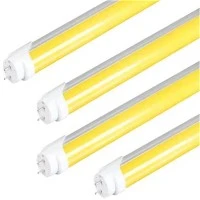
An entire range of wavelengths is provided by natural sunshine; however, interior spaces sometimes do not receive a enough amount of sunlight, which necessitates the use of artificial lighting. A type of fluorescent lighting known as tube lights function by causing mercury vapor to be excited, resulting in the emission of ultraviolet (UV) light. This light is subsequently transformed into visible light by a phosphor coating that is located inside the tube lamp. The spectrum output of the light is determined by the kind of phosphor, which results in fluctuations that have an effect on the development of plants.
The majority of the light that is emitted by cool white fluorescent tubes is in the blue and green spectra, and its color temperature ranges from 4100K to 6500K. They find widespread application in home and commercial settings for the purpose of providing general lighting. In spite of the fact that blue wavelengths are advantageous for vegetative growth, as they encourage the development of leaves and maintain a compact plant structure, the large amount of green light, which plants are unable to absorb very well, hinders their ability to perform photosynthesis. These tubes are good for plants that require low light, such as snake plants or pothos, but they may have difficulty supporting species that develop more quickly.


Fluorescent tubes that produce more red and yellow wavelengths are known as warm white fluorescent tubes. Their color temperature ranges from 2700K to 3000K. One of the most important roles that red light plays in blooming and fruiting is that it is essential for the light-independent processes that occur during photosynthesis. Their decreased blue light output, on the other hand, might impede the growth of leaves during the vegetative stage, which makes them less suitable for seedlings or leafy greens. They are more beneficial for plants that are in the reproductive phase, such as blooming plants that have reached maturity.
The blue (400–500 nm) and red (600–700 nm) wavelengths of full-spectrum fluorescent tubes are balanced with lesser quantities of green and other spectra. This arrangement is designed to simulate the natural sunshine that is present in the environment. The color rendering index (CRI) of these lights is often higher than 85, making them an all-encompassing light source that is suitable for all phases of plant development. Studies, such as the one that was published in HortScience, demonstrate that herbs that are cultivated in full-spectrum tubes have a biomass and chlorophyll content that is equivalent to those that are grown in sunshine, so verifying the usefulness of these methods.
When compared to conventional tubes, high-output (HO) and very high-output (VHO) tubes provide a higher light intensity (which is measured in photosynthetic photon flux density, or PPFD). At a distance of 12 inches, HO tubes have the capability to achieve PPFD values of 400–600 μmol/m2/s, making them acceptable for mid-light plants such as tomatoes. VHO tubes, which have a power factor of discharge (PPFD) of up to 800 μmol/m2/s, are designed to accommodate high-light species. However, they require specialist ballasts and produce greater heat, which necessitates ventilation.
The intensity of light is of utmost importance, as the majority of plants require a photon flux density (PPFD) of 100–2000 μmol/m2/s. At a distance of 12–18 inches, standard tubes are capable of delivering 50–300 μmol/m²/s, which is plenty for low-light plants like lettuce and parsley. Extending this spectrum, HO tubes provide assistance for plants that have modest requirements. Because light intensity is proportional to the inverse square rule, which states that doubling the distance quarters the intensity, the optimal way to optimize absorption is to position tubes between 6 and 12 inches above plants.
The time of light exposure, often known as the photoperiod, is equally important. Light for 12–16 hours a day is sufficient for the majority of plants, but darkness is necessary for respiration. In order to minimize the stress that can be caused by irregular light patterns, tube lights, which can be readily regulated by timers, provide steady cycles.
Even if they are effective, tube lights have certain drawbacks. They have a lower energy efficiency compared to LEDs, which are able to convert more electricity into light and emit wavelengths that are targeted, and hence reduce waste. In addition, LEDs have a longer lifespan (50,000 hours or more, compared to 10,000–20,000 hours for tubes) and create less heat, which results in cheaper cooling expenses. High-intensity discharge (HID) lamps, which include metal halide (MH) and high-pressure sodium (HPS), have a higher power factor factor (PPFD) for large-scale operations; nevertheless, they need a greater amount of energy and produce a substantial amount of heat.

In spite of this, tube lights continue to be widely used for gardening on a smaller scale because of their reasonable initial cost, simple installation, and widespread availability. They perform exceptionally well for growth of seedlings, microgreens, and leafy crops, all of which require less light. According to the findings of a research conducted by the University of California Cooperative Extension, for instance, spinach that is grown in full-spectrum tubes achieves a growth rate that is ninety percent higher than that of spinach that is cultivated outside.
In conclusion, tube lights have the potential to facilitate photosynthesis if they offer sufficient blue and red wavelengths, acceptable intensity, and the suitable photoperiods necessary for the process. Optimal full-spectrum tubes are those that meet the spectral requirements of the majority of plants. Even though they are not as technologically sophisticated as LEDs or HIDs, they provide indoor gardeners with a solution that is both practical and economical. They demonstrate that plants may flourish under artificial tube light provided the appropriate conditions are met.
more informations : https://www.benweilight.com/lighting-tube-bulb/100w-200w-300w-plant-led-tube-light.html