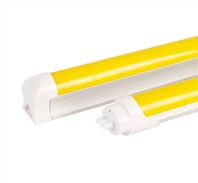
Can thermally conductive plastics enter the led industry?
Nowadays, people keep a high degree of concern about carbon dioxide emissions and gradually increase their awareness of energy conservation and environmental protection. The birth of LED technology has helped people achieve the goal of sustainable development. The use of thermally conductive plastic instead of metal can increase the flexibility of lamp design and reduce the total weight of the lamp. In addition, the application of thermally conductive plastics can effectively improve lighting efficiency and save power consumption. As government departments pay more attention to this and increase technological innovation and investment in special materials, LED materials, especially thermally conductive plastics, will have very good application prospects and development space.
The rapid development of the LED industry has greatly stimulated the development of the upstream materials industry and further promoted breakthroughs in the field of high-end materials. A large number of plastic parts are used in LED lamps, including LED chip packaging components, LED optical lenses, light scattering components, high-efficiency heat dissipation components, light reflection and light diffusion plates, etc. LED lamps are a sustainable alternative lighting solution that can save 30% to 80% more energy than fluorescent and incandescent lamps. Although the LED lamp is energy-saving and has a small amount of heat dissipation, the heat dissipation performance of its heat-conducting parts is extremely critical to the service life and energy-saving effect of the LED lamp. Therefore, scientific researchers use thermally conductive fillers to uniformly fill the polymer matrix material to improve its thermal conductivity, and develop thermally conductive plastics that can effectively transfer heat.
Thermally conductive plastics are increasingly replacing metal parts in the thermally conductive parts of LED lamps, including lamp holders, cooling and heat-dissipating lamp cups and housings. Compared with traditional metal materials, thermally conductive plastics have many advantages.
In summary, there are the following four points: First, uniform heat dissipation, avoid hot spots, and reduce local deformation of parts due to high temperatures.
Second, it is light in weight, 40-50% lighter than aluminum.
Third, it is convenient for forming and processing without secondary processing.
Fourth, the product design has a high degree of freedom.