Can you tell the difference between incandescent light, halogen light, fluorescent light, energy-saving light, and LED light?
There are many kinds of light on the market now. When we choose light, we often don't know where to start. Which light is more suitable for us? Which light should be used in different environments? Next, I will give you a brief introduction to some of the more common light on the market.
1. Incandescent light
The light-emitting principle of an incandescent light is to heat the filament to an incandescent state, and use the thermal radiation to emit an electric light source that emits visible light.
It is the kind of light bulb that we used when we were young, which would be very hot to the hand for a long time, and often slammed the filament, which is the incandescent light bulb. Less than 10% of the electrical energy it consumes can be converted into light energy (compared to 2% for ordinary incandescent light), while the rest is lost as heat. At the same time, the higher the filament temperature, the faster the tungsten filament evaporates, resulting in a shorter lifespan for most incandescent light. Therefore, although incandescent light have many advantages - the color light is closest to the color of sunlight, the color rendering is good, the spectrum is uniform and not obtrusive - but the waste of energy is huge. Since the beginning of 2007, the Australian government took the lead in announcing the complete elimination of incandescent light in the form of legislation. At the beginning, more than a dozen countries and regions have successively released incandescent light phase-out plans. my country has also gradually implemented a phase-out plan since 2011. From October 1, 2016, the sale and import of incandescent light of 15 watts and above for general lighting are prohibited.
Summary: If you want to use incandescent light as a light source, there will indeed be difficulties in purchasing in the future.
2. Halogen light
Halogen light can be seen as an upgraded version of incandescent light. Referred to as halogen bulb or halogen light, also known as tungsten halogen bulb, quartz bulb, is a variant of incandescent light. The principle is to inject halogen gas such as iodine or bromine into the bulb. At high temperature, the sublimated tungsten filament and halogen undergo chemical action, and the cooled tungsten will re-solidify on the tungsten filament to form a balanced cycle to avoid premature breakage of the tungsten filament. . Therefore, halogen bulbs last longer than incandescent bulbs (almost 4 times as long), and because the filament can work at higher temperatures, they get higher brightness, higher color temperature and higher luminous efficiency.
As an upgraded version of incandescent light, halogen light have all the advantages of incandescent light, but halogen light also inherit the disadvantages of incandescent light: short life (although already longer than incandescent light), low luminous efficiency (although already higher than incandescent light), In addition, since the halogen light is also a heat radiation source, the temperature of the bulb is still very high during the lighting or just after the light is turned off, so it is absolutely impossible to touch it with your hands.
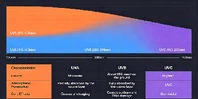
In addition, both incandescent and halogen light have small amounts of ultraviolet (UV) and infrared (IR) radiation problems. It is easy to cause facial skin problems, coupled with ultraviolet radiation, it may even lead to extreme conditions such as solar dermatitis.
Summary: If you want to use a halogen light as a light source, you need at least UV protection treatment - in short, it is best to have a frosted or partially frosted and UV-resistant glass panel for the light-emitting part of the light head.
3. Ordinary fluorescent light
The long tubes we used when we were kids were fluorescent light, also called fluorescent light. The traditional fluorescent light is the low-pressure mercury light, which uses the low-pressure mercury vapor to release ultraviolet rays after being energized, so that the phosphor emits visible light, so it belongs to the low-pressure arc discharge light source.
Ordinary fluorescent tubes are coated with halogen phosphors and filled with a mixture of argon and krypton-argon. Light colors are: cool white daylight fluorescent tubes, warm white daylight fluorescent tubes. Compared with incandescent light, fluorescent light do not get hot and have much higher luminous efficiency, but these two types of fluorescent light have lower color rendering performance, and the color rendering index R value is less than 40. Much smaller than sunlight, the standard value of the color rendering index R=100. Watch the color of the surface of colored objects, resulting in a color cast. The color is cyan, gray, and the color is dim and not bright. These two kinds of fluorescent light are not high-efficiency and energy-saving electric light sources, and do not meet the technical requirements of green lighting.
Summary: Not enough energy saving and environmental protection, it is not recommended to buy.
Fourth, energy-saving light (CFL light)
The name CFL is widely abused for electric light sources other than incandescent halogen light, such as the ubiquitous term "LED CFL". The energy-saving light mentioned here is a compact tri-color electronic fluorescent light (abbreviated as CFL light abroad), which is a compact fluorescent light with its own ballast.
In detail, the CFL light is a single-ended compact energy-saving fluorescent light. The tube, ballast and light cap of this kind of fluorescent light are tightly integrated (the ballast is placed in the light cap), and they cannot be disassembled except for destructive blows, so they are called "compact" fluorescent light. Since there is no need to add a ballast, and the drive circuit is also in the ballast, this kind of fluorescent light is also a self-ballasted fluorescent light and an internal start fluorescent light. The whole light is directly connected to the power supply network through E27 and other light holders, which can directly replace incandescent light. Most of these fluorescent light use three-color phosphors of rare earth elements, so they have energy-saving functions, so they are called "energy-saving light". Energy-saving light are small in size, save energy than incandescent light, and have a longer lifespan than incandescent light. However, the disadvantages are also obvious: as a type of fluorescent light, mercury is added to the light tube. In the absence of a good recycling mechanism at present, the environmental pollution caused cannot be ignored. In addition, the ballast used in energy-saving light will generate certain electromagnetic radiation when generating instantaneous high voltage.
Summary: It contains mercury and other harmful substances, which are harmful to the environment and generate certain electromagnetic radiation. It is not recommended to buy.
Five, LED lights
LED is the abbreviation of English light emitting diode (light emitting diode). A light-emitting diode is a solid-state semiconductor device that can convert electrical energy into visible light, and it can directly convert electricity into light.
The heart of the LED is a semiconductor chip, one end of the chip is attached to a bracket, one end is the negative electrode, and the other end is connected to the positive electrode of the power supply, so that the entire chip is encapsulated by epoxy resin. The semiconductor wafer consists of two parts, one part is a P-type semiconductor, in which holes dominate, and the other end is an N-type semiconductor, where electrons are mainly. But when the two semiconductors are connected, a P-N junction is formed between them. When the current acts on the wafer through the wire, the electrons will be pushed to the P region, where the electrons and holes recombine, and then emit energy in the form of photons, which is the principle of LED light emission.
Because LED light do not generate high heat and convert electrical energy into light energy as much as possible, LEDs are often referred to as "LED energy-saving light". When purchasing energy-saving light, be sure to distinguish between two completely different light sources, LED and CFL. Also known as energy-saving light, compared with CFL light, LED light are environmentally friendly and do not contain mercury and can be recycled and reused. This is probably a major driving force for countries to vigorously develop LED light. LED lights have many advantages, mainly the following:
①Green environmental protection: small glare, no radiation, no harmful substances are produced during use.
②Long life and stable performance, there are no shortcomings such as easy burning, thermal deposition, and light decay of the filament.
③Multiple transformations: LED light source can use the principle of red, green and blue three primary colors, under the control of computer technology, to produce different colors, intensities and color temperatures.
Summary: There are many advantages, but the disadvantage is that the price is slightly higher than the above-mentioned light, but in the long run, the electricity bills saved can also be quickly recovered.
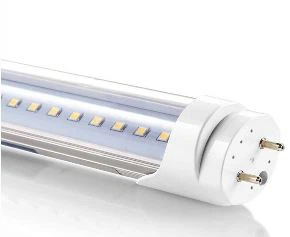
Shenzhen Benwei Lighting Technology Co., Ltd is a professional manufacturer in producing LED lighting products, Our main products T8 T5 LED Tube, LED Grow Light,Poultry LED Light,Tri-proof LED Light,LED Flood Light, LED Panel, LED Stadium Light, LED High Bay, LED Classing Room Light ,If you want to purchase a high-quality LED lighting products or have a more in-depth understanding of the application of LED lighting, please contact send us inquiry.