Classification of lithium batteries
Development of Lithium Batteries
The first patent on lithium-ion batteries was published in 1981.
In 1992, SONY began mass production of civilian lithium-ion batteries.
In 1998, a large number of square lithium-ion batteries were put on the market, occupying a large market share.
In 1999, mass production of lithium-ion batteries began in China.
Application areas of lithium batteries
1. Consumer goods
Mainly used in digital products, mobile phones, mobile power, notebooks and other electronic equipment. Commonly used are 18650 lithium batteries, lithium polymer batteries.
2. Industrial field
Mainly used in medical electronics, photovoltaic energy storage, railway infrastructure, security communications, exploration and mapping and other fields. Commonly used are energy storage/power lithium batteries, lithium iron phosphate batteries, polymer lithium batteries, and 18650 lithium batteries.
3. Special field
Mainly used in the field of high energy physics. Commonly used are ultra-low temperature lithium batteries, high temperature lithium batteries, lithium titanate batteries, explosion-proof lithium batteries, etc.
Classification of lithium batteries
1. Classification by shape
Cylindrical lithium battery Cylindrical lithium ion battery, its model name is generally 5 digits, the first two digits are the diameter of the battery, the middle two digits are the height of the battery, and the last digit 0 represents the cylindrical shape, in millimeters. The most commonly used cylindrical lithium battery
18650 lithium battery
14500 lithium battery
18500 lithium battery/a>
21700 lithium battery
26650 lithium battery
32650 (32700) lithium battery
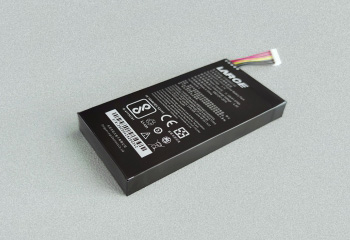
Square lithium battery Square lithium battery usually refers to aluminum shell or steel shell square lithium battery, which is widely used in exploration and mapping, medical equipment, and portable testing equipment.

2. Classification by shell
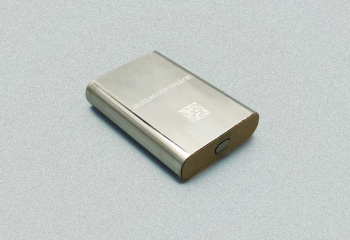
Steel case lithium battery
Lithium-ion batteries in the early days are mostly steel casings. Due to the heavy weight of the steel shell and poor safety, but the strong stability of the steel, many manufacturers optimized the design structure through safety valves, PTC and other devices in the later period, which greatly increased its safety performance. And some directly replace the steel shell, using aluminum shell and soft package, such as the current mobile phone battery.
Aluminum shell lithium battery
Aluminum-shell lithium-ion batteries are slightly better than steel-shell lithium-ion batteries due to their lighter weight and safety.
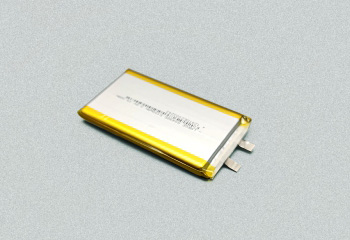
Flexible packaging lithium battery
Due to its light weight, low cost of mold opening and high safety, flexible packaging lithium-ion batteries are gradually expanding their market share.

3. Classification by positive electrode material
There are currently four types of positive electrode materials used in lithium ion batteries: lithium cobalt oxide battery lithium cobalt oxide, with the chemical formula LiCoO₂, is an inorganic compound that is generally used as a positive electrode material for lithium ion batteries. Lithium manganate for lithium manganate batteries is mainly spinel-type lithium manganate, which is a positive electrode material with three-dimensional lithium ion channels first produced by Hunter in 1981. Lithium iron phosphate battery Lithium iron phosphate, also known as lithium iron phosphate, lithium iron phosphorus, is a positive electrode material for lithium ion batteries. The lithium iron phosphate battery named after its positive electrode material is also called a lithium iron battery. Nickel-cobalt-manganese (ternary) lithium battery Lithium nickel-cobalt manganese oxide is the key ternary cathode material for lithium-ion batteries, with higher specific capacity and lower cost than unit cathode materials.
4. Classification by Electrolyte
Liquid Lithium Ion Batteries
The liquid lithium-ion battery uses a liquid electrolyte, and the electrolyte is an organic solvent + lithium salt.
Rd
The polymer lithium-ion battery is replaced by a solid polymer electrolyte. This polymer can be "dry" or "colloidal". At present, most of the polymer colloidal electrolytes are used. The matrix of the polymer is mainly HFP-PVDF, PEO, PAN and PMMA.
All-solid-state lithium-ion battery
"All-solid-state lithium battery" is a lithium battery in which the electrodes and electrolyte materials used in the working temperature range are solid and do not contain any liquid components, so the full name is "all-solid-state electrolyte lithium battery"