What is Color Temperature?
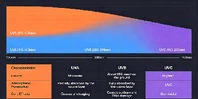
The term color temperature describes the temperature of objects by which they emit light, modeled through the “black body radiator”. When increasing the temperature of a “black body”, it starts to emit visible light in a continuous spectrum. The filament of a 60W incandescent lamp heats up to about 3000°F, as a result the lamp emits light with a color temperature of 3000K. Many of our artificial light sources do not create light by heating up a material until it glows like an incandescent lamps. Instead of creating a continuous spectrum, they generate an assortment of color emission lines. A black body color temperature cannot be directly given to this non-blackbody type of emission, generated by high intensity discharge and fluorescent lamps for example.

What is Correlated Color Temperature?
For those light sources, a correlated color temperature (CCT) is indicated, based on the black body color temperature. A cool white fluorescent lamp has a CCT of about 5000K. The lamps light spectrum is different from a black body one but has the same temperature.The light color influences the atmosphere in a space. The more cozy the ambiance the warmer the light color (lower color temperature) should be and the more dynamic the scene the cooler the light source (higher color temperature).
The CRI is the most important factor to watch when choosing light sources. How good is the light source representing faces, colors and contrasts? The easier the visual task and perception the lower the CRI can be. The color temperature needs to be watched second, it is supporting the space’s atmosphere.
| Lamp Color Name | Apparent Color Temperature (Kelvin) | Characteristics and Examples | Common Adjectives Used to Describe the Light | Best Location |
|---|---|---|---|---|
| Warm White | 2700-3200K | Similar to incandescent bulb, yellowish light best for accentuating skin tones and color of wooden objects | Friendly, warm, inviting, intimate, relaxing | Homes, boutiques, reception areas, Hotels. |
| Natural White | 4000-4500K | Similar to early morning sunlight, Xenon lamp for automotive use | Neat and clean, Natural tone | Offices, School Lights, Outdoor Areas |
| Day White | 5500-6000K | Typical day light, Flash light. Metal Halide | Crisp light, efficient, brightly lit, natural outdoor | Retail stores, Factories, Printing, Warehouses, Schools, Parking Lots, Outdoor Area Lighting |
| Cool White | 7000-7500K | Best contrast but least flattering to the skin, may need mixing with light from a warm white lamp. | Bright light, bluish light | Special applications needing high light intensity and good color rendition like art Galleries, museums, showcases for precious stones and jewelry |
How Does CRI Affect My Purchase Decision
So how much CRI do you need? It really depends who you are. Are you a retail store like the Gap or Bed Bath and Beyond? Are you a car dealership? Are you a hospital that wants to replace your parking lights? Are you a factory, a warehouse or a school? or for roadway lighting, need solar street light, led street light? Different businesses and facilities all have different needs.
If you are a retail shop selling to consumers, high CRI is good. 80+ is preferred. 85 is great, even 90. If you are a not a retailer, then 70+ will be just fine. But can you visibly see the difference between 70 CRI and 90 CRI. Then answer is yes, if you know what to look for.
At a recently lighting trade fair, we walked into a booth that displayed a series of glass bowls of colorful gumballs. Each bowl was under a LED light, and the CRI of that light was labeled above the bowl. We walked from the 70 CRI display all the way to the 95 CRI bowl and thought to ourselves “We’re not seeing the difference”. So then an engineer walked up to me as we kept on walking from bowl to bowl and he told me to “Look at the red gumballs”. And sure enough, the red gumballs became brighter and more vibrant as the CRI increased. The other colors seemed similar from one display to the next.
So, as a factory or a warehouse manager, do you care if the reds in your warehouse are not as vibrant under 70 CRI than under a 95 CRI light? Are you prepared to pay more for that difference? Probably not. If you own a clothing store, then you probably want the best quality of light available.