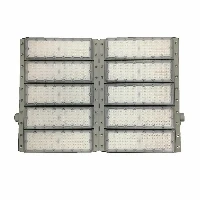
Conquering the Heat: Thermal Management in Sealed Explosion-Proof LED High Bays
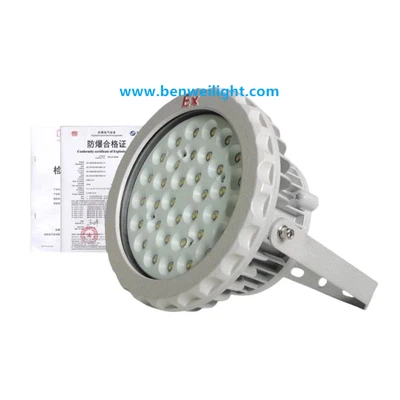
Explosion-proof LED high bay lights face a fundamental engineering paradox: they must be hermetically sealed to contain potential internal sparks or flames (per ATEX/IECEx/UL standards), yet LED performance and longevity critically depend on efficient heat dissipation. Operating within the harsh environments of oil refineries, chemical plants, or grain elevators amplifies this challenge. Here's how advanced designs overcome thermal constraints without sacrificing photometric output:
The Core Challenge: Heat Trapped in a Fortress
LED Sensitivity: Junction temperatures (Tj) above 100–120°C accelerate lumen depreciation (up to 30% loss at 105°C vs. 60°C) and shorten lifespan exponentially (Arrhenius effect). Phosphor conversion efficiency also drops at high temps, shifting CCT and reducing CRI.
Sealed Enclosure Limits: Eliminates convective cooling, forcing reliance on conduction. Traditional heatsinks struggle without airflow.
Hazardous Ambient Heat: Industrial sites often exceed 40–50°C ambient temperatures, shrinking the thermal "budget."
Key Thermal Management Strategies:
1. Material Science & Structural Design
High-Conductivity Enclosures: Die-cast aluminum housings (thermal conductivity: 120–220 W/m·K) act as primary heatsinks. Alloys like ADC12 are optimized for thermal mass and corrosion resistance.
Thermal Pathway Optimization:
Direct-Attach PCBs: LEDs mounted on MCPCBs (metal-core PCBs) with dielectric layers (<3 W/m·K thermal resistance) bonded directly to the housing.
Thermal Interface Materials (TIMs): Silicone-free, ceramic-filled gap pads (5–15 W/m·K) or phase-change materials ensure minimal thermal resistance between PCBs and enclosure.
Internal Heat Spreading: Embedded copper heat pipes or vapor chambers transfer heat from LED arrays to enclosure walls uniformly, preventing hot spots.
2. Passive Cooling Architecture
Massive External Finning: Complex 3D fin designs maximize surface area within explosion-proof constraints (e.g., fin gaps >1mm to prevent flame passage). Computational fluid dynamics (CFD) optimizes fin geometry for static-air dissipation.
Isolated Thermal Chambers: Separate sealed compartments for LEDs vs. drivers prevent driver heat from compounding LED thermal load.
Hybrid Enclosures: Aluminum fins fused to explosion-proof glass-reinforced polyester (GRP) housings combine conductivity with corrosion resistance.
3. Photometric Preservation Tactics
Junction Temperature Control: Active thermal foldback circuits reduce drive current if Tj approaches critical thresholds (e.g., >110°C), maintaining stable lumens and chromaticity.
Efficient Optics: PMMA or glass TIR (total internal reflection) lenses minimize light absorption (<5%) vs. polycarbonate, reducing heat generation from trapped light.
Thermally Stable Phosphors: Remote phosphor designs or high-Tg (glass transition) phosphor layers (e.g., LuAG:Ce) resist thermal quenching.
4. Advanced Thermal Mitigation Technologies
Phase-Change Materials (PCMs): Micro-encapsulated paraffin/wax in heatsinks absorb peak thermal loads (latent heat: 150–250 J/g), delaying temperature spikes during high-ambient operation.
Vacuum Insulated Panels (VIPs): Reduce radiative heat ingress from high-ambient environments (thermal conductivity: 0.004 W/m·K).
Substrate-Level Cooling: Ceramic substrates (AlN, thermal conductivity: 170–200 W/m·K) replace traditional FR4 for high-power COB arrays.
Performance Validation & Certification:
Thermal Simulation: CFD and finite element analysis (FEA) model heat paths under worst-case scenarios (e.g., Ta=55°C).
LM-80/TM-21 Testing: Validates lumen maintenance (e.g., L90 >100,000 hrs at Ts=105°C) under sealed conditions.
Explosion-Proof Compliance: Surface temperature testing (T-rating: T4≤135°C, T6≤85°C) ensures housing temps stay below autoignition points of hazardous gases (e.g., hydrogen, acetylene).
Real-World Impact:
| Parameter | Traditional Sealed Light | Advanced LED High Bay |
|---|---|---|
| L70 Lifespan | 20,000–40,000 hrs | 80,000–120,000 hrs |
| Luminous Efficacy | 70–90 lm/W | 140–180 lm/W |
| CCT Shift (ΔK) | >500K (after 10k hrs) | <200K (after 50k hrs) |
| Housing Temp Rise | 50–70°C above ambient | 25–35°C above ambient |
Conclusion:
Modern explosion-proof LED high bays master thermal management through multi-layered engineering: conductive materials act as thermal highways, intelligent structures dissipate heat passively, and adaptive electronics safeguard photometric stability. By converting enclosures into high-efficiency heatsinks and deploying cutting-edge thermal materials, these luminaires deliver consistent, high-quality light (140+ lm/W, CRI>80) while surviving 80,000+ hours in sealed, hazardous environments. The result is a paradigm shift – where safety, longevity, and performance coexist in the most demanding industrial landscapes. Rigorous simulation and certification (IEC 60079-0, UL 844) ensure these solutions don't just manage heat; they conquer it.