Why Do Plant Grow Lights Need IP67 Waterproofing and Customized Spectrum? The Answer Lies in the "Light Recipe"
In plant factories, tissue culture labs, vertical farms, and high‑humidity greenhouses, ordinary LED grow lights often fail due to moisture damage or cause leggy growth and abnormal flowering because of mismatched spectra. A truly professional grow light must be not only "bright," but also "precise" and "durable."
Using an IP67 waterproof LED grow light as an example, this article explains the "light recipe" that determines plant growth and the reliability design required for harsh environments.

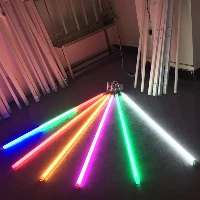
1. Spectrum Is Not About "Colorful" – It Must Be Tailored to the Plant
Plants respond very differently to different wavelengths of light. This product offers a full spectrum from UV to far‑red, but not all wavelengths are suitable for plant growth. Understanding the "relationship between spectrum and effects" is the first step in selecting the right light:
| Spectral Range | Wavelength | Effect on Plants |
|---|---|---|
| UV‑C | ~100nm | Causes plants to wither quickly – harmful |
| UV‑B | 275–320nm | Kills bacteria, but excessive amounts harm plants |
| UV‑A | 320–420nm | Affects photoperiod effect, prevents stem elongation |
| Blue | 420–520nm | Peak absorption by chlorophyll and carotenoids; greatest impact on photosynthesis |
| Green | 520–610nm | Excellent light transmittance, low pigment absorption – penetrates canopy |
| Red | 610–720nm | High chlorophyll absorption; significantly affects photosynthesis and photoperiod |
| Far‑red | 720–1000nm | Low absorption; inhibits seedling growth and flowering |
| >1000nm | Infrared | Produces heat only – no direct effect on plants |
Key conclusion: Blue (420–520nm) and red (610–720nm) are the workhorses of plant photosynthesis; UV‑A can regulate morphology; far‑red should be used with caution. A quality grow light should allow customization of the ratio of each band to match different plant species and growth stages.
2. IP67 Waterproofing: Built for High‑Humidity Environments
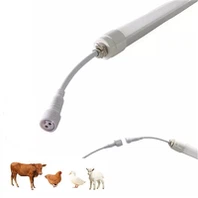
In plant factories, tissue culture rooms, and greenhouses, humidity often reaches 80%–90%. The power supply and PCB of ordinary lights are prone to moisture ingress and short circuits. This product achieves IP67 waterproofing on two levels:
| Component | Waterproofing Measure | Benefit |
|---|---|---|
| LED driver | Imported waterproof potting compound | Fully sealed, protects against moisture; PF>0.95, 5‑year warranty |
| PCB board | Imported glue coating + waterproof design | Protects the circuit while maintaining efficient heat dissipation |
What IP67 means: Completely dust‑tight and can be immersed in 1 meter of water for 30 minutes without damage. This allows:
- Direct use in hydroponic and aeroponic environments
- Resistance to high‑pressure water jets (easy cleaning)
- Long‑term stable operation in condensing conditions
For commercial plant factories or research institutions, IP67 means lower failure rates and longer service life.

3. Customizable Spectrum: One Light for Many Plants
Different plants (leafy greens, fruiting vegetables, flowers, medicinal plants) and different growth stages (seedling, vegetative, flowering) require completely different spectral ratios. This product supports customization of the light ratio:
| Plant Type / Stage | Recommended Spectral Emphasis |
|---|---|
| Leafy greens (lettuce, spinach) | High blue light proportion (promotes leaf growth) |
| Fruiting vegetables (tomato, pepper) | High red light proportion (promotes flowering and fruit set) |
| Seedling stage | Blue + a small amount of red (prevents leggy growth) |
| Flowering stage | Increased red and far‑red proportion |
| Tissue culture | Low light intensity, specific red/blue ratio |
By adjusting the type and number of LED chips, a precise light recipe tailored to the physiological characteristics of specific plants can be achieved, maximizing yield and quality.
4. Typical Applications
| Application | Why It Fits |
|---|---|
| Plant factories | Multi‑layer vertical farming requires high efficacy, low heat, and moisture‑proof lights |
| Tissue culture labs | Needs stable, adjustable lighting and sterile, easy‑to‑clean environment (IP67 allows washing) |
| Greenhouse supplemental lighting | High humidity; ordinary lights fail quickly; IP67 ensures long‑term reliability |
| Home indoor growing | Safe, waterproof – no shock risk |
| Research / breeding | Customizable spectrum for different experimental designs |
5. Key Parameter Summary
| Parameter | Specification |
|---|---|
| LED chip | Epistar SMD2835 (high efficacy, high reliability) |
| Waterproof rating | IP67 (driver + PCB dual waterproofing) |
| Power factor | >0.95 |
| Driver | Imported waterproof driver, 5‑year warranty |
| Spectral range | UV‑A 320nm to far‑red 1000nm – customizable |
| Typical efficacy | ≥130 lm/W (white light portion); PPF depends on spectrum |
| Certifications | CE/RoHS etc. (should be available – check with supplier) |
6. Purchasing Recommendations
| Consideration | Recommended Standard |
|---|---|
| Spectrum adjustability / customization | Must allow adjustment of red/blue ratio and addition of UV/far‑red to suit different plants |
| Waterproof rating | At least IP65 in high‑humidity environments; IP66 or IP67 recommended |
| Thermal design | Aluminum PCB + waterproof coating ensures long‑term lumen maintenance |
| Driver quality | Branded driver + potting compound; warranty ≥3 years |
| PPF/PPFD data | Request photosynthetic photon flux density test reports from the supplier |

Bottom Line
A plant grow light is not about "the more purple, the better" – it's about the more precise the spectrum and the more reliable the waterproofing, the better. In plant factories or high‑humidity cultivation environments, an IP67 waterproof, spectrum‑customizable LED light not only dramatically reduces equipment failure rates but also elevates crop yield and quality to new heights through a scientific "light recipe."
Choosing the right light is the first step toward a bountiful harvest.
Need a custom spectrum solution for your specific plants or cultivation system? Provide us with the plant species, growing area, and target yield, and we will design the optimal light recipe and layout plan for you.