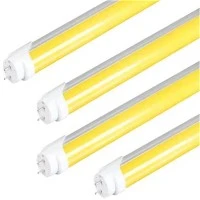
Decoding Blue Light-Blocking LED Bulbs: Technology & Mechanisms Explained
The constant glow of artificial lighting is an inescapable part of modern life. While energy-efficient LED technology revolutionized illumination, concerns emerged about its inherent emission of blue light wavelengths. This spurred the development of specialized blue light-blocking LED bulbs and tubes. But what exactly are these lights, and how do they achieve their claimed reduction in blue light output? Let's delve into the science and engineering behind them.
What They Are: Redefining the LED Spectrum
At their core, blue light-blocking LEDs are modified versions of standard white LED technology. Traditional white LEDs work on a fundamental principle:
The Blue Core: A semiconductor chip emits intense blue light when electricity passes through it (typically around 450-460 nm).
Phosphor Conversion: This blue light strikes a layer of yellow-emitting phosphors coating the chip.
White Light Creation: The combination of the original blue light and the yellow light converted by the phosphors produces the perception of "white" light. The specific "color temperature" (e.g., 2700K "warm white", 5000K "cool daylight") is determined by the exact blend and type of phosphors used. Cooler whites have a higher blue light component relative to warmer whites.
Blue light-blocking LEDs disrupt this standard process. Their explicit design goal is to significantly reduce the intensity of high-energy blue light wavelengths (roughly 400-500 nm, particularly the peak around 450-460 nm) emitted into the environment, while still producing usable white or warm white light. They are not simply low-color-temperature warm white bulbs, although they often operate in that range. They are engineered to specifically attenuate the problematic blue peak inherent in standard LED design.
How They Reduce Blue Light Output: Two Primary Methods
Manufacturers employ several key techniques to achieve blue light reduction:
Advanced Phosphor Engineering (The Primary Method):
Targeted Phosphor Blends: Instead of relying heavily on the standard blue chip + yellow phosphor mix, these LEDs use more complex, multi-component phosphor blends. These blends are designed to absorb a significant portion of the intense blue light emitted by the chip and convert it into longer, less energetic wavelengths.
Shifting the Emission: Instead of just converting blue to yellow, these specialized phosphors shift the light output further down the spectrum. They convert more of the original blue light into green, amber, orange, and red wavelengths. This significantly dampens the sharp blue peak seen in standard LED spectra.
Result: The overall spectrum becomes "fuller" in the warmer regions and "flatter" or significantly reduced in the blue/violet region, particularly around 450nm. The light appears warm, often with a noticeable amber or peach tint compared to a standard warm white bulb of the same color temperature rating.
Physical Blue Light Filters:
Lens or Coating Application: Some bulbs incorporate a physical filter layer on the outer lens or diffuser. This filter is designed to selectively absorb or reflect specific wavelengths of blue light.
Material Science: These filters often use special dyes, pigments, or nano-coatings embedded within the glass or plastic that have optical properties tuned to block high-energy blue wavelengths while allowing other wavelengths (green, yellow, red) to pass through more readily.
Result: Similar to phosphor engineering, this physically removes blue light after it's generated. The effectiveness and color rendering impact depend heavily on the specific filter technology used. This method can sometimes be used in conjunction with modified phosphors.
The Science Behind the Concern: Why Block Blue Light?
The drive for these specialized bulbs stems from biological research:
Circadian Rhythm Disruption: The human body uses light, particularly blue wavelengths, to regulate its internal 24-hour clock (circadian rhythm). Blue light exposure, especially in the evening and night, suppresses the production of melatonin, the sleep hormone. This can delay sleep onset, reduce sleep quality, and potentially impact long-term health.
Visual Discomfort & Fatigue: High-intensity blue light scatters more readily within the eye than longer wavelengths. This scattering can contribute to glare, reduce visual contrast, and potentially lead to digital eye strain (headaches, dry eyes, blurred vision) during prolonged exposure to screens or intense cool-white lighting.
Potential Retinal Health: While ongoing research is establishing definitive long-term effects in humans under typical exposure conditions, some laboratory studies suggest high-energy blue light could contribute to oxidative stress in retinal cells over time.
What Blue Light-Blocking LEDs Achieve (and What They Don't)
They Achieve:
A significant reduction in the peak intensity of high-energy blue light (around 450-460nm) compared to standard LEDs of the same color temperature.
A spectral power distribution shifted towards warmer wavelengths (more amber/red).
Reduced potential for melatonin suppression in the evening/night compared to cool white or standard warm white LEDs, promoting better sleep hygiene when used appropriately.
Reduced glare and potentially less visual discomfort for sensitive individuals, especially in low-light or task-lighting scenarios.
Important Considerations (What They Don't Do):
Eliminate Blue Light: They significantly reduce, but do not completely eliminate, all blue light. Some blue is necessary for good color rendering.
Maintain Perfect Color Rendering (CRI): Blocking specific blue wavelengths inevitably affects how colors appear under the light. While good designs aim for acceptable CRI (often >80), colors, especially blues and violets, may appear less vivid or slightly different compared to under a full-spectrum or standard LED light. Look for bulbs specifying CRI.
Appear Like Standard Light: They often have a distinct, noticeably warm, sometimes amber or peachy hue. This is inherent to the technology and the trade-off for blue light reduction.
Replace Good Habits: They are a tool, not a cure-all. Reducing screen time before bed and using dim, warm lighting in the evening remain crucial for sleep. Proper ergonomics and screen settings are vital for combating digital eye strain.
Informed Choices
Blue light-blocking LED tubes and bulbs represent a technological adaptation addressing specific biological concerns associated with modern lighting. By fundamentally altering the phosphor chemistry or adding physical filtration, they achieve a demonstrable reduction in the most problematic blue light peaks. Understanding this core mechanism – the intentional shift away from the standard blue-chip dominance towards a warmer, fuller spectrum – empowers consumers to make informed decisions. Choosing these bulbs involves accepting a trade-off in color appearance for potential benefits in circadian alignment and visual comfort, particularly during evening hours or for sensitive individuals. Look for reputable brands that provide spectral data or adhere to relevant low-blue-light certifications (like IEC TR 62778 for photobiological safety) to ensure genuine efficacy.