Design Principles of Anti-Glare LED Lighting Systems
1. Fundamental Concepts of Glare Control
Glare remains one of the most critical challenges in LED lighting design, affecting both visual comfort and safety. Anti-glare LED systems incorporate multiple engineering solutions to reduce discomfort and disability glare while maintaining high luminous efficacy. These designs follow fundamental optical principles that balance light distribution, intensity control, and visual perception factors.
1.1 Types of Glare in LED Applications
| Glare Type | Characteristics | Impact Threshold | Common Occurrences |
|---|---|---|---|
| Disability Glare | Reduces visual performance and contrast sensitivity | >30 cd/m² veiling luminance | Street lighting, automotive headlights |
| Discomfort Glare | Causes visual fatigue without impairing visibility | UGR >19 (office environments) | Indoor lighting, display backlighting |
| Reflected Glare | Mirror-like reflections from shiny surfaces | Depends on surface reflectance | Task lighting, retail displays |
| Direct Glare | High-brightness sources in field of view | >5000 cd/m² source luminance | LED billboards, stadium lighting |
2. Optical Design Strategies for Glare Reduction
2.1 Primary Anti-Glare Design Approaches
2.1.1 Secondary Optics Engineering
Modern anti-glare LEDs employ sophisticated secondary optics that go beyond simple diffusers:
Micro-lens arrays with precisely calculated focal lengths (typically 0.5-2mm) break up concentrated light beams
Asymmetric reflectors redirect light away from typical eye-level viewing angles (45-85° vertical)
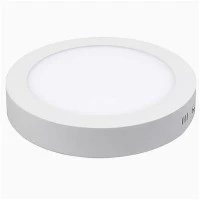
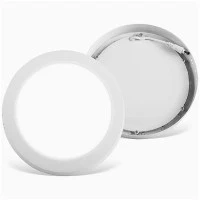
Light-guide plates in panel lights create uniform surface luminance below 3000 cd/m²
Honeycomb louvers with cell sizes <5mm reduce high-angle light emission
2.1.2 Advanced Diffuser Technologies
Comparative performance of diffuser types:
| Diffuser Type | Haze Level | Transmission Efficiency | Glare Reduction |
|---|---|---|---|
| Standard Opal | 85-90% | 75-80% | Moderate |
| Micro-structured | 92-97% | 82-88% | High |
| Nano-particle | 95-99% | 78-83% | Very High |
| Hybrid (micro+nano) | 94-98% | 85-90% | Excellent |
2.2 Thermal-Optical Co-Design
Effective anti-glare solutions require integrated thermal-optical design:
Junction Temperature Control
Maintains stable color temperature (ΔCCT <100K)
Prevents phosphor degradation that increases direct glare
Target junction temperature: <85°C for critical applications
Thermally Stable Materials
Silicone-based optical elements withstand >150°C
Polycarbonate lenses with UV stabilization
Ceramic substrates for high-power applications
3. Electronic Control Methods
3.1 Adaptive Dimming Strategies
Intelligent glare control systems utilize:
Ambient light sensors (0.1-100,000 lux range)
Motion detectors with 180° coverage
Time-based dimming profiles (circadian rhythm matching)
Zone-based control in multi-fixture installations
3.2 Performance Comparison of Control Methods
| Control Method | Response Time | Glare Reduction | Energy Savings |
|---|---|---|---|
| Continuous Dimming | <100ms | 30-50% | 20-40% |
| Step Dimming | 0.5-2s | 20-35% | 15-30% |
| PWM (200Hz+) | <10ms | 40-60% | 25-45% |
| Hybrid (PWM+Analog) | <50ms | 50-70% | 30-50% |
4. Mechanical Design Considerations
4.1 Baffle and Visor Geometries
Optimized shading elements follow specific design rules:
Cutoff angles of 45-60° for general lighting
Depth-to-opening ratios between 1:1 and 3:1
Serrated edges break up sharp shadow lines
Matte black interiors with <5% reflectance
4.2 Mounting Height Guidelines
Recommended installation heights for glare control:
| Application | Minimum Height | Optimal Height | Max Luminance at Viewing Angle |
|---|---|---|---|
| Office Task Lighting | 2.1m | 2.4-2.7m | <2000 cd/m² at 65° |
| Street Lighting | 5m | 6-8m | <3000 cd/m² at 80° |
| Industrial High Bay | 6m | 8-12m | <5000 cd/m² at 75° |
| Retail Accent Lighting | 3m | 3.5-4.5m | <2500 cd/m² at 45° |
5. Photometric Requirements and Standards
5.1 International Glare Metrics Comparison
| Standard | Metric Name | Acceptable Range | Measurement Method |
|---|---|---|---|
| CIE | UGR (Unified Glare Rating) | <19 (offices) | Calculated from luminaire geometry |
| IES | VCP (Visual Comfort Probability) | >70 (recommended) | Subjective evaluation panels |
| EN | GR (Glare Rating) | <50 (road lighting) | Field measurements at eye level |
| DIN | CGI (CIE Glare Index) | <16 (classrooms) | Similar to UGR with modified weighting |
5.2 Luminance Distribution Requirements
Critical photometric parameters for anti-glare designs:
Maximum Luminance Zones
Direct view: <5000 cd/m²
65-75° viewing angle: <2500 cd/m²
75-90° viewing angle: <1000 cd/m²
Luminance Uniformity
Task areas: U0 > 0.7
Ambient lighting: U0 > 0.5
Facades/displays: U0 > 0.8
6. Emerging Technologies in Glare Control
6.1 Active Optical Systems
Next-generation solutions under development:
Electrochromic filters that dynamically adjust transparency
Response time: <1s
Transmission range: 15-85%
Cycle life: >100,000 operations
Micro-electromechanical (MEMS) louvers
Individual louver control
0.1° angular resolution
<5ms response time
AI-based predictive control
Uses occupancy patterns
Adapts to user preferences
Learns from feedback sensors
6.2 Advanced Materials
Innovative materials for future anti-glare solutions:
| Material Class | Key Properties | Potential Applications |
|---|---|---|
| Metamaterials | Negative refraction index | Ultra-precise beam shaping |
| Quantum dot films | Tunable scattering | Color-corrected diffusion |
| Cholesteric LCDs | Directional light control | Switchable glare protection |
| Aerogel composites | Low-density light guides | Weight-sensitive installations |
7. Implementation Best Practices
7.1 Design Process Flow
Glare Analysis Phase
Identify critical viewing directions
Calculate preliminary UGR/GR values
Determine luminance thresholds
Prototyping Stage
3D printed optical prototypes
Ray-tracing simulations (ASAP, TracePro)
Photometric lab verification
Field Validation
In-situ measurements
User feedback collection
Iterative adjustments
7.2 Cost-Performance Optimization
Balancing glare control with economic factors:
| Design Feature | Cost Impact | Glare Reduction Benefit |
|---|---|---|
| Standard Diffuser | +5-10% | 20-30% |
| Precision Micro-optics | +25-40% | 40-60% |
| Active Control System | +50-100% | 60-80% |
| Full Custom Solution | +100-300% | 80-95% |
Conclusion: Holistic Approach to Glare Management
Effective anti-glare LED design requires multidisciplinary integration of optical engineering, thermal management, electronic control, and mechanical design. By implementing the principles outlined above-from advanced diffuser technologies to intelligent adaptive systems-lighting designers can achieve UGR values below 16 for office environments, GR ratings under 30 for roadway applications, and maintain visual comfort in all lighting scenarios. The future of glare control lies in dynamic, responsive systems that automatically adjust to both environmental conditions and user needs while maintaining energy efficiency and visual performance.