Different Types of LED Lights

Today, a wide variety of LED lights are available in different colors, shapes, sizes, and types - a direct result of decades of advancement in semiconductor technology.
From LED dog collars for nighttime walks to vintage-style Edison bulbs, LEDs are everywhere. You might be familiar with office task lights or indicator LEDs in household electronics, but that's just the beginning. LEDs are also used in skin therapy devices, light-up furniture, and countless other applications. Below, we explore the major types of LED bulbs and their uses.
1. Miniature LEDs (Chip, Nano & Pico LEDs)
Miniature LEDs are among the most common types. They are small, often single-color or single-shape LEDs used in devices like remote controls, calculators, and mobile phones as status indicators.
Thanks to their compact design, they can be mounted directly onto circuit boards without extra cooling systems. This makes them ideal for use in advanced electronics and automated systems.
Miniature LEDs are divided into three sub-types:
Standard
Low-current
Ultra-high output
These differ in wattage, voltage, current, and manufacturing specs. There are also 5V and 12V miniature LEDs, which include a built-in series resistor for direct connection to higher-power sources.
2. High-Power LEDs
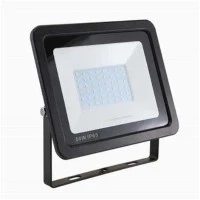
 Advances in diode technology led to the development of high-power (or high-output) LEDs, which produce significantly more lumens than standard LEDs. Some high-power chips can emit thousands of lumens.
These LEDs are categorized by:
Luminosity
Wavelength
Voltage
Because they generate significant heat, they must be attached to a heat-absorbing material (like a heatsink) to avoid overheating. Proper thermal management ensures efficiency, long life, and prevents early failure.
When buying high-power LEDs, always consider heat control and the balance between light output and heat dissipation. These LEDs are commonly used in LED tubes, high-power lamps, car headlights, and industrial applications.
3. Application-Specific LEDs

This category includes LEDs designed for particular functions and can be divided into several sub-types:
Lighting LEDs
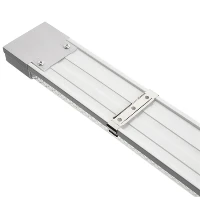
Also called illuminators or LED bars, these come in various shapes and sizes - including popular Edison-style bulbs. To manage heat, many lighting LEDs use finned ceramic or aluminum bodies to improve heat dissipation.
Alphanumeric LEDs
While less common today due to the rise of LCDs, these are still used in displays that show letters and numbers. Sub-types include:
7-segment – Displays numbers and limited letters
4- and 16-segment – Known as star-burst displays; can show uppercase letters and numbers 0–9
Matrix displays – Most versatile; show uppercase, lowercase, numbers, and symbols
RGB LEDs

These contain red, green, and blue emitters that mix to produce various colors. Controlled via electronic circuits, RGB LEDs usually have a 4-pin connection (common anode or cathode). They are used in status indicators, accent lighting, video displays, and light shows.
Bi-Color and Tri-Color LEDs

Bi-color LEDs contain two light-emitting dies wired in inverse parallel, allowing only one die to light at a time. Alternating current creates a color mix.
Tri-color LEDs have two dies with three leads (common anode/cathode setup), allowing each die to light separately or together to produce a third color.
Flashing LEDs
These are attention-grabbing indicators with a built-in integrated circuit that makes them flash at set frequencies. They can connect directly to a power supply without a series resistor and are often used in signs, automotive applications, and safety indicators.
LED technology continues to evolve, offering efficient, versatile, and creative lighting solutions across countless industries and daily uses.