Diffusers, Lenses, and Louvers
In lighting design, light fixtures (or luminaires) are essential for controlling and distributing light effectively. Shielded light fixtures are commonly used to modify the way light is emitted. These fixtures help achieve specific lighting goals, including:
Reducing glare
Diffusing light
Protecting or hiding lamps
Improving the fixture's appearance
There are three primary types of light fixtures used to achieve these objectives: diffusers, lenses, and louvers. Below is a simplified explanation of each type and how they work.
1. Diffusers
A diffuser is a translucent or semi-transparent cover that scatters light. The main purpose of a diffuser is to spread light evenly, reducing brightness and creating a soft, pleasant glow. This is especially useful in spaces where glare needs to be minimized, like offices, classrooms, or areas with lower ceiling heights.
Benefits:
Softens light to reduce harshness and glare.
Evenly distributes light across the space.
Ideal for spaces with lower ceilings, as it reduces direct brightness and creates a comfortable atmosphere.
Materials:
Diffusers are commonly made from glass or plastic. They are typically installed at the bottom or sides of light fixtures to help disperse light effectively.
Example Applications:
Office lighting
School classrooms
Hallways or other spaces with low ceilings


2. Lenses
A lens is a transparent cover that controls how light passes through it. Unlike diffusers, lenses don't scatter the light but can direct it in specific ways to improve its distribution and quality. Two common types of lenses used in lighting are:
2.1 Prismatic Lenses
A prismatic lens has a unique surface texture with small refractive components arranged in a pattern. These lenses are excellent at diffusing light and reducing glare by refracting light at different angles. This helps to soften the light while still maintaining its intensity.
Benefits:
Excellent glare reduction.
Helps distribute light evenly over a larger area.
Improves visual comfort, especially in office settings.
2.2 Polycarbonate Lenses
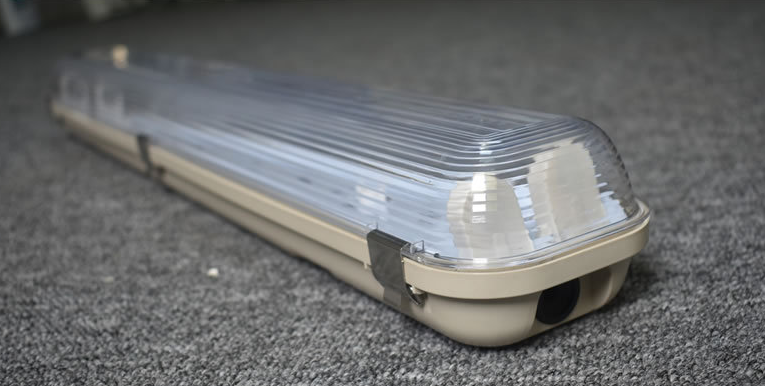
Polycarbonate lenses are highly durable and resistant to impact, making them ideal for harsh or industrial environments. These lenses are often used in vapor-tight fixtures designed for wet or dusty areas.
Benefits:
Extremely durable and impact-resistant.
Ideal for use in wet or harsh environments where other materials may not perform as well.
Example Applications:
Industrial lighting
Wet or dusty environments (e.g., warehouses, parking garages)
Exterior lighting fixtures
3. Parabolic Louvers
A parabolic louver is a reflective baffle system designed to manage light distribution. It uses an open grid pattern with parabolic reflectors (curved surfaces) in each cell of the grid. The purpose of a louver is to direct light downward and reduce glare from the light fixture, making it ideal for spaces where direct light control is essential.
The size and depth of the louver affect how much light is emitted and its distribution. A deeper louver will direct more light downward, while a shallower one will allow more light to spread out.
Benefits:
Directs light downward, reducing light spill.
Reduces glare by controlling light output.
Improves visual comfort by focusing light where it's needed.
Example Applications:
Office lighting (especially above desks)
Classroom lighting
Commercial spaces where bright, focused light is needed without glare

Conclusion
To summarize, diffusers, lenses, and louvers are all integral components in lighting design, each serving a unique purpose:
Diffusers: Scatter light to create a soft, even glow and reduce glare, making them ideal for spaces with lower ceilings.
Lenses: Transparent covers that help direct or diffuse light more precisely, with prismatic lenses reducing glare and polycarbonate lenses offering durability in harsh environments.
Parabolic Louvers: Use reflective grids to direct light downward and reduce glare, making them excellent for focused lighting in workspaces.
Each of these components helps improve the quality and efficiency of lighting in different settings, from home to industrial environments. By selecting the right one, you can achieve optimal lighting performance while enhancing both functionality and aesthetics.