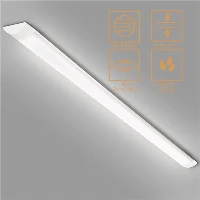
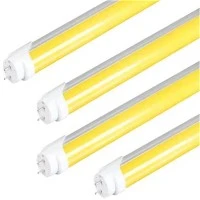
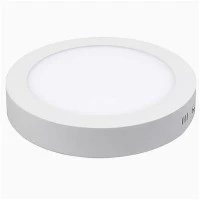
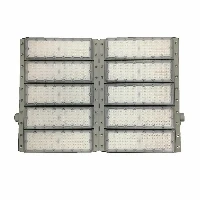
Because of its extended lifespan, energy economy, and diversity, LED panels are widely employed in a variety of lighting applications. Whether or not LED panels emit ultraviolet (UV) radiation is a frequently asked issue. We shall examine the connection between UV emission and LED panels in this article.
An Introduction to LED Panels
Light-emitting diodes, or LEDs, are semiconductors that produce light from electrical energy. To create a consistent light source, several separate LEDs are grouped together in an LED panel. Electroluminescence is the process by which light is emitted in LEDs. An LED's semiconductor material releases energy in the form of photons when electrons recombine with electron holes when an electric current flows across it.
Light Wavelengths Generated by LEDs
LEDs can be designed to emit many light wavelengths, each of which represents a particular hue. The wavelength range of visible light is about between 380 and 780 nanometers (nm). Red LEDs, for instance, usually emit light between 620 and 750 nm, green LEDs between 500 and 570 nm, and blue LEDs between 450 and 495 nm.
The Properties of UV Radiation
The wavelength of ultraviolet radiation is between 10 and 400 nm, which is shorter than that of visible light. Three subcategories are also distinguished: UVA (315–400 nm), UVB (280–315 nm), and UVC (100–280 nm). The Earth's ozone layer absorbs the majority of UVC's high energy. While UVA can penetrate deeper into the skin and also contributes to skin damage, UVB is known to produce sunburn and to have a role in skin aging and the development of skin cancer.
Are UV Rays Emitted by LED Panels?
Generally speaking, premium LED panels are made to emit as little UV light as possible. This is primarily due to the fact that LEDs are designed and function to produce visible light. The bulk of energy is transformed into visible spectrum photons by the engineering of the majority of consumer and commercial-grade LED panels.
Nonetheless, in certain circumstances, LED panels may include a trace quantity of UV radiation:
Incomplete Phosphor Conversion: To produce white light or a wider range of visible light, LEDs frequently employ phosphors to change blue light into other hues. A very small portion of the energy may occasionally be released as UV radiation if the phosphor conversion process is not 100% effective. However, the quantity is incredibly low, typically far below the thresholds that could be extremely harmful to one's health.
LEDs that are flawed or of poor quality: Low-quality LED panels could employ inferior components or have manufacturing flaws. Inappropriate semiconductor material qualities or problems with the phosphor coating and encapsulation may make these defective LEDs more likely to produce some UV light.
Aspects of Safety and Health
Even though LED panels do occasionally release ultraviolet light, the amounts are usually so low that they do not seriously endanger human health. When it comes to UV exposure, LED panels are far safer than conventional light sources like fluorescent bulbs, which can produce comparatively greater UV levels because of the mercury vapor discharge process.
Regulatory agencies have placed restrictions on how much UV radiation lighting items can release in order to guarantee public safety. To guarantee that their goods are safe for consumer usage, LED panel manufacturers must adhere to these criteria.
Final thoughts
In conclusion, although a very small quantity of UV radiation may theoretically be released by LED panels, particularly in situations involving subpar manufacture or insufficient phosphor conversion, the amounts are often insignificant. To reduce any possible UV emissions, high-quality LED panels are made to convert nearly all electrical energy into visible light. When it comes to UV exposure, LED panels are a far safer choice than many other conventional lighting sources from a health and safety standpoint. We may anticipate that makers of LED panels will further optimize their designs as technology develops, lowering even the smallest amounts of UV radiation that could be present at the moment. Because of this, LED panels are a dependable, safe, and energy-efficient option for a variety of lighting applications in the future.