Do plant lights work? Recommended plant lights + where to buy them? A look at the principles, advantages, and disadvantages of plant lights.
Everyone knows that light is one of the food sources for plants, and for plants to grow healthily, adequate light is essential. So, do you know what a grow light is? Are grow lights useful? Have you noticed the recent surge in the use of grow lights? This article will introduce you to grow lights and their benefits. Let's take a look!
What are grow lights?
Grow lights are artificial light sources, also known as plant grow lights, developed to promote plant growth. They mimic the spectrum of sunlight, adding red and blue wavelengths to promote photosynthesis based on plant growth patterns. Grow lights are most often used for indoor cultivation or to provide supplemental light for plants in low-sunlight conditions. The difference between grow lights and general lighting lies in their spectral composition. General lighting is designed for human eye comfort and may lack sufficient red and blue light components to meet the needs of plant photosynthesis. Grow lights, on the other hand, are designed to target the plant growth spectrum and are generally categorized as full spectrum or red and blue spectrum.
Comparison Table of Common LED Grow Lights

Are grow lights effective?
Besides air, water, temperature, soil, and insects, the most important factor affecting plant growth is light! In recent years, grow lights have become an essential tool for indoor growing, as they can create an ideal growing environment for plants without relying on external climate conditions. This is especially important in areas with lower temperatures or insufficient sunlight. Grow lights work by simulating the sunlight spectrum, providing the red and blue wavelengths of light necessary for plant growth. While they can't completely replace natural sunlight, they remain an ideal choice for growers due to their inherent advantages and benefits.
What are the advantages of grow lights?
People who choose grow lights to help their plants grow typically do so because they help them photosynthesize and promote growth. Below, we'll explore three advantages of grow lights and explain why they are such a valuable tool for growing plants.
Grow Light Advantage 1: Providing the Right Amount of Light for Plants
The primary advantage of grow lights is that they supplement sunlight, helping plants photosynthesize even in low-light environments. Grow lights provide stable and sufficient light, meeting the needs of healthy plant growth and adding the red and blue wavelengths that are most effective for plant growth. Furthermore, flowering conditions for plants are also related to light duration and temperature. Grow lights can effectively adjust these light factors, increasing flowering frequency.
Grow light advantage 2: Extending the growth period
Grow lights not only provide a light source but also adjust the range, angle, and intensity of light. Growers should first understand the type of plant they are cultivating, such as full-sun, part-sun, or shade-tolerant plants. Based on this information, they should determine the plant's growth needs. Next, they should select an appropriate grow light for supplemental illumination based on the growing environment and adjust the light's operating time, illumination angle, and spectrum to ensure the plant receives sufficient light energy, extending its growth period.
Grow light advantage 3: Adapting plants to their growing environment
During the seedling stage, to simulate the natural day and night, it is recommended that grow lights be on for at least 16 hours per day and off for 8 hours. As the plant's light needs increase, the on time can be extended to 18 hours per day and off for 6 hours. When plants reach their flowering stage, their light requirements begin to decrease. It's recommended to adjust the daily light cycle to 12 hours of daylight and 12 hours of rest.
Plants also have different light requirements, such as cacti that require full sun and Monstera that require partial shade. Before planting, it's important to thoroughly understand the plant's growth needs to determine the optimal growing method and environment.
What are the disadvantages of grow lights?
There's no such thing as a perfect grow light; each type has its pros and cons. The following three disadvantages of grow lights will help you better navigate your selection process.
Disadvantage of grow lights 1: Requires knowledge of grow light care.
Because grow lights offer significant convenience for caring for indoor plants, many growers prefer to use them for supplemental light and growth. However, beginners often make mistakes due to a lack of understanding. In addition to basic plant care, including watering, nutrients, and environmental adjustments, and the varying light requirements of different plants, it's also important to consider the quality of the grow light and understand its wattage and light spectrum. Furthermore, details such as the distance, angle, and spectrum of a grow light need to be adjusted based on the characteristics of the plants. Without the right conditions, it will be impossible to provide the correct grow light for your plants.
Grow Light Disadvantage 2: Grow Lights Have a Lifespan
Even with proper use, grow lights will eventually break down. The lifespan of a grow light depends on usage and the environment in which it is used. For example, a well-ventilated environment helps dissipate heat, reducing the risk of failure and extending its lifespan. Furthermore, usage habits can affect the lifespan of a grow light. For example, if dust or dirt is not regularly cleaned, the lamp will likely be affected. Therefore, regular cleaning is recommended to extend the lifespan of the grow light.
Grow Light Disadvantage 3: Spectrum Selection is Limited by Living Space
Red and blue spectrum grow lights were developed primarily to promote plant growth and color development. However, the light they produce can create visual conflict, making them unsuitable for use in residential spaces. If you want to grow plants in your living space, it is recommended to choose a full-spectrum grow light. This mimics natural sunlight, making it more comfortable for the human eye and meeting the growing conditions of plants. Therefore, when choosing a grow light, always consider the space and environment requirements.
How to properly install a grow light?
Before installing a grow light, do your research to understand the light source your plants prefer, select the appropriate lamp holder and grow light, and then proceed with installation. For example, for a PAR bulb, screw the bulb clockwise into the fixture and tighten it. Then adjust the distance between the bulb and the fixture. A distance of 30-50 cm is generally recommended. If the plant is in its growth phase, the height of the fixture should be adjusted accordingly.
Where to buy grow lights? Recommended Dancing Light LED Grow Lights
Recommended Grow Lights 1: Full-Spectrum T8 Tubes, E27 Full-Spectrum PAR Lights
Dancing Light full-spectrum grow lights, available in both tube and PAR configurations, simulate the light composition and color temperature variations of sunlight. They are a product developed with modern technology to meet the lighting needs of indoor plants. PAR lights are IP66 certified for water and dust resistance, making them ideal for outdoor installations like balconies and terraces. While sunlight is the most natural full-spectrum light source, it is limited by time and location and cannot provide stable illumination throughout the day. Therefore, sunlight-mimicking full-spectrum grow lights have emerged to create a comfortable sunlight-like environment for indoor plants, freeing them from weather influences and ensuring healthy growth!
Recommended Grow Light 2: Red and Blue Spectrum Grow Lights
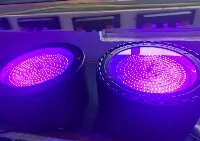
In addition to full-spectrum options, the Dancing Light Grow Light series also offers red and blue spectrum grow lights, including tube and PAR models. PARs are IP66 certified for water and dust resistance, ensuring they can be installed outdoors without any issues. Red and blue spectrum grow lights specifically preserve the red and blue wavelengths that promote flowering and growth. They are ideal for those seeking to accelerate flowering and color development. They optimize both plant growth and appearance.
Frequently Asked Questions about Grow Lights
Do you have a deeper understanding of grow lights? Finally, we've compiled some frequently asked questions about grow lights to help you use them more effectively!
Which growing environments require grow lights?
These environments include balconies or rooms with insufficient sunlight, reduced sunlight in autumn and winter, continuous rain during the rainy season, and indoor grows or greenhouses. Whenever plants lack sufficient sunlight, consider using grow lights to supplement their light supply, helping them photosynthesize and grow successfully.
Can grow lights be turned on all day?
Of course! In indoor environments without natural light, plants rely on grow lights to provide light. However, when using grow lights, growers should adjust the lighting schedule based on the plant's light needs. For example, full-sun plants require at least 12-16 hours of light per day; temperate plants in partial sun require 10-12 hours of light per day, while semi-shade plants require 6-8 hours of light per day. Shade plants require only 4-6 hours of light per day, or even no sunlight at all. However, all living things have their rest periods, so there is no need to keep the plant lights on 24 hours a day!
How to Place Plant Lights at the Right Distance?
When using plant lights to illuminate indoor plants, the distance between the light fixture and the plant is crucial! It's recommended to set the light at least 30-50 cm away, as a light source too close can cause leaf burn. However, if the distance is too far, insufficient light will be provided, affecting plant growth. Therefore, before planting a plant, be sure to research its native habitat and determine whether it prefers high light or low light.
FAQs
Q1. How Can I Get This Samples?
A1: Hi, easy for this.give me your address and tell me which item you need,we will arrange sent to you by DHL or FedEx.
Q2:How About Your Quality?
A2: All raw material with top quality to ensure high luminous and enough brightness.
Q3:What About The Lead Time?
A3:Sample needs 3-5 days, mass production time needs 25-40 days after receving the deposit
Shenzhen Benwei Lighting Technology Co.,Ltd
Telephone: +86 0755 27186329
Mobile(+86)18673599565
Whatsapp :19113306783
Email:bwzm15@benweilighting.com
Skype: benweilight88
Web: www.benweilight.com