Effects of LED Light Quality Combinations on Growth and Leaf Colour of Tissue Culture-Generated Sedum rubrotinctum Plantlets
This study explored the influence of different red and blue LED light combinations on the growth, biomass, pigment accumulation, and leaf coloration of *Sedum rubrotinctum* plantlets produced through tissue culture. The main purpose was to determine the optimal light ratio for improving both growth performance and ornamental leaf color, which can support efficient commercial production of this popular succulent.

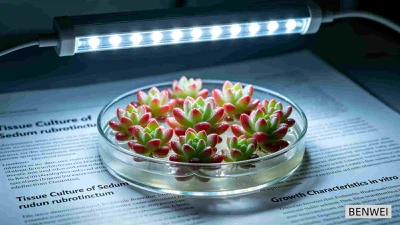
The experiment was carried out in a controlled tissue-culture environment. Six light treatments were tested: pure red light (R), pure blue light (B), white light (W), and three mixed red-blue spectra-4R1B, 3R1B, and 2R4B. After 90 days of cultivation, multiple indicators were measured, including plant height, biomass, leaf and root morphology, chlorophyll and anthocyanin contents, and leaf color parameters. Statistical analyses included ANOVA and principal component analysis (PCA) to compare and rank the overall performance of each light condition.
The results showed that light quality strongly affected growth and appearance. Pure red light promoted the tallest stem elongation but resulted in the lowest biomass, thinnest leaves, and weakest root development. Pure blue light supported better biomass and leaf growth than red light but was still less effective than mixed red-blue light. All combined R/B light treatments significantly outperformed monochromatic R, B, and white light in fresh weight, stem diameter, crown width, leaf number, leaf area, and root growth indexes such as total root length, surface area, and volume.
In terms of pigments and color, mixed R/B light greatly increased chlorophyll content and anthocyanin accumulation. Leaves under 3R1B, 4R1B, and 2R4B showed obvious red coloration, while those under pure R or B light remained green. The redness value (a*) was notably higher in mixed light groups, closely related to elevated anthocyanin levels. Among all treatments, 4R1B achieved the best overall growth, with the highest total fresh weight, thickest leaves, largest leaf area, and strongest root system.
PCA provided a comprehensive ranking of the six treatments: 4R1B > 2R4B > 3R1B > W > B > R. This confirmed that the 4R1B ratio was most effective for balancing vigorous growth and attractive leaf color.
In conclusion, appropriate red-blue LED combinations are far superior to monochromatic red, blue, or white light for tissue-cultured *Sedum rubrotinctum*. Red light promotes stem lengthening, blue light benefits biomass accumulation, and their combination supports balanced, robust growth and enhanced ornamental color. The 4R1B light regime is recommended as the optimal choice for industrial tissue-culture propagation and high-quality production of *Sedum rubrotinctum* and similar succulent plants.
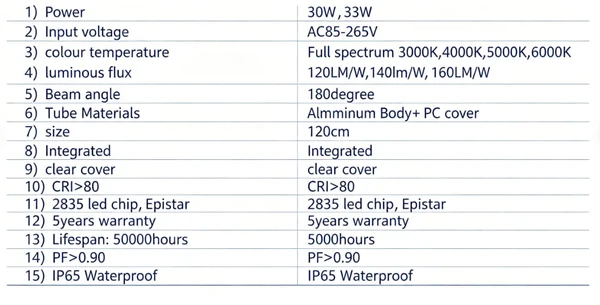
https://www.benweilight.com/lighting-tube-bulb/best-grow-lights-for-indoor-plants.html