When selecting a UV LED lamp for photochemical reactions, it is a strategic decision that can significantly impact the efficiency, precision, and sustainability of your work. The market has moved beyond traditional broad-spectrum lamps towards highly customizable LED solutions.
To help you navigate this specialized field, here is a clear, data-driven guide.
1 , Key Selection Criteria for UV LED Lamps
Selecting the right lamp hinges on three core criteria:
Wavelength Precision: The most critical factor. Different photochemical reactions require specific photon energies. For instance, UVC (200-280nm) is ideal for disinfection and breaking strong bonds, while UVA (315-400nm) is standard for curing and photocatalysis. Your lamp's peak wavelength should match the absorption peak of your photoinitiator or target molecule. A deviation of more than ±10nm can drastically reduce effectiveness.
Spectral Purity (FWHM): Full Width at Half Maximum (FWHM) indicates spectral "purity." A narrower FWHM means more energy is concentrated at your target wavelength. A high-quality UV LED, like those from Benwei, can have an FWHM as low as 12.1 nm, meaning >90% of energy is concentrated near the target wavelength. In contrast, traditional mercury lamps have a much broader FWHM of 20-40 nm and include many useless spectral lines, wasting energy and causing unwanted side reactions.
Power & Scalability: Power requirements vary widely. A 10-100W lamp is suitable for laboratory-scale experiments, while 300-1200W models are designed for industrial mass production. Your lamp should match the scale of your reaction.
🆚 LED vs. Traditional Light Sources
Understanding why UV LEDs are rapidly replacing traditional sources is crucial. Here is a detailed comparison:
| Feature | UV LED Lamp (e.g., Benwei, Kessil) | Traditional Mercury Lamp | Xenon Lamp |
|---|---|---|---|
| Spectral Range | Narrow-band, single or specific multi-wavelength | Broad-band, especially in UV region | Continuous, broad spectrum from UV to visible |
| Energy Efficiency | High, saves up to 80% vs. fluorescent | Lower, more energy is wasted as heat and broad spectrum | Moderate to Low |
| Lifetime | Long, often >50,000 hours | Shorter, degrades over time | Finite, shorter than LED |
| Wavelength Control | Precise, digitally controllable and dimmable | Limited, fixed by mercury spectral lines | Limited, broad output often requires filtering |
| Warm-up Time | Instant on/off, no warm-up required | Requires warm-up time to reach stable output | Requires warm-up and stabilization time |
| Environmental Impact | Mercury-free, RoHS compliant | Contains toxic mercury, requires special disposal | Less harmful than mercury, but less efficient |
| Cost | Higher initial investment, but lower total cost of ownership | Lower initial cost, but higher maintenance and energy costs | Most expensive, justified by high brightness |
| Best For | Specific, wavelength-dependent reactions (e.g., photocatalysis, polymer curing) | General UV-induced reactions (e.g., polymerization) | Research needing high-intensity, broad-band light |
2, Featured Manufacturer: Benwei Lighting
Shenzhen Benwei Lighting Technology Co., Ltd. is a specialized Chinese manufacturer offering highly customizable UV LED solutions for photochemical applications.
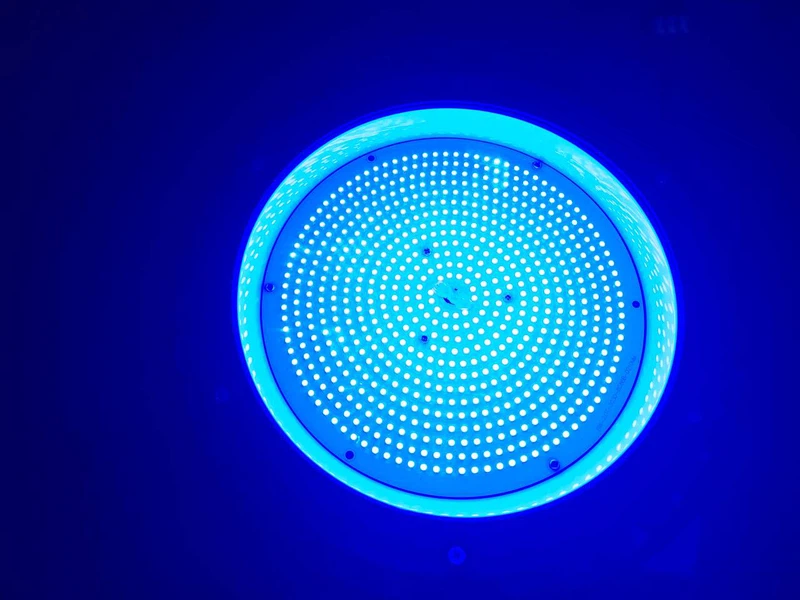
Product Overview: Benwei's UV LED lamps are designed for a wide array of uses including photochemical reaction, UV curing, printing, photocatalytic oxidation, and disinfection.
Wavelength Options: They provide a comprehensive range, from deep UVC (254nm, 265nm) to UVA (365nm, 395nm) and near-UV (420nm, 440nm). This allows you to precisely match the lamp to your reaction's absorption peak.
Power Range: The product line spans an impressive 10W to 1200W, accommodating everything from delicate lab research to heavy-duty industrial processes.
Customization: A key strength is Benwei's ability to custom-make lamps to a client's specific wavelength and power demands, making it an OEM/ODM-friendly source.
Price Reference: While a direct quote is best obtained from the factory, a listing for a Benwei UV LED lamp for pharmaceutical and catalysis applications shows a price range of USD $100 - $3000 per unit, with a minimum order quantity of 1 piece.
3, Benwei vs. Other Market Options
To give you a sense of the competitive landscape, here is how Benwei's customizable lamp stacks up against other types of photochemical light sources:
| Feature / Model | Benwei UV LED Lamp | Kessil PR160L Gen 2 | Ace Glass Mercury Lamp | Sirius Xenon Light Source |
|---|---|---|---|---|
| Type | Customizable OEM LED | Benchtop LED Spot Lamp | Immersion Mercury Vapor Lamp | Broadband Xenon Lamp |
| Wavelength | Broad selection (254nm to 440nm) | Selectable, fixed models (e.g., 275nm, 370nm) | Broad UV spectrum (mercury lines) | Continuous 200-2500nm |
| Power | Highly scalable (10W - 1200W) | Fixed, per model (35W - 58W max) | Fixed (e.g., 450W, 500W) | Fixed (e.g., 300W, 6.6W UV) |
| Spectral Purity | Narrow-band, precise (±1nm) | Narrow FWHM (~12.1nm) | Broad (multiple lines) | Broad, continuous |
| Form Factor | Customizable lamp/array | Compact, plug-and-play unit | Quartz immersion lamp | High-intensity source unit |
| Best For | Custom industrial systems, OEM integration, R&D | Academic research, small-scale precise reactions | Traditional immersion well reactors |
High-intensity, broad-band research
|
4, Recommendations
For Custom Industrial or OEM Integration: If your priority is high power, specific wavelength customization, and a direct relationship with a manufacturer, Benwei Lighting is an excellent choice. Contact them directly for a tailored quote and specifications.
For Academic or Small-Scale Research: If you need a precise, easy-to-use, and safe benchtop instrument for exploring UV photochemistry, the Kessil PR160L Gen 2 is highly recommended.
the ideal UV LED lamp for your photochemical reaction is the one that precisely matches your specific wavelength and power requirements. By focusing on these core parameters, you can move beyond inefficient legacy technologies and unlock the full potential of your photochemical processes. you can see more information on http://www.benweilight.com