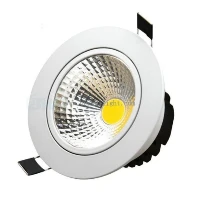
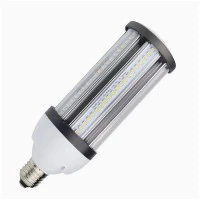
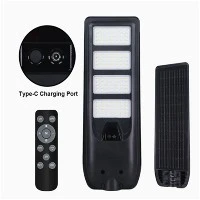
We provide the tennis lights you need for professional center courts and backyards.
Depending on the level of play, which ranges from recreational to professional, different lighting requirements apply to tennis courts. For players and spectators to enjoy a well-lit playing field, tennis facilities must distribute tennis lights evenly.
Standards of Play
Class I: International & National
500 Lux is a high level for professional or international grade.
elite level of competitive play for a sizable audience.
Broadcast tennis matches like the U.S. Open, Wimbledon, etc. are typically included in the facilities.
Class II: Commercial & Club Competition
300 lux is a medium level for club standards.
Average viewing distances, high-level training, and mid-level competition
College facilities that are mostly utilized for recreational or intercollegiate play may be included in Class III: Leisure & Housing
Recreational or lower-level play: 200 lux
Recreational activities, school teams, general training, low-level competition, or local
Lighting Needs for Professional Tennis Organizations
The World Tour and Challenger Tour tournaments are the two categories into which the Association of Tennis Professionals (ATP) divides the standards for tennis court illumination for professional play.
ATP World Tour Competitions
Tennis court lighting for world tour events must be uniformly distributed and have a minimum light intensity of 100 foot candles, or around 1076 lux. The minimum illumination level for televised matches should be around 285 foot candles, or 3,067 lux on average.
Tournaments on the ATP Challenger Tour
Lighting must be equally distributed over the court for Challenger Tour tournaments, with a minimum light intensity of 70 foot candles, or roughly 750 lux.
Tennis Court Lighting Requirements
It is imperative to focus on the needs of tennis court illumination while designing the lighting solution. The following are some prerequisites that you should be aware of.
1.Brightness of tennis court lighting
Brightness is the primary need for tennis court lighting. For players and spectators to see the court well, it must be well-lit. HID lights are used in several courts to illuminate the entire area. Despite their low cost, additional lighting must be installed.
Compared to HID lights, LED tennis lights offer greater brightness levels, making them a superior choice. Technically speaking, metal halide lights can only provide 1,500 to 2,000 watts of power, whereas LED tennis lights can produce up to 10,000 watts.
2. Tennis court lighting efficiency
The effectiveness of the lighting on the tennis court is another criterion. The energy bills are high because the light will be on for the most of the day. LED tennis court lighting, which is renowned for its energy efficiency, can be useful in this situation.
Luminous efficacy is used to calculate the light's efficiency. The efficacy is measured in lm/W, where lm is an abbreviation for lumen. Remember that brightness increases with lumens.
Halogen has 10 to 20 lm/W, metal halide has 75 to 100 lm/W, HPS has 90 to 100 lm/W, and LED tennis court lighting has 120 to 150 lm/W. This indicates that 150 lumens will be produced by LED tennis court lights with a 1 watt power usage. Therefore, compared to alternative lighting options, LED tennis lights will save more electricity.
3. Duration of Life
The lifespan of the light is among the most crucial specifications you should consider. The lights must last a long time because the courts are open late into the night. The lights will need to be replaced more often if they have a low lifespan. This raises the cost of operating in addition to maintenance and replacement expenses. The field lighting is expensive to install.
Since LED tennis lights can last up to 80,000–100,000 hours, they have a lengthy service life. However, metal halide lights can last up to 10,000 hours, whereas halogen lights only last 2000 hours. Therefore, the highest performance is offered by LED tennis lights.
Things to Consider When Buying LED Tennis Court Light
There are several things to take into account when purchasing the best LED tennis lights for a tennis court. These are the items you should think about.
1. Water-resistant
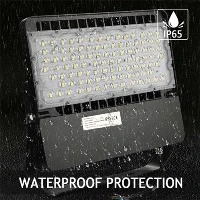
The waterproof nature of the LED tennis light should be one of your primary priorities. For outdoor use, the light must be at least IP65 and have strong waterproofing. You can use these lights anyplace in this fashion. Since LED tennis lights don't contain filaments, brittle glass, or gas discharge, they can operate waterproofly without any problems.
2. Superior Luminous Performance
To lower the maintenance expense, you must purchase a robust and quality LED tennis light. You must use a high-efficiency luminaire while choosing LED tennis lights. This implies that it will consume less electricity and light.
3. Broad Color Temperature Range
You must take the tennis lights' color temperature into account when purchasing the best LED lighting for your court. Cool white, such as that with 5000 to 6000K, is advised. Warm light with a color temperature between 2800 and 3500K is necessary for certain tennis courts.
4. The anti-glare function
The anti-glare functionality is one of the most crucial aspects of the LED tennis court lights. The intense light that irritates or discomforts is called glare. An anti-glare lens on our LED tennis lights lessens the dazzling effect and improves visibility.
6.High Light Uniformity
High light homogeneity is essential for illuminating the tennis court. This displays the minimum-to-maximum lux ratio. Light uniformity of 0.6 to 0.7 is usually sufficient.
5. Dissipation of Heat
Heat dissipation is another crucial element. When it comes to indoor tennis courts, it is lethal since stored heat may shorten the light's lifespan.

https://www.benweilight.com/industrial-lighting/led-stadium-light/led-round-stadium-lights-100w.html