How Can We Use Lighting to Guide, Not Harm, Migrating Birds?
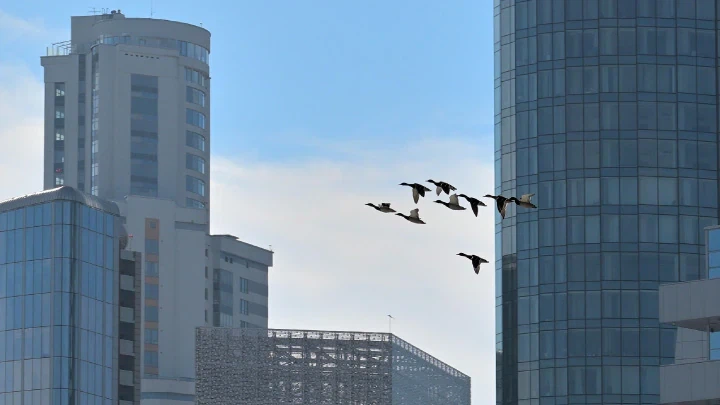
Every spring and fall, billions of birds undertake incredible nocturnal journeys under the cover of darkness. For millennia, they have navigated by the stars. But today, our brightly lit cities pose a deadly, unintended threat. Artificial light disorients them, leading to massive fatalities. The good news is that through smarter lighting technology, we can significantly reduce these risks and help ensure their safe passage.
The Problem: How Light Pollution Becomes a Death Trap
To find the solution, we must first understand the problem. Nocturnal migrants use celestial cues, like the stars, for navigation.
The Attraction Trap: Artificial light from cities, especially white and blue-rich light, scrambles their internal GPS. Birds become attracted to these lights, circling them until they collapse from exhaustion or collide with buildings-a phenomenon known as fatal light attraction.
The Consequences:
Collisions: Disoriented birds fatally strike illuminated buildings, communication towers, and windows.
Exhaustion: Trapped in cones of light, they fly in circles until they deplete their energy reserves, unable to continue their journey.
Disorientation: Entire flocks are pulled off course, failing to reach critical breeding or wintering grounds on time.
The Solution: Bird-Friendly Lighting Technology
By strategically managing the color, direction, intensity, and timing of our artificial light, we can transform a hazard into a harmless background feature.
1. Spectrum & Color: The Shift to Safer Wavelengths
Birds' vision is different from ours; they are particularly sensitive to short-wavelength light (blue and UV).
The Golden Rule: Use longer wavelength light (Amber & Red) and eliminate blue/UV emissions.
Actionable Steps:

Amber LEDs (<3000K): This is the most effective and widely adopted solution. Replacing cool-white LEDs (5000K+) or metal halide lamps with amber LEDs dramatically reduces avian attraction.
Red & Infrared Light: For specific, high-risk locations like offshore platforms, using red or even invisible infrared light can virtually eliminate disruption.
2. Direction & Shielding: Light Where You Need It
Unshielded, upward-facing light is a primary cause of skyglow, which lures birds from miles away.
The Golden Rule: Use fully shielded fixtures that prevent any light from spilling upwards or sideways.
Actionable Steps:
Full-Cutoff Fixtures: Install lighting fixtures designed to cast all their light downward onto the target area (like a street or pathway), with zero light emitted above the horizontal plane.
Add Shielding: Retrofit existing fixtures with shields or hoods to block stray light.
3. Intensity & Dimming: Less is More
Over-lighting wastes energy and increases harm. The goal is adequate, not excessive, illumination.
The Golden Rule: Use the lowest illumination level necessary for safety and security.
Actionable Steps:
Follow Lighting Standards: Adhere to dark-sky-friendly lighting guidelines to avoid over-lighting.
Smart Dimming Systems: Implement controls that automatically reduce light levels late at night when activity is minimal (e.g., dimming to 30% of full power).
4. Timing & Smart Control: The Ultimate Tool – Lights Out
During peak migration, the single most effective action is turning non-essential lights off.
The Golden Rule: Eliminate non-essential lighting during critical migration nights.

Actionable Steps:
Bird Migration Alerts: Leverage weather radar networks (e.g., NEXRAD in the US) that can detect dense flocks of migrating birds in real-time. When a major "flight event" is predicted over a city, an automated alert can be sent to building managers, triggering a city-wide lights-out protocol.
Motion Sensors: For area lighting, use motion sensors so lights are only active when needed.
Success Stories: Cities Leading the Way
Initiatives like the Lights Out program in cities like Chicago, New York, and Toronto have proven highly effective. During migration seasons, hundreds of skyscrapers voluntarily turn off their decorative lighting after midnight, resulting in dramatic reductions in bird collisions-some reports show a decrease of over 80%.
Even the FAA in the United States now permits the use of bird-friendly, flashing white lights on communication towers instead of constantly lit red lights, significantly reducing tower strikes.

Conclusion: A New Paradigm for Nighttime Lighting
Protecting migratory birds with lighting technology isn't about plunging our cities into darkness. It's about working smarter, not harder. The guiding principle is simple:
Use the right amount of the right color of light, in the right place, at the right time.
By embracing amber LEDs, full-cutoff fixtures, adaptive dimming, and lights-out alerts, we can fulfill our needs for safety and security while clearing a safe path for one of nature's most magnificent phenomena. It is a powerful demonstration of how technology and ecology can work in harmony.