High-Power UVA Lamps: Industrial Applications Where Intensity is Non-Negotiable
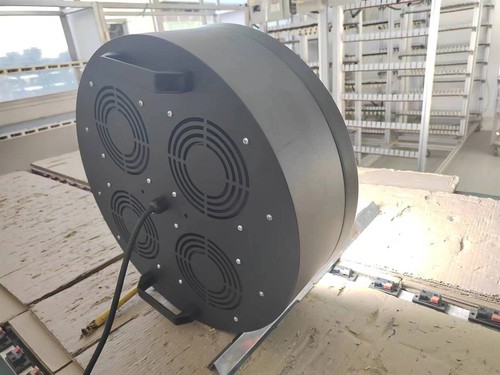
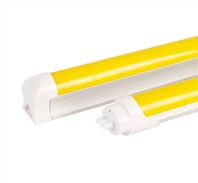
UVA lamps (315-400 nm) emitting 200-800 watts represent a critical tier of industrial photonic technology, deployed where standard low-wattage units fail. Their high radiant flux isn't a luxury – it's an engineering necessity dictated by demanding processes relying on intense photon density. Here's where these powerful emitters excel and why their output is irreplaceable:
Core Industrial Applications Demanding 200-800W UVA:
High-Speed UV Curing of Industrial Coatings, Inks & Adhesives:
Scenario: Curing thick, highly pigmented, or filled coatings on fast-moving production lines (e.g., automotive clear coats, furniture finishes, metal can printing, rigid plastic part assembly, fiber optic coatings). Curing pressure-sensitive adhesives for tapes and labels at high speeds.
Power Need: Curing is a photochemical chain reaction. Power density (mW/cm² or W/cm²) directly dictates cure speed and depth. Lower power = slower line speeds or incomplete curing (tacky surfaces, poor adhesion, reduced chemical resistance). High-power lamps deliver the intense irradiance needed to achieve deep penetration and rapid polymerization (seconds or milliseconds) on complex 3D parts or opaque materials. Systems often use multiple lamps in focused arrays.
Accelerated Weathering & Material Degradation Testing:
Scenario: Simulating years of outdoor UV exposure in weeks or months within environmental chambers (e.g., testing automotive components, aerospace composites, building materials, textiles, solar panel encapsulants).
Power Need: Faithful acceleration requires replicating high solar UV flux levels. Lower-wattage lamps cannot achieve the necessary high irradiance across large sample areas within chambers. High-power UVA sources (often metal halide doped for specific spectral output matching sunlight) provide the intense, uniform flux required for reliable, standardized testing (e.g., ISO 4892-2, SAE J2527). Power ensures tests run efficiently and meet industry protocols.
Large-Scale Photochemical Reactors & Advanced Oxidation Processes (AOPs):
Scenario: Degrading persistent organic pollutants (pesticides, pharmaceuticals, industrial chemicals) in wastewater treatment plants or chemical synthesis reactors using UVA-activated photocatalysts (like TiO₂) or oxidants (like H₂O₂ - "UV/H₂O₂" process).
Power Need: Degradation efficiency depends on photon flux driving the reactions. Treating high flow rates or concentrated contaminants requires massive photon input. High-power UVA lamps provide the volumetric irradiance needed for effective contaminant destruction within practical reactor sizes and residence times. Efficiency scales significantly with power.
Specialized Disinfection & Surface Decontamination (Non-Air/Water):
Scenario: Decontaminating large surfaces or volumes where chemical disinfectants are impractical or leave residues (e.g., food processing conveyor belts, large packaging surfaces prior to filling, specialized cleanroom equipment, bulk material treatment like powders or grains if UVA-effective). Note: Primary germicidal action is UVC, but high-dose UVA can inactivate some microbes and is used where UVC ozone generation or material degradation is problematic.
Power Need: Achieving sufficient microbial log-reduction requires a high UVA dose (Joules/cm² = Irradiance x Time). High-power lamps deliver the irradiance needed to achieve lethal doses quickly over large areas, making the process industrially viable. Lower power would require impractical dwell times.
Semiconductor & Electronics Manufacturing (Niche):
Scenario: UV-induced wafer surface modification, curing of specialized dielectric films or solder masks, and releasing UV-curable temporary bonding adhesives used in wafer thinning/packaging processes.
Power Need: Processes often require very high intensity within specific wavelength bands (e.g., 365nm or 395nm) for rapid, controlled reactions on sensitive materials. High-power focused UVA systems ensure throughput and process uniformity in cleanroom environments.
How High Power Output (200-800W) Enhances Efficacy:
Achieving Critical Irradiance (Power Density): This is the paramount factor. Many photochemical processes have a threshold irradiance below which the reaction rate is too slow or inefficient. High-wattage lamps generate the necessary W/cm² at the target surface, enabling:
Deep Cure Penetration: In thick or opaque coatings, high irradiance drives the reaction deep into the material before surface cure blocks light.
Overcoming Oxygen Inhibition: Higher initiation rates at the surface overcome oxygen quenching in free-radical polymerization (common in acrylates).
Effective Photocatalyst Activation: Ensures sufficient photons reach catalyst sites to generate reactive species (e.g., hydroxyl radicals in AOPs) at rates exceeding pollutant influx.
Enabling High Throughput & Production Speeds: In manufacturing, time is money. High irradiance directly translates to faster reaction times (curing, degradation, disinfection). This allows:
Faster Conveyor Line Speeds: Products can move quickly under the lamp while still receiving the required dose.
Reduced Reactor Size/Volume: Higher power allows treating the same flow rate in a smaller reactor or treating larger flows in the same reactor.
Shorter Test Durations: Accelerated weathering tests achieve target doses faster.
Improving Process Efficiency & Uniformity: High-power systems, when properly engineered with reflectors, can deliver more uniform irradiance over larger areas compared to using numerous lower-power lamps. This reduces "cold spots" and ensures consistent product quality or test results. Higher intensity can also improve the quantum yield (efficiency per photon) of some reactions.
Overcoming Absorption & Scattering: Materials like pigments, fillers, turbid water, or thick coatings absorb and scatter UV light. High incident irradiance ensures sufficient photons penetrate to the required depth or reach the target molecules despite these losses.
Economic Viability: While high-power lamps consume more energy per unit, they often offer lower cost-per-unit-processed due to vastly increased throughput and efficiency. Running one 400W lamp is frequently more economical and manageable than running eight 50W lamps to achieve the same irradiance.
Critical Considerations Beyond Wattage:
Spectral Match: The lamp's emission spectrum must align with the absorption spectrum of the photoinitiator (curing), photocatalyst (AOPs), or target molecule/material. High power is useless if emitted at the wrong wavelengths. Common peaks are 365nm (Hg-line) and 395nm/405nm (longer UVA).
Cooling & Thermal Management: 200-800W lamps generate substantial heat. Effective air or water cooling is essential for lamp stability, longevity, and preventing thermal damage to substrates or reactor components. Cooling design is integral to the system.
Lamp Lifetime & Stability: Industrial processes demand reliability. Lamp lifespan under high-power operation and the stability of output (spectral and intensity) over time are critical factors. Metal halide lamps are common but have shorter lifespans than LEDs (though high-power UVA LEDs >500W are still developing).
Optics & Delivery: Reflectors, focusing lenses, and light guides are essential to efficiently direct the high-power output onto the target area uniformly. Poor optics waste photons and reduce effective irradiance.
Safety: Intense UVA requires strict safety protocols (interlocks, shielding, PPE) to prevent skin and eye damage to operators.
Conclusion:
200-800W UVA lamps are workhorses of industrial photochemistry, enabling processes where photon intensity is the fundamental driver of speed, depth, and efficiency. From instantly hardening coatings on a car bumper to breaking down toxic chemicals in millions of liters of water or simulating a decade of sun damage in weeks, these high-power sources overcome the limitations of lower-intensity light. Their efficacy hinges on delivering the critical irradiance needed to drive photochemical reactions at commercially viable rates and scales, making them indispensable tools in advanced manufacturing, materials testing, environmental remediation, and specialized disinfection. Selecting the right lamp involves careful matching of spectrum, power density, thermal management, and safety to the specific application's demanding requirements.