In the modern world, safety is crucial in public areas, transit networks, industrial locations, and residential and commercial structures. Among other safety equipment, LED emergency lights are essential for directing people to safety in the event of a fire, power loss, or other natural catastrophe. However, how do these lights fare in harsh environments like intense heat, severe cold, high humidity, or dusty air?
In order to explain why LED emergency lights are becoming more and more popular over conventional lighting technologies for crucial safety applications, this article explores the performance, robustness, and dependability of LED emergency lights in challenging conditions and extremely high temperatures.
An Overview of LED Emergency Lighting
When there is a power outage, LED (Light Emitting Diode) emergency lights are made to turn on automatically. When regular illumination fails, these lights are a vital safety element that assist residents in securely leaving buildings or navigating dangerous locations. LEDs provide major benefits over conventional incandescent or fluorescent emergency lights in terms of longevity, light quality, and energy economy.
They are inherently more resilient due to their solid-state design, which eliminates the need for delicate gas tubes or filaments. Because of this, LED emergency lights are especially well-suited for harsh and demanding settings including tunnels, cold warehouses, desert military outposts, and offshore oil platforms.
Effectiveness at High Temperatures
In recent years, LED technology has advanced significantly, particularly with regard to working temperature ranges.
Cold Conditions
The remarkable performance of LED emergency lights in extremely cold temperatures-even below -40°C (-40°F)-is one of their most notable qualities. at contrast to fluorescent bulbs, which have trouble starting at cold temperatures because to the composition of their internal gases, LEDs:
Immediately turn on to maximum brightness.
Because low temperatures minimise thermal losses in semiconductor materials, you will see increased efficiency in colder climates.
When paired with specially made lithium-ion or nickel-metal hydride batteries suited for below-freezing temperatures, they provide stable battery support.
Uses:
Warehouses for cold storage
Structures for outdoor parking
Facilities for Arctic exploration
Ski areas
Warm Conditions
For LEDs, high temperatures pose a greater problem since they can shorten their lifespan and luminous efficiency. Nonetheless, contemporary LED emergency lights come with sophisticated heat management features like:
Copper or aluminium cooling fins and heat sinks
Brightness-regulating temperature sensors that prevent overheating
components with a high temperature rating (drivers, batteries, lenses)
Because of these modifications, LED emergency lights can function at temperatures of at least +50°C (122°F), which makes them perfect for:
Installations in the desert
High ambient temperatures in industrial facilities
Engine rooms and substations for power
Adaptability under Tough Circumstances
In addition to temperature, other factors that LED emergency lights have to deal with include corrosive environments, moisture, dust, mechanical stress, and chemical exposure.
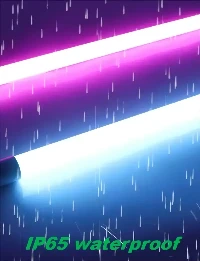
When assessing LEDs for damp or humid environments, Water and Moisture Ingress Protection (IP) ratings are crucial. The following LED emergency lights are rated IP65, IP66, or even IP67:
Waterproof and weatherproof, perfect for outdoor installations or water-exposed indoor spaces (e.g., car washes, swimming pools).
sealed to stop moisture intrusion using gaskets and epoxy coatings.
Depending on their IP rating, they can tolerate full immersion for brief periods of time or high-pressure water jets.
Uses:
Marine ships
Underground and tunnel networks
Industrial restrooms and kitchens
Debris and Dust
Dust buildup can make emergency lights less effective in places like mines, construction sites, or agricultural operations. Typically, dust-resistant LED units include the following features:
IP6X-rated dust-tight enclosures
Anti-static substances that prevent particles from building up
Smooth surfaces that are easy to clean
Even when entirely coated in dust or other particle matter, these lights continue to function dependably.
Resistance to Chemicals and Corrosives
Lights may be exposed to corrosive gases, acids, or seawater in sectors including waste treatment, chemical processing, and oil & gas. These settings' LED emergency lights are:
composed of materials that don't corrode, including coated aluminium, polycarbonate, or stainless steel.
Outfitted with vapor-tight containers
tested to satisfy ATEX and UL844 requirements for hazardous locations.
These durable constructions guarantee that safety lights will continue to function dependably even in extremely reactive conditions.
Battery Life under Harsh Circumstances
Emergency lighting's dependability depends on its backup power supply. Batteries need to be matched to the operating temperature and use condition, especially in hostile settings.
Batteries made of nickel-cadmium (Ni-Cd) and nickel-metal hydride (NiMH) operate well in cold and mild temperatures.
Because of its extended cycle life, thermal stability, and broad temperature range, lithium iron phosphate (LiFePO4) batteries are preferred in many contemporary systems.
Systems that are anticipated to withstand significant temperature swings may be equipped with battery heating or cooling components.
The emergency light's integrated battery management systems (BMS) can keep an eye on the temperature and stop thermal runaway, which is dangerous in hot weather.
Compliance and Certifications
LED emergency lights made for harsh conditions frequently undergo stringent certifications to guarantee dependable performance:
UL924: North American Emergency Lighting Safety Compliance.
IP and IK ratings: Defence against mechanical impacts, dust, and water.
Lighting in hazardous areas must be explosion-proof, which requires ATEX or IECEx certification.
Electrical enclosures subjected to different climatic conditions are rated by NEMA.
In addition to guaranteeing legal compliance, selecting lights with the appropriate certifications verifies that the product has undergone extensive testing for the particular circumstances it will encounter.
Upkeep and Duration
The low maintenance profile of LEDs is one of its primary benefits. They outlive their halogen or fluorescent counterparts by a wide margin, with lifespans of 50,000 hours or more. This is especially important in hazardous or difficult-to-reach areas where regular maintenance is not feasible.
Additionally, a lot of LED emergency lights have self-testing mechanisms that:
Automate the monthly and yearly checkups.
Notify users of circuit issues or battery deterioration.
Make sure the lights are prepared for emergencies at all times.
Over time, this improves system dependability and lowers the possibility of human mistake.
Final thoughts
LED emergency lights are more than simply contemporary, energy-efficient enhancements; they are crucial instruments for guaranteeing safety in the event of crises and power outages, particularly in hostile and severe conditions. Thanks to developments in battery design, sealing technologies, thermal management, and material science, LED emergency lights currently function very well in:
Arctic locations that are freezing
Hot industrial areas
Sites that are moist, corrosive, or dusty
Temperature tolerance, IP/NEMA ratings, battery technology, and compliance certifications are important factors to take into account when selecting LED emergency lighting for such settings. When chosen properly, LED emergency lights provide unparalleled dependability, little upkeep, and long-term affordability, guaranteeing security when it counts most.