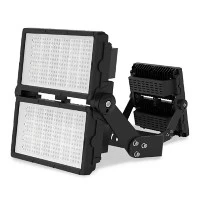
LED (Light Emitting Diode) efficiency is a key factor in determining the quality of LED lighting. In simple terms, LED efficiency refers to the amount of light produced per unit of electrical input. Calculating LED efficiency involves several factors including the luminous efficacy, the input power, and the output light.
The first step to calculate LED efficiency is to determine the luminous efficacy of LEDs. This is the measure of how efficiently light is emitted from an LED relative to the amount of energy consumed to produce it. Luminous efficacy is measured in lumens per watt (lm/W). Generally, high-quality LEDs have a luminous efficacy of over 100 lm/W, which means that they produce more than 100 lumens of light for every watt of electrical input.
The next factor to consider is the input power. The input power is the amount of energy required to operate an LED. This can be measured in Watts. In many cases, LED manufacturers specify the maximum input power for a given LED.
Finally, the output light is a crucial factor in determining the LED efficiency. The output light of an LED is measured in lumens, which is a measure of the amount of light produced by an LED. It is important to note that the output light may vary depending on the light distribution and the color temperature of the LED.
To calculate the LED efficiency, the following formula can be used:
LED efficiency = output light (lumens) / input power (Watts)
For example, if an LED produces 120 lumens at an input power of 1 Watt, the LED efficiency can be calculated as follows:
LED efficiency = 120 lumens / 1 Watt = 120 lm/W
Therefore the LED efficiency is 120 lm/W, which indicates that the LED is highly efficient in terms of producing light relative to the amount of energy input.
In conclusion, calculating LED efficiency is important for ensuring that LED lighting is energy-efficient and of high quality. By considering the luminous efficacy, input power, and output light, we can accurately determine the efficiency of an LED. Ultimately, this will result in cost savings and environmental benefits.