How LED Lights Change Colors?
By Kevin Rao November 18,2025
|
How LED Lights Change Colors? The Technology Behind the Colors: RGB Systems Practical Examples of Color Mixing: Color Temperature: A Different Concept Understanding the Kelvin Scale: |
The ability of LED lights to change colors is a fascinating application of modern technology, creating dynamic and customizable environments for homes, retail spaces, and architectural features. While it's not possible to change the inherent color of a single LED diode, advanced systems combine multiple diodes to achieve this effect. This process relies on the sophisticated blending of red, green, and blue light.
This article explains the technology behind color-changing LEDs and clarifies a key related concept: color temperature.
The Technology Behind the Colors: RGB Systems
The most common method for creating color-changing light is through RGB (Red, Green, Blue) technology. Here's how it works:
The Triad of Diodes: An RGB LED bulb is not a single light source. Instead, it is a compact unit that houses three separate, tiny semiconductor diodes-one red, one green, and one blue.
The Role of Semiconductors: The specific color each diode emits is determined by the material of its semiconductor:
Red diodes are typically made from aluminum gallium arsenide.
Green diodes use gallium phosphide.
Blue diodes rely on indium gallium nitride.
Each material emits a specific, fixed color when an electrical current passes through it.
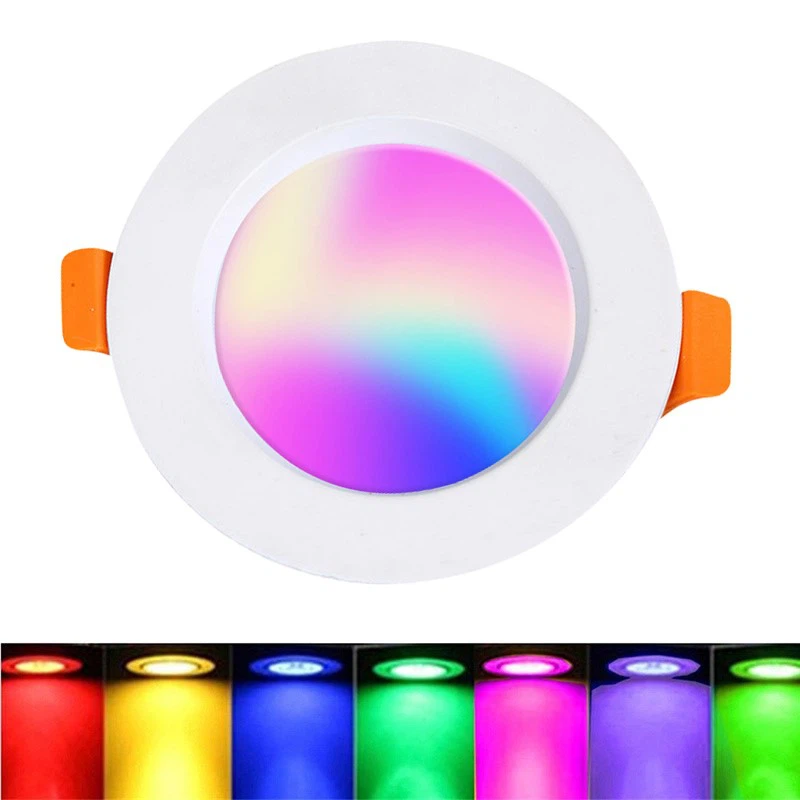
Creating the Spectrum: By independently adjusting the intensity (brightness) of each of these three colored diodes, the LED can produce a vast spectrum of perceived colors. This mixing happens through additive color theory, where different colors of light combine to create new ones.
Practical Examples of Color Mixing:
Red (100%) + Green (100%) + Blue (0%) produces Yellow.
Red (100%) + Green (0%) + Blue (100%) produces Magenta.
Red (0%) + Green (100%) + Blue (100%) produces Cyan.
Red (100%) + Green (100%) + Blue (100%) produces White Light.
By finely tuning the current to each diode to various percentages between 0% and 100%, the system can generate over 16 million unique color shades.
Intelligent controllers and smart technologies manage this precise adjustment of brightness and tone, allowing for full customization, dynamic lighting scenes, and seamless color transitions.
Color Temperature: A Different Concept
It is crucial to distinguish "light color" from "color temperature."
Light Color: Refers to the actual hue of the light, such as red, blue, or green, as produced by RGB systems.
Color Temperature: Refers exclusively to the shade of white light emitted by an LED. It describes whether the white light appears warm (yellowish) or cool (bluish) and is measured in Kelvin (K).
Understanding the Kelvin Scale:
The Kelvin scale for lighting is based on the color change of a theoretical black object as it is heated. Warmer, reddish colors correspond to lower temperatures, while cooler, bluish colors correspond to higher temperatures.
Warm White (2,000K - 3,000K): Creates a cozy, relaxing atmosphere, similar to incandescent bulbs.
Cool White (3,500K - 4,500K): Provides a clean, neutral light, ideal for kitchens and offices.
Daylight (5,000K - 6,500K): Offers a bright, bluish-white light that mimics natural daylight, promoting alertness.
In summary, LED lights change color through the precise blending of red, green, and blue diodes within a single unit, controlled by intelligent systems. Meanwhile, the whiteness of the light-from warm to cool-is separately defined by its color temperature measured in Kelvin. This combination of technologies provides unparalleled flexibility for modern lighting design.
Tel/Whatsapp:+8619972563753
Email:bwzm12@benweilighting.com
Skype:bwzm32
Web:https://www.benweilight.com/