Your energy costs, worker productivity, and safety compliance are all impacted by the lights you choose for your business building. Businesses lose thousands of dollars in maintenance and electricity due to poor lighting decisions.
At Benwei lighting, we assist businesses in navigating the intricate realm of commercial lighting systems. The key elements that decide which fixtures are most appropriate for your particular company requirements are covered in this guide.

Recognizing the Needs for Commercial Lighting
Commercial lighting options are influenced by energy costs; LED fixtures use 50% less power than fluorescent systems and 90% less than incandescent bulbs. Since lighting uses 17% of the energy used in commercial buildings overall, according to the Department of Energy, efficiency is the most important factor in lowering operating costs. Compared to fluorescent lights that burn out after 15,000 hours, commercial LED lights have a lifespan of 100,000 to 150,000 hours and require less maintenance.
Safety Requirements Selection of Drive Fixtures
Consumer goods and professional-grade fixtures are distinguished by UL and DLC certifications. OSHA mandates sufficient lighting levels for worker safety; offices must have a minimum of 50 foot candles and warehouses must have 30 foot candles. In settings where there is moisture, dust, or chemical exposure, vapor-tight fittings become essential. IBC regulations for egress routes and a 90-minute battery backup are requirements for emergency lighting systems.
Specific Task Performance Requirements Quality of Light
Accuracy and worker performance are directly impacted by color temperature. For precise operations, manufacturing facilities require 5000K daylight white, while retail establishments benefit from 3000K warm white, which enhances product appeal. For color-critical applications (such as food preparation or textile manufacture), high CRI scores above 80 are non-negotiable. Ceiling height and surface reflectance must be taken into consideration when calculating lumen output; for high bay applications, 15,000 to 25,000 lumens per light are needed for sufficient coverage.
Fixture requirements are shaped by the installation environment
Specialized fixtures that may endure harsh environments are required. IP65-rated enclosures are necessary in dusty areas, while protective coatings are necessary for fixtures in corrosive environments. LED performance is impacted by temperature variations; certain fixtures are rated to operate between -40°F and 140°F. Fixture type is determined by ceiling height; for spaces over 20 feet, high bay fixtures with focussed beam patterns are usually needed to maintain appropriate foot-candle levels at floor level.
Although the appropriate fixtures must meet the needs of your particular application, knowing the different kinds of fixtures available can help you make an informed decision.
Commercial Building Lighting Types
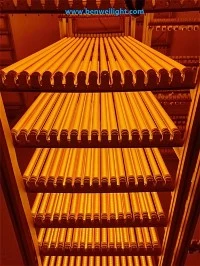
Warehouses and manufacturing facilities with ceiling heights greater than twenty feet are dominated by high bay fixtures. These fixtures use long-range focused beam angles to provide 15,000 to 25,000 lumens per unit. With vapor-tight models rated IP65 for dusty situations and corrosive-resistant coatings for chemical exposure, these workhorses can withstand prolonged operation in challenging environments. Low bay lights, which provide 8,000 to 15,000 lumens with greater beam spreads for even coverage, are most effective in locations with 12 to 20 foot ceilings, such as retail stores and smaller factory units.
Office Lighting Systems Provide Equitable Distribution
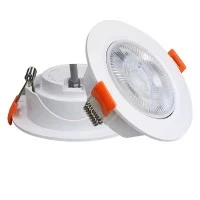
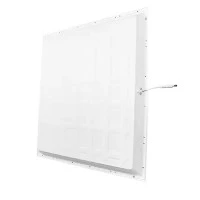
With prismatic lenses that reduce harsh shadows and glare, troffer fixtures provide 3,000 to 5,000 lumens of light while blending in perfectly with drop ceiling grids. In settings where visual comfort is crucial, such as businesses, schools, and medical facilities, these 2x2 or 2x4 foot fixtures perform best. Panel lights are perfect for contemporary office designs and retail areas where aesthetics influence consumer perception because they have slimmer profiles with edge-lit technology that creates consistent illumination without noticeable hot spots.
Fixtures for Outdoor Security Deliver Sturdy Performance
With photocell controllers that turn on automatically at nightfall and motion sensors that increase output when activity occurs, area lights that are mounted on poles offer broad coverage patterns for parking lots and loading docks. With cutoff designs that prevent light trespassing and preserve security coverage, wall pack fixtures, which mount directly to building exteriors, provide 2,000 to 8,000 lumens of illumination. With adjustable mounts that precisely aim light where needed without wasting light on unneeded areas, flood lights provide the highest output levels, ranging from 10,000 to 40,000 lumens, for perimeter security and big outdoor events.

Targeted Solutions Are Needed for Specialty Applications
While providing powerful illumination in overhang areas, canopy lights shield loading docks and petrol stations from the elements (usually 4,000 to 12,000 lumens per fixture). Where standard fixtures cast shadows, strip lights offer continuous linear illumination for stairwells, hallways, and under-cabinet applications. With sealed housings that prevent contamination and provide a constant light output, vapor-proof lights can resist high levels of moisture and chemical exposure found in car washes and food processing facilities.
How well these fixture types fit your unique space needs and operating demands is more important than their performance specs.
Important Considerations for Commercial Lighting Selection
Calculations for lumen output must take into account your exact space needs rather than general suggestions. 48 high bay fixtures with 120-degree beam angles, each producing 25,000 lumens, are required to provide the 1.2 million total lumens that a 40,000 square foot warehouse requires. Overlapping patterns of light eliminate dark areas that pose a risk to safety and lower production, according to the International Association of Lighting Designers. The choice of beam angle is influenced by ceiling height; wide 120-degree spreads are more suitable for applications up to 25 feet, while narrow 60-degree beams function better over 30 feet.
Total Project Costs Are Affected by Installation Complexity
Because existing electrical infrastructure saves labor hours, retrofit installations are 60% less expensive than new construction projects. High bay installations take 45 minutes apiece, plus $200 per day for lift equipment rental, whereas troffer replacements take 15 minutes per fixture. Expert installation avoids warranty voids and code infractions that necessitate costly repairs. Fixture selection is influenced by maintenance access: hanging fixtures that can remove lenses without the use of a tool reduce servicing time by 40% when compared to recessed units that need to have their ceiling tiles removed and ladders placed.
ROI Estimates Show That LEDs Are Better
LED fixtures save energy and require less maintenance, which results in payback periods of 12 to 24 months. While identical LED fixtures use 18,000 watts and cost $1,800 annually, a 100-fixture fluorescent system using 54,000 watts costs $5,400 in power at $0.10 per kWh. By eliminating ballast replacements and reducing lamp changes from twice a year to once every ten years, LED fixtures add an additional $2,000 in maintenance savings each year. According to the Energy Star program, companies that convert to LEDs see an average 75% reduction in energy use, with medium-sized facilities saving more than $50,000 over a ten-year period.
Optimize Energy Efficiency with Smart Controls
Depending on the amount of natural light present, daylight harvesting systems decrease lights, and occupancy sensors cut down on runtime by 30%. Motion sensors reduce energy consumption by up to 40% in low-traffic areas by increasing output when activity occurs and decreasing it during idle periods. Energy waste from forgotten lights in idle regions is avoided thanks to networked controls, which provide facility managers the ability to monitor and modify several zones from a single dashboard.


Our address
No. 5-3 Niujiao Road, Yanchuan Community, Yanluo Street, Bao'an District, Shenzhen
Phone Number
+86 18659785153
bwzm04@ledbenweilighting.com