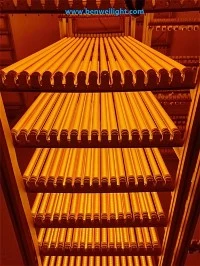
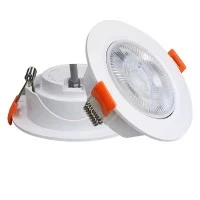
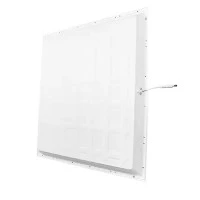
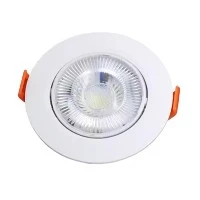
The Blue Light Risk from Classroom LED Tubes
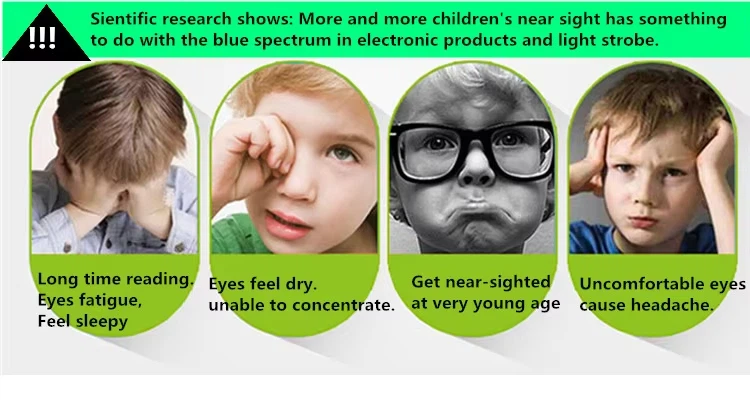
In recent years, LED tubes have been widely adopted in classroom lighting due to advantages like energy savings and long lifespan. However, the high-energy blue light (wavelength 400-500 nanometers) in their light source can negatively affect students' visual health and circadian rhythms. Adolescents are particularly vulnerable because the lenses in their eyes are more transparent to light (about 70% transmittance compared to only 20% in adults), allowing more blue light to reach the retina and potentially increasing the risk of accelerated myopia progression.
Mechanisms of Blue Light Hazard
Visual Damage: High-energy blue light (particularly in the 415-455 nm band) can penetrate the eye and reach the macular region of the retina, triggering photochemical oxidation reactions. Long-term exposure may lead to retinal cell damage.
Circadian Rhythm Disruption: Blue light (especially around 460 nm) significantly suppresses melatonin secretion. Exposure to blue light at night can disrupt sleep cycles, making it difficult to fall asleep.
Key Safety Standards and Classifications
According to international standards, the blue light hazard of luminaires is classified into main risk groups:
| Hazard Group | Core Requirement & Application Scenario |
|---|---|
| RG0 (No Risk) | Mandatory requirement for classroom lighting. Luminaires in this group are safe for unlimited duration use and pose no blue light hazard. |
| RG1 (Low Risk) | Generally not permitted for use in core classroom areas. |
| RG2 (Medium Risk) | Unsuitable for any classroom environment. |

How to Select Safe Classroom LED Tubes (Core Protective Measures)
To ensure student safety, the following principles should be followed when selecting and designing classroom lighting:
Confirm Safety Rating: It is essential to choose LED tubes that are clearly labeled with a "Blue Light Hazard Group: RG0". This is the most important baseline requirement.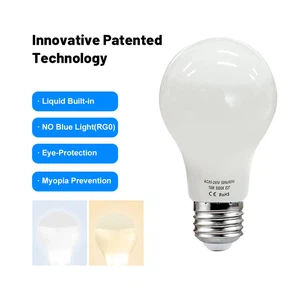
Control Correlated Color Temperature (CCT): Prioritize light sources with a lower CCT. It is recommended to use warm white or natural white light in the range of 3000K to 4000K, and avoid cool white light above 5000K, as the latter typically contains a higher proportion of blue light.
Optimize Spectral Power Distribution (SPD): Choose products that can reduce the peak intensity of harmful blue light. Advanced technologies (such as using violet chips to excite phosphors, quantum dot filtration, etc.) can shift the blue light peak from the high-risk area around 450 nm to the relatively safer region above 470 nm.
Reasonable Lighting Design:
Appropriate Illuminance: Maintain desk illuminance around 300 lux (lx), avoiding excessive pursuit of high illuminance levels.
Uniform Light Distribution: Use a checkerboard layout to ensure even light distribution and prevent glare from localized bright spots.
Correct Installation: Luminaires should be installed above the aisles between desks, avoiding direct light immediately above students' heads.
Use Protective Light Diffusers/Covers: Installing professional protective covers or diffusers designed for LED tubes has been shown to reduce the peak blue light intensity by 42%-58%, and can also reduce glare, significantly alleviating visual fatigue.

Summary
Classroom lighting safety cannot be overlooked. By mandating the use of low-CCT LED tubes rated RG0, combined with scientific lighting design and necessary protective measures (like adding diffusers), we can fully utilize the energy-saving benefits of LED technology while effectively mitigating its potential blue light hazards, creating a healthy and comfortable visual learning environment for students.
Tel/Whatsapp:+8619972563753
Email:bwzm12@benweilighting.com
Skype:bwzm32
Web:https://www.benweilight.com/