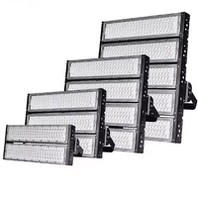
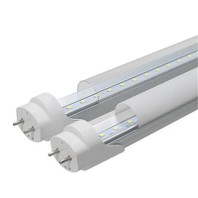
Choosing a good quality LED light requires comprehensive consideration from multiple dimensions such as light source technology, heat dissipation design, driver power supply, brand certification, etc.
The following is a detailed purchase guide to help avoid common misunderstandings:
I. Core parameter indicators
1. Light source chip
Give priority to chips from well-known brands:
High-end chips: Cree, Nichia, OSRAM, Lumileds.
China high-quality chips: Sanan Optoelectronics, Epistar , Huacan Optoelectronics.
Chip size: Large-size chips (such as 3030, 3535) have better heat dissipation and lower light decay than small-size chips (such as 2835).
2. Light efficiency (lm/W)
The higher the light efficiency, the more energy-saving:
Ordinary LED lights: 80~100 lm/W
High-end LED lights: 150~180 lm/W (such as COB integrated light sources)
Beware of false labeling: Low-quality products often falsely label light efficiency, and you need to check the third-party test report.
3. Color rendering index (CRI/Ra)
Recommended for home use: Ra≥80: can restore the true color of objects (such as food, clothing).
Select Ra≥95 led lamp for high-demand scenes: museums, art galleries, high-end retail stores.
4. Color temperature (K value)
Warm white light (2700K~3300K): bedroom, dining room.
Natural light (4000K~4500K): living room, office.
Cold white light (5000K~6500K): kitchen, warehouse.
II. Key hardware design
1. Heat dissipation structure
Material: Aluminum heat sink (high thermal conductivity) is better than plastic or inferior metal.
Design: Fin heat dissipation > closed shell, the larger the heat dissipation area, the longer the life.
Test method: Touch the lamp body after lighting for 10 minutes, and the lamp that is obviously hot has poor heat dissipation.
2. Driving power supply
Constant current power supply > RC voltage reduction: Constant current power supply can stabilize current and reduce light decay (see if the product is marked with "constant current driving").
Brand power supply: such as Inventronics, Mean Well.
Waterproof level: IP65 or above for humid environments (such as bathrooms).
III. Certification and test report
1. Authoritative certification
Safety certification: Domestic mandatory 3C certification, CE, RoHS ,SAA ,UL, etc. for export products.
Energy efficiency label: China Energy Efficiency Label (Level 1 is the best), US Energy Star.
2. Light decay data
LM-80 report: Light decay test report provided by the manufacturer, showing the lumen maintenance rate of LED at high temperature.
L70 life: the time when the light decay reaches 70% (such as the nominal L70 is 50,000 hours, better than 30,000 hours).
4. Guide to Avoiding Pitfalls in Purchasing
1. Price Traps
Low price ≠ cost performance: Products below the market average price may use inferior chips or drivers.
Reasonable price range:
2. Identification of promotional words
"No flicker": Use a mobile phone camera to point at the light, and the ripples are inferior drivers.
"Extra-long life": If there is no LM-80 report or L70 data, it may be a false label.
5. Scenario recommendations
1. Home lighting
Brand recommendations: Philips, OPPLE, NVC, Yeelight (smart linkage).
Key parameters: Ra≥80, adjustable color temperature, no blue light hazard certification.
2. Commercial/industrial lighting
Brand recommendations: Citizen, Panasonic, Sanxiong Aurora.
Key parameters: IP protection level, L70 life ≥ 50,000 hours.
VI. Test method (when purchasing in physical stores)
Stroboscopic test: Use the slow motion mode of the mobile phone to shoot the light, preferably without ripples.
Color rendering test: When illuminating colored objects (such as fruits), the more natural the color, the higher the color rendering index.
Heat dissipation test: After continuous lighting for 30 minutes, the radiator temperature should be lower than 60℃ (slightly warm to the touch).
Good quality LED lights = high-quality chips + efficient heat dissipation + constant current drive + authoritative certification. When purchasing, give priority to brand products that provide LM-80 reports, and avoid only looking at wattage and price. If used in high-frequency usage scenarios (such as more than 8 hours a day), it is recommended to directly choose commercial-grade lamps, which have lower long-term costs.
you can buy high quality 5years warranty with high lumen on http://www.benweilight.com