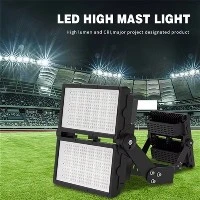
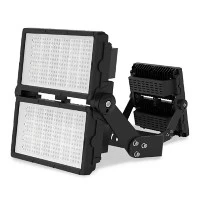
Standard lighting solutions are frequently unable to address the special lighting requirements of metal buildings. In manufacturing facilities, warehouses, and agricultural buildings, inadequate lighting has an impact on energy costs, safety, and productivity.
For metal building applications, Benwei lighting is aware that choosing the best LED lights necessitates carefully weighing variables including ceiling height, ambient circumstances, and long-term endurance.
What Lighting Needs Are There for Metal Structures?
Accurate lighting estimates based on quantifiable parameters that directly affect costs and performance are necessary for metal buildings. According to the Illuminating Engineering Society, a 40,000 square foot warehouse with 30-foot ceilings needs roughly 50–75 foot candles for general operations, whereas precise work areas require 100+ foot candles. Spaces over 20 feet are best suited for high bay LED lights with 20,000–30,000 lumens, whereas lower ceiling applications under 15 feet are better served by linear or panel lighting with 4,000–8,000 lumens per unit.
Fixture Selection Is Determined by Ceiling Height
Mid-bay fixtures with 120-degree beam angles are necessary for buildings with ceilings between 15 and 25 feet in order to produce even lighting distribution free of dark areas. In order to efficiently focus light downward, facilities longer than thirty feet must have fixtures that provide 30,000 lumens with narrow beam angles of sixty to ninety degrees. Because of the inverse square law, which states that doubling mounting height results in a 75% reduction in light levels, choosing the right fixtures is crucial to preventing situations where there is either too much or too little light.
Conditions of the Environment Shape Durability Requirements
Temperature fluctuations in metal buildings range from -20°F to 120°F, necessitating LED drivers rated for harsh environments and thermal control systems that avoid premature failure. IP65-rated fixtures with sealed housings are required for humidity levels above 60% in order to stop moisture intrusion, which can lead to corrosion and electrical failures. Fixtures with smooth surfaces and few dust-collecting crevices are necessary for manufacturing and agricultural operations where airborne particles are present. This lowers the frequency of maintenance from monthly to quarterly cleaning cycles.
Patterns of Light Distribution Impact Productivity
For typical storage spaces where even lighting eliminates shadows between tall shelving units, wide beam patterns are ideal. Assembly lines and other task-oriented areas need asymmetric distribution patterns that focus light exactly where employees need it most. Studies on workplace lighting conducted by the American Society of Safety Professionals have shown that this method can enhance accuracy rates by up to 23% while reducing eye strain.
Power Needs and Calculations for Load
The total wattage load of all fixtures plus a 20% safety margin for future growth must be supported by the electrical systems in metal buildings. About 30kW of electrical capacity is needed for a typical 100,000 square foot facility with 150 high bay LED lighting, each of which uses 200 watts. In contrast to 120V or 240V systems, the majority of metal structures employ 480V three-phase power distribution, which lowers installation costs and wire gauge requirements.
The LED qualities that are most important for your particular metal building application are directly influenced by these technical requirements.
What LED Specifications Matter Most?
LED fixtures for metal buildings must meet certain performance standards that have an immediate effect on labor productivity and operating expenses. The main way to measure the amount of light is by lumen output; depending on the application and mounting height, industrial facilities need between 15,000 and 40,000 lumens per fixture. Long-term power costs are determined by energy efficiency ratings expressed in lumens per watt; high-performing LED lighting can achieve 130–150 lumens per watt, whereas older metal halide systems can only produce 80–100 lumens per watt. Over the fixture's 50,000-hour lifespan, this efficiency differential translates into a 40–50% reduction in energy use.
Work Performance Is Affected by Color Temperature
Color temperatures between 4000K and 5000K are advantageous for metal buildings because they produce brilliant white light without the harsh blue tint of 6000K+ alternatives. According to research from the National Institute for Occupational Safety and Health, manufacturing firms that employ 5000K LED lighting claim 15% fewer assembly errors. 4000K temperatures are more effective for agricultural uses because they lessen cattle stress while preserving worker visibility. Workers can reliably differentiate colors when the Color Rendering Index is above 80, which helps to avoid expensive errors in material handling and quality control procedures.
Optimize Energy Savings with Smart Controls
In locations with sporadic occupancy, such as loading docks and storage zones, motion sensors can save energy use by 30–60%. They are especially useful in establishments with erratic work schedules. Daylight harvesting systems reduce daytime power use by 25–40% in buildings with sufficient fenestration by automatically dimming bulbs when natural light streams in through skylights or translucent panels. Facility managers may independently arrange lighting zones, track energy consumption in real time, and get maintenance notifications before lights break thanks to sophisticated networked controls. Usually, these control systems pay for themselves in 18 to 24 months thanks to lower energy expenses and longer fixture life from better operating cycles.
Thermal Control Avoids Untimely Failure
In order to preserve their rated performance and lifespan, LED high bay fixtures must effectively disperse the heat they emit. In comparison to simple designs, high-quality lights use aluminum heat sinks with fins that increase surface area by 300–400%. This eliminates thermal degradation, which is responsible for a 30% reduction in light output within two years. Since passive cooling systems don't have any moving elements that could break down in humid or dusty environments, they perform best in metal buildings with significant temperature fluctuations.
Your metal construction project's installation and long-term maintenance requirements are directly impacted by these standards.
How to Install LED Lighting in Metal Structures?
Installations of metal buildings call for specialized mounting hardware that can tolerate structural movement and thermal expansion. Aircraft cable suspension systems rated for 50% higher than fixture weight are required for steel purlins and I-beams in order to account for wind loads and equipment vibration. In industrial settings, aviation cable systems retain their integrity for more than 15 years, whereas chain mounting breaks down after 3–5 years owing to metal fatigue.
Techniques for Mounting at Various Heights
With 6–12 inch stems that place lights beneath structural obstacles while preserving the right light distribution angles, pendant mounting is most effective for fixtures over 25 feet. Although it cuts installation time by 40%, surface attachment straight to structural components restricts the flexibility of future arrangement modifications. In buildings with varied ceiling designs, suspended fixtures provide improved control over light dispersion and simpler maintenance access.
Retrofits for Electrical Systems
When compared to 277V systems, the majority of metal structures employ 480V three-phase distribution, which requires 60% less wire gauge. With no panel improvements, LED retrofits frequently function within the current electrical capacity since existing metal halide ballasts use 20–30% more power than the rated fixture wattage. Copper pigtails are necessary at connection locations for older buildings with aluminum wiring in order to prevent galvanic corrosion, which can result in voltage drops and fire hazards.
Power Factor and Circuit Protection
Because LED fixtures have different power factor characteristics than discharge systems but lower inrush current, circuit breaker sizing needs to be adjusted. To avoid overcorrection that harms LED drivers, power factor correction capacitors from outdated ballast systems must be eliminated. The majority of industrial LED lights run at a power factor of 0.9 or higher, which removes utility fines for low power factors, which can raise monthly electricity bills by 15% to 20%.
Quality of Components and Warranty Coverage
10-year warranties with assured lumen maintenance above 90% for the duration of the warranty should be included with industrial LED lighting. Since 80% of issues with LED fixtures are caused by driver failures, distinct 7-year driver warranties denote higher-quality parts. Fixtures with field-replaceable drivers save $200–300 each failure compared to replacing the entire fixture, but they initially cost $40–60 more. Because metal structures undergo significant heat cycling that is above the capabilities of ordinary commercial fixtures, temperature derating standards are more important than basic IP ratings.
Concluding remarks
LED lights with color temperatures between 4000K and 5000K, CRI values above 80, and lumens ranging from 15,000 to 40,000 per fixture are required for metal building facilities. While effective thermal management avoids the 30% light degradation that occurs in poorly designed lights, motion sensors and daylight harvesting controls save energy use by 30–60%. High-quality LED lights with 50,000-hour lifespans and energy savings of 40–50% result in payback periods of 18–36 months for metal construction applications.
Aircraft cable mounting systems, appropriate circuit protection, and power factor management are necessary for a successful installation. LED retrofits without electrical panel changes are usually possible in facilities with existing 480V three-phase systems. Field-replaceable drivers and high-quality fixtures with ten-year guarantees prevent maintenance interruptions and lower long-term replacement expenses.
At Benwei lighting, we specialize in LED solutions for metal buildings that satisfy the exacting specifications of industrial settings. To assist facility managers in assessing their LED conversion initiatives, our team offers lighting arrangement designs and ROI analyses. These services assist in making well-informed decisions on lighting investments for metal buildings, especially for establishments with intricate operating needs.


Our address
No. 5-3 Niujiao Road, Yanchuan Community, Yanluo Street, Bao'an District, Shenzhen
Phone Number
+86 18659785153
bwzm04@ledbenweilighting.com