Ahhh, the satisfying sound of another bug hitting the dust on a steamy July night. Thousands of innocent insects are drawn to their unfortunate end by the bug zapper's eerie, alluring blue glow. A 2,000-volt wire grid is waiting for phototactic creepy crawlies as they move toward the light.
Even though these tiny execution cells are helpful, farmers attempting to prevent insects from eating priceless stored grains and other products will find little use for them. Insecticides are typically used by farms to manage pests like beetles and moths. Finding an alternative would be optimal, though, as insecticides are toxic to people. Now, such a choice might be available.
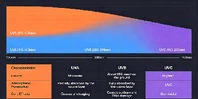
In the publication Scientific Reports, Japanese experts from Tohoku University explain how specific visible light wavelengths can kill particular bug species. For instance, while ultraviolet A light (wavelength = 378 nm) was only about 40% deadly to fruit fly pupae, blue light (wavelength = 467 nm) was nearly 100% fatal.
The writers continued by demonstrating that fruit fly embryos were also killed by blue light (467 nm). Any individuals who lived through the light therapy had significantly shorter lives and laid fewer eggs.
Other insects were similarly destroyed by visible light, but at various frequencies. The authors demonstrated that while pupae of the confused flour beetle (Tribolium confusum) were killed by several various wavelengths of light, spanning from violet to blue, pupae of the London Underground mosquito (Culex pipiens molestus) were killed by violet/indigo light (417 nm).
The writers come to the conclusion that species-specific and wavelength-dependent mortality caused by visible light exists. In other words, certain categories of light only destroy specific types of bugs, whereas other types of light only kill specific types of bugs. Additionally, earlier study indicates that the insects are perishng because blue light probably causes the production of reactive oxygen species, which harm crucial molecules and cellular structures.
Farmers could use this information to exterminate specific species of pest insects while sparing the lives of benevolent insects, which is a clear advantage of their study. Additionally, it would lessen the need for pesticides. The drawback is that in order to eliminate all of the bugs that pose a danger to farms, numerous light wavelengths (and thus, numerous LEDs) would be needed. UVC light, the most deadly form of UV light, would therefore be much more effective at destroying insects. The UVC light itself, however, has disadvantages, including its random bug killing and toxicity to people and other animals.

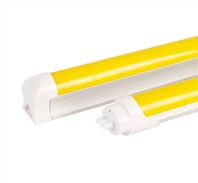
Benwei UV 120cm led tube black light Product Specification:
|
Item |
UV led light tube bulb T8 |
|
Input Volt |
AC85-265V |
|
Power |
10W,18W,24W |
|
Length |
60cm/2ft, 120cm/4ft, 150cm/5ft |
|
Bean Angle |
120°, 180° |
|
Lifespan |
50000 hrs |
|
Wavelength |
365nm 395nm 254nm 280nm |
|
Warranty |
3-5 years |