When selecting LED grow lights for your greenhouse, plant factory, or outdoor growing operation, have you noticed the "IP65" or "IP67" mark on the specification sheet? This seemingly insignificant two-digit code could be the difference between your lights lasting three years or just three months. What exactly does IP67 mean? And why isn't IP65 enough for grow lights? This article explains the international standards for IP ratings, compares the practical differences between IP65 and IP67 in real growing environments, and shows you, with data and facts, what level of protection can truly withstand long-term exposure to high‑humidity conditions.
1. Understanding the Two Digits of the IP Rating
IP stands for Ingress Protection, defined by the International Electrotechnical Commission (IEC) in standard IEC 60529 (adopted equivalently as GB/T 4208 in China). An IP code consists of two digits:
- First digit (0–6) : Dust protection level. "6" is the highest – completely dust‑tight. No dust can enter the fixture.
- Second digit (0–9K) : Water protection level. Higher numbers indicate stronger water protection, but the test conditions are very different.
Table 1: Detailed Test Conditions for Common IP Water Protection Ratings
| IP Rating | Dust Protection | Water Test Method | Key Capability | Critical Limitation |
|---|---|---|---|---|
| IP44 | Protects against solids >1mm | Splashing water from any direction | Light rain, basic splash resistance | Not rain‑ or jet‑proof |
| IP65 | Completely dust‑tight | 6.3mm nozzle, water jets from any direction, ≥3 min | Rain‑proof, low‑pressure hose wash | Cannot be immersed |
| IP66 | Completely dust‑tight | 12.5mm nozzle, powerful water jets, ≥3 min | Heavy seas, high‑pressure wash | Cannot be immersed |
| IP67 | Completely dust‑tight | Immersion at 1m depth for 30 min | Protection against accidental immersion | Not for prolonged immersion |
| IP68 | Completely dust‑tight | >1m depth, duration defined by manufacturer | Continuous immersion | Check depth/time limits |
(Test data based on IEC 60529 and public information from third‑party testing laboratories)
⚠️ Important misconception: IP65 protects against low‑pressure water jets but not against immersion; IP67 protects against short‑term immersion but may not withstand high‑pressure jets. They are not interchangeable, nor is it a simple linear upgrade – passing IPX6 does not automatically satisfy IPX5; each level must be independently verified.
2. The Harsh Humid Environment for Grow Lights – Worse Than You Think
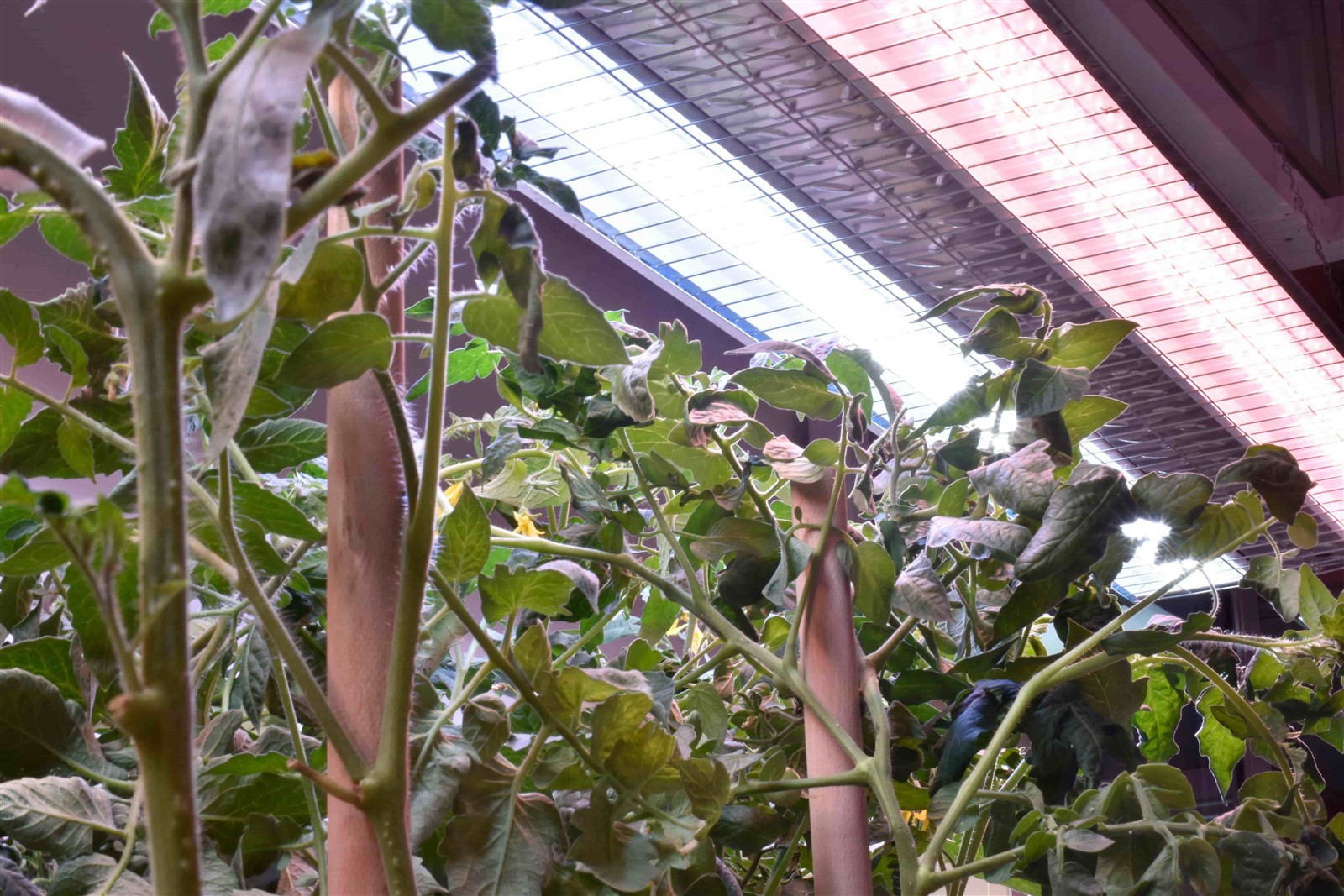
Operating conditions in greenhouses, plant factories, and outdoor cultivation are vastly different from ordinary indoor spaces. Relative humidity remains high year‑round, water mist or droplets are present during irrigation, and some facilities require regular washing. When ordinary indoor LED lights are used in such environments, moisture ingress into internal electronic components is a primary cause of early failure.
Take inter‑canopy lighting as an example. Plant transpiration releases large amounts of water vapor within the canopy, causing relative humidity to often soar above 90% – sometimes near saturation. In these areas, light fixtures are not only continuously exposed to high‑humidity air but also face the following specific challenges:
- Condensation cycles: Temperatures rise during the day, increasing transpiration; at night, temperatures drop and water vapor condenses on the fixture surfaces, periodically "soaking" the housing.
- Chemical corrosion: Greenhouse air is not pure water – it contains fertilizer residues, sulfur fumigants, pesticides, and other chemicals. This "chemical soup" quickly degrades ordinary sealants and plastic gaskets.
- Hydroponic splashing: In deep flow technique (DFT) systems, roots are continuously immersed in nutrient solution. During water changes and maintenance, nutrient solution may splash onto the lights. If a pipe bursts or water levels fluctuate abnormally, lights may be briefly submerged.
Table 2: Challenge Levels and Recommended IP Ratings for Different Growing Scenarios
| Growing Scenario | Typical Humidity | Main Moisture Source | Splash/Immersion Risk | Recommended Minimum IP Rating |
|---|---|---|---|---|
| Home indoor growing | 40–60% | None | None / very low | IP20–IP44 |
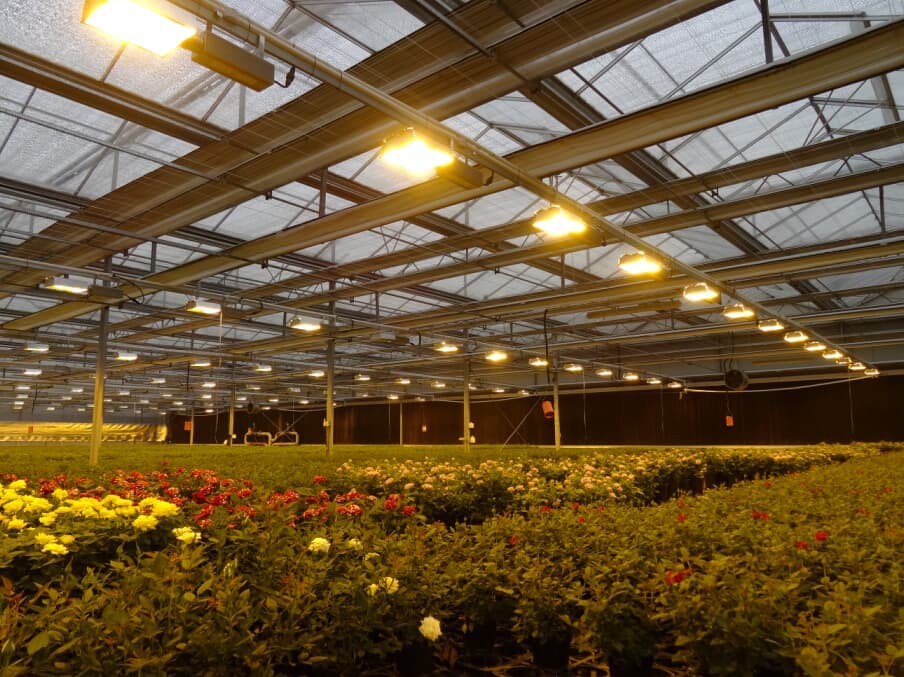
| General greenhouse (top lighting) | 60–85% | Irrigation system, condensation | Possible splashing | IP65 |
| High‑humidity greenhouse (canopy lighting) | 85–98% | Transpiration + irrigation + condensation | Persistent high humidity + condensation | IP67 |
| Hydroponic system (DFT/NFT) | 70–95% | Nutrient solution splashing, condensation | Splashing + short‑term immersion risk | IP67 |
| Outdoor growing | Varies with weather | Rain, irrigation | Heavy rain + accidental ponding | IP67 |
| Facilities requiring regular washing | - | High‑pressure water jets | Powerful water impact | IP66 or higher |
3. Common Failure Modes of LED Grow Lights in High‑Humidity Environments
Before understanding why protection ratings matter, let's look at what happens when sub‑standard lights are used in high‑humidity conditions:
3.1 LED chip failure – dead LEDs and lumen depreciation
Moisture penetrates the LED encapsulation and invades the chip, causing short circuits or leakage current, directly leading to dead LEDs. Even if not completely dead, brightness decay, color temperature shift, and flickering may occur. A chip rated for 50,000+ hours may see its service life drop to below 10,000 hours after moisture ingress.
3.2 Metal corrosion – lead frame oxidation
LED leads and frames are often made of copper, silver, or other metals. High humidity accelerates oxidation and corrosion, forming rust and oxide layers. Corrosion causes poor electrical contact, affecting current transmission and leading to flickering or total failure. In severe cases, the entire fixture is scrapped.
3.3 Safety hazards – short circuits and leakage
For high‑voltage LEDs or large integrated modules, moisture greatly reduces insulation resistance, easily causing short circuits or leakage. This not only damages drivers and controllers but can also lead to fires or electric shocks in extreme cases.
3.4 Increased total cost of ownership – frequent replacement
Consider a greenhouse with 500 light tubes. The average time‑to‑failure from moisture for IP65 lights is around 18 months; for IP67 lights, it is over 5 years. The replacement cost difference is more than an order of magnitude – not to mention the losses from production downtime.
4. Real‑World Differences Between IP65 and IP67 for Grow Lights
Table 3: Core Differences Between IP65 and IP67
| Comparison Aspect | IP65 | IP67 |
|---|---|---|
| Dust protection | Completely dust‑tight (level 6) | Completely dust‑tight (level 6) |
| Water protection | Low‑pressure water jets | Short‑term immersion (1m / 30 min) |
| Withstands rain/splashing? | ✅ Yes | ✅ Yes |
| Withstands condensation droplets? | ✅ Short term | ✅ More reliable |
| Withstands short‑term immersion? | ❌ No | ✅ Yes |
| Withstands high‑pressure jets? | ❌ No (needs IP66) | ⚠️ Not guaranteed |
| Hydroponic accidental splashing? | ⚠️ Depends | ✅ Reliable |
| Long‑term tolerance of canopy high humidity? | ⚠️ Higher risk | ✅ Recommended |
| Thermal design trade‑off | More design freedom for heat dissipation | Waterproofing slightly reduces heat dissipation |
⚠️ Key trade‑off: To achieve higher waterproof sealing, IP67 fixtures typically require thicker housings and more rigorous potting, which can slightly compromise heat dissipation. In greenhouse environments where short‑term immersion risk is absent, IP65 may allow more efficient thermal design. Therefore, blindly chasing the highest IP rating is not always optimal – the key is to match the rating precisely to your actual scenario.
5. Key Technologies Behind IP67 Grow Lights: How Is Triple Waterproofing Achieved?
A high‑quality IP67 grow light's waterproof ability does not rely on a single "seal" sticker but on a multi‑layer systematic design:
- First layer: High‑transmittance PC lens sealing – Each LED chip or the whole light module is encapsulated using precision‑molded polycarbonate lenses, achieving 99% light transmittance while physically isolating the chips from the external environment.
- Second layer: Fully waterproof PCB – The PCB surface is coated with nano‑waterproof coating or conformal coating, preventing moisture ingress and corrosion of traces.
- Third layer: Aluminum housing + potting compound sealing – The 6063 aluminum extrusion housing is corrosion‑resistant; both ends are sealed with imported waterproof potting compound, encapsulating even the driver circuit board. Connectors use IP67‑rated waterproof connectors.
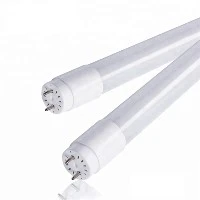
Taking the Benwei IP67 T8 LED grow light tube as an example, it adopts the triple waterproof structure described above and has passed third‑party laboratory IPX7 immersion testing, ensuring no water ingress after 30 minutes at 1 meter depth – the driver circuit remains completely dry. This enables stable and reliable lighting in hydroponic and outdoor growing environments.
6. Key Application Scenarios for IP67 Grow Lights
Table 4: IP67 Grow Light Applications and Data Reference
| Application Scenario | Why IP67 Is Needed | Reference Lamp Life | Maintenance Cost Savings |
|---|---|---|---|
| Hydroponic systems (DFT/NFT) | Roots immersed in nutrient solution, frequent splashing; pipe burst risk leads to immersion | 50,000+ hours | Reduces replacement by >90% |
| Inter‑canopy lighting (high‑density, high humidity) | Humidity 90%+, condensation droplets periodically "soak" the fixture | 50,000+ hours | Avoids frequent high‑altitude work |
| Outdoor growing / open greenhouse areas | Heavy rain, accidental ponding, regular irrigation | 50,000+ hours | Withstands extreme weather |
| Vertical farms (multi‑layer shelves) | High‑density planting + frequent washing; steam and condensate mix | 50,000+ hours | Ensures year‑round continuous production |
Note: Lamp life data is based on industry‑standard L70/L90 test methods; specific 50,000‑hour figures reference publicly available data from manufacturers.
Summary
The core value of an IP67 protection rating is not just protection against splashing or spraying, but systematic defense against accidental immersion and long‑term high‑humidity environments. For high‑humidity greenhouses, hydroponic systems, and outdoor cultivation, IP67 means the light fixture can maintain stable operation over its 50,000‑hour rated life, reducing failure rates to near zero – in one laboratory test, IP67 fixtures showed failure rates approaching zero even at 98% continuous relative humidity.
Choosing IP67 is not about "the higher the better", but about precise matching to your actual scenario. If your grow lights are deployed in environments where condensation droplets regularly adhere, where short‑term immersion risk exists, or where extreme high humidity prevails, IP67 is an engineering‑proven reliable solution. For ordinary greenhouse top lighting with no immersion risk, IP65 may offer better cost‑effectiveness.