LED grow lights have fundamentally changed the way modern controlled-environment agriculture operates. From plant factories and vertical farms to greenhouses, more and more growers are switching from traditional high-pressure sodium (HPS) and fluorescent lamps to LED grow lights. Why? Because LEDs convert electricity more efficiently into the photons that plants actually need, rather than wasting it as useless heat. For commercial growers, this means lower operating costs and higher yield per square meter. But is your current lighting solution really the right one?
1. Light Is Not Just "Light" – How Different Wavelengths Affect Plant Growth
Plants perceive light very differently from humans. The human eye is most sensitive to yellow-green light (around 555nm), so a "bright-looking" lamp is not necessarily effective for plants. What plants truly need is photosynthetically active radiation (PAR) in the 400–700nm wavelength range – photons within this range can be absorbed by chlorophyll and drive photosynthesis.
The core advantage of LED grow lights is precise control of the light spectrum, allowing growers to "tailor" the light recipe according to different plant species and growth stages, thereby driving photosynthesis more efficiently. Below is the effect of each spectral band on plant growth:
Table 1: Effects of Different Spectral Bands on Plant Growth
| Wavelength Range | Spectral Band | Primary Effect on Plants |
|---|---|---|
| 275–320nm | UV-B | Kills bacteria, but high doses are harmful to plants |
| 320–420nm | UV-A | Regulates photoperiodic effects, inhibits excessive stem elongation |
| 420–520nm | Blue | Highest absorption by chlorophyll and carotenoids; greatest impact on photosynthesis; promotes leaf growth, inhibits leggy growth |
| 520–610nm | Green | Excellent transmittance, can penetrate canopy to lower leaves, but low pigment absorption |
| 610–720nm | Red | High chlorophyll absorption; significantly affects photosynthesis and photoperiod; promotes flowering, fruiting, and carbohydrate accumulation |
| 720–1000nm | Far-red | Low absorption, inhibits seedling growth, regulates flowering and seed germination |
| >1000nm | Far-infrared/Heat | Produces only heat, no photosynthetic contribution |
A good full-spectrum LED grow light achieves a reasonable ratio among these key bands. For red and blue bands, the combined proportion should exceed 60%, and red (630–660nm) to blue (440–460nm) is typically configured at a ratio of 3:1 to 5:1 to balance vegetative and reproductive growth.

2. Understanding the Core Performance Metrics: PPF, PPFD, and PPE
These three essential terms must be mastered when selecting LED grow lights. Any professional grow light supplier should be able to provide these data:
- PPF (Photosynthetic Photon Flux) : The total amount of PAR emitted by the fixture per second, measured in μmol/s. This is the "total output capacity" of the light.
- PPFD (Photosynthetic Photon Flux Density) : The number of photons received per square meter of plant canopy per second, measured in μmol/m²/s. This is the actual light intensity that plants "receive" – the most critical indicator for determining whether a lighting solution is suitable. The same light installed at 30 cm vs. 60 cm height will produce vastly different PPFD at the canopy.
- PPE (Photosynthetic Photon Efficiency) : The amount of PAR photons produced per joule of electrical energy consumed, measured in μmol/J. This is the "energy efficiency index" of a grow light – the higher the value, the more electricity saved.
Recommended PPFD ranges for different crop growth stages:
| Crop Type / Growth Stage | Recommended PPFD (μmol/m²/s) |
|---|---|
| Seedling / propagation | 100–300 |
| Leafy greens (lettuce, spinach, etc.) | 200–400 |
| Vegetative stage | 400–600 |
| Flowering stage | 600–900 |
| Fruiting stage (tomatoes, peppers, strawberries, etc.) | 800–1200 |
3. IP67 Waterproof Rating: Why Do Grow Lights Need Professional Protection?
Operating conditions in greenhouses, plant factories, and outdoor growing environments are vastly different from ordinary indoor spaces – relative humidity remains high year-round, water mist or droplets are present during irrigation, and some facilities require regular washing. Ordinary indoor LED lights, when used in such environments, suffer from moisture ingress into internal electronic components, which is a primary cause of premature failure.
The IP (Ingress Protection) rating consists of two digits: the first indicates dust protection (6 = completely dust-tight), the second indicates water protection. Professional grow lights require significantly higher IP ratings than general lighting. At least IP65 is required for agricultural environments, and IP67 or higher should be chosen for areas with high-pressure washing requirements.
An IP67 rating means completely dust-tight and can withstand immersion in 1 meter of water for 30 minutes without damage. This ensures long-term stable operation in humid, dusty, misty, or regularly washed environments.
Table 2: Comparison of Common IP Ratings for Grow Lights
| IP Rating | Dust Protection | Water Protection | Suitable Application |
|---|---|---|---|
| IP65 | Dust-tight | Protected against water jets (low-pressure) | General greenhouse |
| IP67 | Dust-tight | Temporary immersion possible | High-humidity greenhouse, hydroponics, outdoor, wash-down areas |
| IP68 | Dust-tight | Prolonged immersion | Deep hydroponic channels, special environments |
4. Full Spectrum vs. Red-Blue Mixed Light: Which Grow Light Is Better for Your Growing Scenario?
Grow lights on the market are mainly divided into red-blue mixed type and full-spectrum type. Each has its advantages and disadvantages. The choice depends on your specific growing needs and environment:
| Comparison | Red-Blue Mixed | Full-Spectrum |
|---|---|---|
| Spectral composition | Contains only red and blue light; appears pinkish-purple | Mimics sunlight, covering 400–700nm PAR band plus some far-red |
| Visual experience | Pinkish-purple, not suitable for daily inspection tasks | Near-natural white light, comfortable for long-term human work |
| Photosynthetic efficiency | High (most targeted) | High (full-band coverage, versatile) |
| Typical applications | Large-scale commercial supplemental lighting (pursuing ultimate efficiency) | Vertical farms, research & propagation, home growing, high-end greenhouses |
| Suitable crops | Crops with specific high-efficiency needs | Leafy greens, flowers, succulents, ornamental foliage, fruits/vegetables |
For commercial cultivation, full-spectrum LED grow lights are increasingly advantageous – they provide plants with the complete range of growth wavelengths while creating a comfortable visual environment for workers. Growers can perform planting management and disease observation under the light without needing protective eyewear. Full-spectrum lighting can also serve as a complete replacement for sunlight in plant factories, supporting the full life cycle of plants in the complete absence of natural light.

5. Market Data: Global Plant Lighting Industry Enters High-Growth Phase
The global horticultural lighting market is experiencing explosive growth. According to industry reports:
- The global horticultural lighting market is projected to grow from $4.92 billion in 2025 to $5.74 billion in 2026, representing a compound annual growth rate (CAGR) of 16.7%.
- The LED garden lighting market is growing even faster, projected to increase from $4.8 billion in 2025 to $6.09 billion in 2026, with a CAGR of 26.8%.
- Looking at a longer timeframe, the global horticultural lighting market is projected to reach $17.79 billion by 2032, with a CAGR of approximately 14%.
- Some organizations are more optimistic, predicting that the global garden lighting market is expected to reach US$45.57 billion by 2034, with a CAGR of approximately 18.1%.
Table 3: Global Plant Lighting Market Data Overview
| Metric | 2025 | 2026 | 2032/2034 Forecast | CAGR |
|---|---|---|---|---|
| Horticultural lighting market | $4.92B | $5.74B | $10.47B (2030) | 16.2–16.7% |
| LED horticultural lighting market | $4.8B | $6.09B | $15.76B (2030) | 26.8% |
| LED agricultural grow light market | $2.157B | - | $4.973B (2032) | 12.9% |
| LED plant grow light market | $2.028B | - | $5.082B (2032) | 14.2% |
This rapid growth is driven by: expansion of controlled-environment agriculture, increasing adoption of vertical farming and hydroponics, gradual phase-out of traditional HPS and fluorescent lamps, and large-scale commercial application of full-spectrum LED technology.
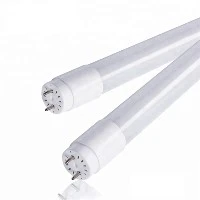
6. Key Parameter Checklist for Selecting T8 LED Grow Lights
If you are selecting LED grow lights for a plant factory, greenhouse, or laboratory, please focus on the following core parameters:
Table 4: Core Parameter Reference Table for T8 LED Grow Lights
| Parameter Category | Reference Value for Quality Grow Light | Selection Tips |
|---|---|---|
| Power options | 18W/600mm, 36W/1200mm, 45W/1500mm | Choose based on growing area and shelf height; roughly 30–60W/m² |
| LED chip brand | Top-tier: Epistar, Osram, Lumileds, etc. | Chip quality directly affects efficacy and lifespan |
| Full-spectrum coverage | 400–700nm PAR band, red+blue ≥60% | Ensure inclusion of both blue (450nm) and red (660nm) peaks |
| PPF value | Calculate according to area and crop needs | Higher doesn't always mean better; evaluate with PPFD distribution |
| PPFD uniformity | Coefficient of variation ≤25% | Avoid "hot spots" (bright center, dark edges) |
| Efficacy (PPE) | ≥2.5 μmol/J (commercial grade) | Higher PPE = more energy savings |
| Power factor (PF) | PF ≥0.95 | PF≥0.9 is acceptable; higher is better for grid friendliness |
| Beam angle | 120° / 180° / 220° optional | Choose according to shelf spacing |
| IP rating | IP67 (waterproof & dust-tight) | At least IP65 for greenhouses/high humidity; IP67 preferred |
| Operating temperature | -20°C ~ 55°C | Ensure stable operation in your environment |
| Housing material | PC cover + aluminum alloy heat sink | Aluminum ensures heat dissipation, reduces lumen depreciation |
| Warranty | 5 years | Long warranty is a sign of quality |
7. Why Is the Benwei T8 IP67 Full-Spectrum LED Grow Light Worth Your Attention?
Taking Benwei's product as an example, it demonstrates the configuration expected from a professional grow light:
- Multiple power options: 18W, 36W, and 45W corresponding to 600mm, 1200mm, and 1500mm lengths, suitable for different shelf sizes.
- High-quality chips: Uses Epistar SMD2835 chips with proven efficacy and stability.
- IP67 full waterproof construction: Triple waterproof design (waterproof driver + waterproof PCB + sealed aluminum housing), suitable for high-humidity greenhouses, hydroponic systems, and outdoor growing.
- Customizable full spectrum: Fine-tuned spectral ratios can be customized based on the physiological needs of different plant species, suitable for tissue culture labs, plant factories, and automated control systems.
- 5-year warranty: Provides full assurance for long-term investment.
Final Summary
Choosing a professional LED grow light requires data-driven decisions. Don't just look at "how bright it appears" – look at its actual performance in terms of PPFD, PPE, and spectral composition. In high-humidity greenhouse environments, an IP67 waterproof rating is the key to ensuring long-term reliability.
Full-spectrum technology, IP67 protection, and high efficacy (PPE ≥2.5 μmol/J) are becoming the mainstream standards for modern plant lighting. For plant factories, greenhouses, and hydroponic systems, upgrading to professional full-spectrum LED grow lights is an investment with a clear and quantifiable return – higher yields, lower electricity bills, longer service life.