Is there a difference between LED lights and grow lights
One of the most prevalent sources of misunderstanding, particularly among individuals who are new to gardening, horticulture, or lighting technology, is the subject of whether grow lights and LED lights are the same thing. On the surface, both employ light-emitting diodes (LEDs), yet their functions, designs, and capabilities are very different from one another with substantial differences. It is vital to break down what each phrase entails, how they overlap, and where they differ in order to have an understanding of whether or not they are related to one another.
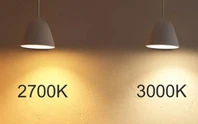
Let's begin by defining what LED lights are. LED is an abbreviation that stands for "light-emitting diode," which is a semiconductor device that emits light every time an electric current flows through it. The term "LED lights" refers to a broad category of lighting technology that is utilized in a wide variety of applications, ranging from home bulbs and smartphone displays to streetlights and headlight illumination for automobiles. Their popularity may be attributed to the fact that they are efficient in terms of energy consumption, have a long lifespan (often about 50,000 hours or more), and can produce a wide range of colors and brightness levels. LED lights are capable of emitting light over a wide range of spectrums, including warm white, cool white, and even specialty hues such as red or blue, depending on the design of the LED light. On the other hand, their primary purpose is often to brighten areas for human vision, whether for the purpose of performing practical chores, creating an atmosphere, or enhancing aesthetics. For example, a conventional LED bulb is designed to simulate the appearance of natural daylight or incandescent light. This design prioritizes how humans perceive brightness and color rather than adapting to the unique biological requirements of other creatures.
Grow lights, on the other hand, are a specialized kind of illumination that was first developed for a single purpose: to encourage the development of plants alone. Photosynthesis is a process that plants use to transform light energy into chemical energy, which is then used to power growth, blooming, and fruiting. Plants are dependent on light for this process. In contrast to humans, plants do not "see" light in the same sense that we do; rather, they react to certain wavelengths of light. Blue light, which is between 400 and 500 nanometers, is essential for the development of roots and leafy growth, whereas red light, which is between 600 and 700 nanometers, encourages blooming and fruiting. Depending on the type and stage of development of the plant, it may also be beneficial for some plants to get a tiny quantity of green or far-red light. Grow lights are designed to give these particular wavelengths in quantities that are balanced in order to maximize the health of plants and their output.
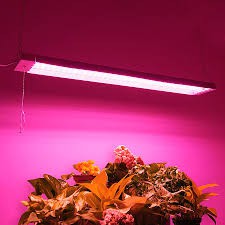
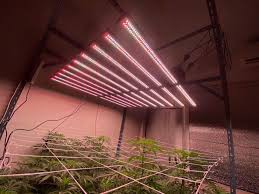
Here is where the most of the misconception arises: the majority of current grow lights are, in fact, based on LED technology. Because LEDs can be tuned to emit exact spectrums, they consume less energy than traditional grow lights (such as high-pressure sodium or metal halide lamps), and they create less heat, which reduces the danger of injuring plants. This has resulted in the grow light business being revolutionized by LED technology. To put this another way, "LED grow lights" are a subset of both LED lights and grow lights; more precisely, they are LED lights that have been created exclusively for the development of plants. On the other hand, not all grow lights are LED lights, and not all LED lights are in fact grow lights.
In order to provide further clarification, a grow light is not always a regular LED light bulb, even if it is marketed as "full-spectrum." With a particular emphasis on color rendering index (CRI), the majority of LED lights used in homes are calibrated to improve human sight. This is done in order to make colors look more realistic to our eyes. There is a possibility that they release certain wavelengths that are beneficial to plants; nevertheless, they frequently do not possess the intensity or the precise balance of red and blue light that is necessary for efficient photosynthesis. For instance, a warm white LED bulb releases more yellow and red light, but it might not have enough blue light to promote healthy leaf growth. On the other hand, a cool white bulb might have more blue light, but it might not have enough red light to support blooming. A specialized LED grow light, on the other hand, is designed to provide the precise proportions of red, blue, and other wavelengths that plants require. These grow lights typically include spectrums that can be adjusted to accommodate different phases of plant development, such as seedlings vs mature plants.
However, grow lights are not limited to the sphere of LED technology; they can exist independently. Existing grow lights were often based on various technologies prior to the widespread use of LED chips. As an illustration, high-pressure sodium (HPS) lights create a great deal of red and orange light, which makes them a popular choice for blooming phases. On the other hand, metal halide (MH) lamps provide a greater amount of blue light, which is excellent for vegetative growth. These classic grow lights are still utilized in some business settings, despite the fact that they are less efficient in terms of energy consumption and produce more heat than LED counterparts. To clarify, the term "grow light" refers to a purpose, which is to encourage the development of plants, but the term "LED light" refers to a technology, which is light-emitting diodes. Although there is some overlap between the two categories when LED technology is utilized to make a grow light, the two categories are not directly interchangeable.
The difference in intensity and coverage is still another important element. In order to provide plants with an adequate amount of photosynthetic photon flux density (PPFD), which is a measurement of the amount of light that is accessible for photosynthesis, grow lights, particularly LED grow lights, are constructed. This often necessitates a higher intensity than the usual LED lights, which are intended to illuminate a space for the purpose of encouraging human activity. A 100W LED grow light, for instance, may concentrate its energy on generating selected wavelengths at high intensity over a specific area (for example, a grow tent). On the other hand, a 100W domestic LED bulb may distribute its light more broadly at a lower intensity, putting an emphasis on energy efficiency for general lighting.
On top of that, grow lights typically come equipped with characteristics that are absent from conventional LED lights. In order to simulate natural light cycles (for example, by replicating dawn and sunset), many LED grow lights are equipped with dimming capabilities, timers, or spectrums that may be adjusted. Additionally, they may be constructed with heat sinks or cooling fans in order to control the heat that is produced by their high-intensity diodes, so preventing any harm to the plants. These qualities, on the other hand, are not typically included in standard LED lights since they are not required for the principal function of these lights, which is to illuminate enclosed rooms for human use.
It is also important to note that the word "full-spectrum" is frequently employed in a manner that is unclear, which contributes to the misunderstanding. In order to simulate the effects of natural sunshine, a full-spectrum LED grow light is intended to span the complete spectrum of wavelengths that plants require, from ultraviolet (UV) to far-red frequencies. To the contrary, a full-spectrum LED light for the home is designed to encompass the visible spectrum, which extends from 400 to 700 nanometers, in order to make colors look more realistic to people. However, it may not have the precise peaks in red and blue that plants require the most. As a result, the term "full-spectrum" can refer to a variety of different things depending on whether the light is designed for animals or for human consumption.
It is important to note that grow lights and LED lights are not the same thing. There is a wide range of lighting technologies that falls under the category of LED lights, but grow lights are a specialized kind of illumination that is meant to encourage the development of plants. Although LED technology is used in many grow lights today, which makes them known as LED grow lights, not all LED lights are good for growing plants since they do not possess the spectrum, intensity, and characteristics that are required for this purpose. On the other hand, grow lights can be based on various technologies; nevertheless, LEDs have grown to become the most popular choice due to their efficiency and the fact that they can be customized. Understanding this distinction is essential for anybody who is interested in purchasing lighting for plants, since it is highly doubtful that the required results would be achieved by substituting a conventional LED light for a grow light because of the differences between the two.
ogether, we make it better.