What "Color Codes" Are Hidden in the Spectrum? How to Pick the Best LED Based on Wavelength bands?
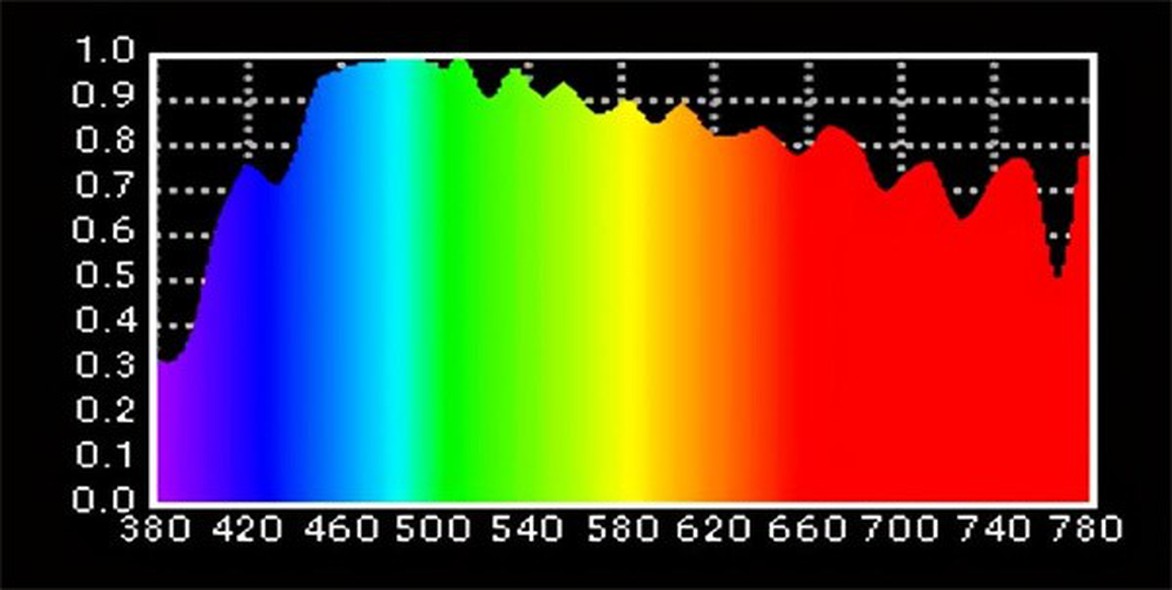
When purchasing LED lighting fixtures, most people only focus on whether they are bright enough or energy-efficient. Very few pay attention to the Spectral Power Distribution (SPD) chart printed on the packaging. In reality, light is not just a simple "white" or "yellow" beam; it is a composite light made by blending various colors of light across different wavelengths.
In different application scenarios, precisely matching specific spectral wavelength bands determines not only the "visual appeal" of objects but also directly impacts eye health, agricultural crop growth, and industrial production efficiency. Which wavelength band corresponds to which color? How should you scientifically select the right light for different scenarios? This article breaks down the spectral secrets of LEDs.
1. Core Science: The Correspondence Between Visible Light Bands and Colors
The light that the human eye can perceive is called visible light, and its wavelength range spans approximately from 380 nanometers (nm) to 780 nanometers (nm). Different wavelength bands exhibit entirely unique colors and energy characteristics:
| Wavelength Range (nm) | Corresponding Color | Optical Characteristics & Physiological Effects |
| 380 - 420 | Violet / Near-UV | Higher photon energy; easily triggers luminescence or photochemical reactions in certain materials. |
| 420 - 475 | Blue | High-Energy Visible (HEV) light. It suppresses melatonin secretion to keep people alert; however, excessive, high-intensity short-wave blue light easily induces visual fatigue. |
| 475 - 495 | Cyan | Situated between blue and green; plays an essential role in regulating the human circadian rhythm and alertness. |
| 495 - 570 | Green | The wavelength band to which the human eye is most sensitive; contributes the most to brightness perception under photopic (daylight) conditions. |
| 570 - 590 | Yellow | Offers excellent fog penetration; provides a warm and soft visual sensation. |
| 590 - 620 | Orange | Conveys a strong sense of warmth and effectively stimulates appetite. |
| 620 - 780 | Red | The longest wavelengths in the visible spectrum with strong penetration power. It exhibits intense biological stimulation effects in bio-lighting. |
2. Scenario Application Guide: Which "Golden Bands" Do Different Fields Need?
In practical production and daily life, LED fixtures do not perform best when their spectrum is perfectly flat. Instead, they require "spectral customization" tailored to specific environments:
2.1 Residential and Educational Lighting: Pursuing "Low Blue Light" and "Full Spectrum"
- Core Need: Protecting eyesight, preventing myopia, and regulating the biological clock.
- Band Selection: Conventional LEDs achieve white light by utilizing a "blue chip to excite yellow phosphor," which typically creates a towering "blue light peak" near 450nm. When picking a desk lamp or classroom light, prioritize Full Spectrum LEDs. Their spectrum is closer to natural sunlight, shifting the blue peak to a safer range (above 460nm) and supplementing the 500nm (Cyan) region to alleviate visual fatigue.
2.2 Fresh Food and Commercial Retail: Using the Spectrum to "Beautify" Commodities
- Core Need: Enhancing the color saturation of products to stimulate consumers' desire to purchase.
- Band Selection: * Butcher Shops / Meat Counters: Choose specialized fresh food lamps that increase the proportion of the 620–660nm (Red Light) band, making fresh meat look redder and juicier.
Vegetable and Bakery Sections: Enhance the 520nm (Green Light) and 580nm (Yellow-Orange Light) bands to make vegetables look crispier and bread look golden-brown.
2.3 Plant Factories and Agricultural Lighting: Precise "Light Formulas"
- Core Need: Replacing sunlight to promote plant photosynthesis, growth, and development.
- Band Selection: * 430 - 450nm (Blue Light): One of the absorption peaks for chlorophyll; primarily promotes root and stem growth and leaf enlargement.
640 - 660nm (Red Light): Another core band for photosynthesis; primarily controls plant flowering, fruiting, and overall yield enhancement.
2.4 Specialized Industrial and Inspection Scenarios: The Magic of Monochromatic Light
- Core Need: Preventing photosensitive reactions or high-contrast defect detection.
- Band Selection:
Semiconductor Photolithography Rooms: Must strictly filter out short-wave light below 500nm (blue, violet, and UV light). The entire room uses 570–590nm (Yellow Light) illumination to prevent the photoresist from unexpected exposure.
Surface Defect Detection: Industrial machine vision often utilizes pure 450nm (Blue Light) or 365nm (Near-UV) narrow-band light sources. By leveraging the reflection and excitation properties of high-energy short-wave light, minute scratches on metal or mirrored surfaces are clearly revealed.
3. Practical Tips When Selecting LED Lights
3.1 Learn to Read the Spectral Power Distribution (SPD) Chart: High-quality lighting fixtures include a spectral diagram in their specification sheets. The curve in the diagram should be relatively smooth and complete, without extreme, sharp spikes or cliff-like gaps.
3.2 Pay Attention to Color Consistency (SDCM): Standard Deviation of Color Matching (SDCM) reflects the consistency of a fixture's spectrum. Engineering lighting or high-end residential designs require SDCM < 3, ensuring that the color of light emitted by the same batch of fixtures is identical, preventing the awkward phenomenon of one light looking bluish and another looking greenish.
3.3 Do Not Use Functional Special Spectrums for General Lighting: For instance, fresh food lamps with a high proportion of red light are strictly prohibited for office or residential lighting. Their unbalanced spectrum causes color distortion in human perception, and long-term use can lead to vision impairment.
Summary
Picking an LED fixture is essentially picking the "combination of the spectrum."
- Home & Office: Look for a healthy full spectrum with a 460nm gradual blue light peak.
- Commercial Display: Target and enhance specific color bands based on the color of the merchandise.
- Specialized Industry: Strictly follow industry-specific single-band regulations (such as yellow light in photolithography rooms).
Understanding spectral wavelength bands ensures that light serves not only to illuminate but also to support health and production efficiency.
✨Contact✨
🙋♀️Harriet
📫Email: bwzm88@benweilighting.com
📞Whatsapp: +8613007285242