Learn About LED Ligh

The Basics of LED Lighting
What Are LEDs, and How Do They Function?
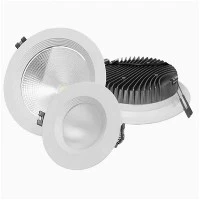
LED is an abbreviation for "light-emitting diode." Lighting products powered by LEDs are up to 90% more energy-efficient than incandescent bulbs. Their operating principle is straightforward: when an electric current passes through a microchip, it lights up the tiny light sources we call LEDs, ultimately producing visible light. To avoid performance problems, a heat sink absorbs the heat generated by LEDs.
The Lifespan of LED Lighting Products
The definition of "useful life" for LED lighting differs from that of other light sources like incandescent or compact fluorescent lamps (CFLs). Unlike these traditional options, LEDs usually continue working. Instead, they undergo a process called "lumen depreciation", where their brightness fades gradually over time. For LEDs, "lifetime" is not measured by complete failure – instead, it is estimated as the point when the light output drops by 30% (a standard benchmark for functionality).
How LEDs Are Applied in Lighting
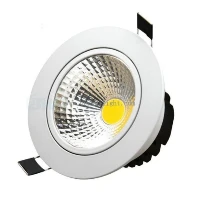
LEDs are integrated into bulbs and fixtures for everyday general lighting needs. Their small size opens up unique possibilities for design: some LED bulbs are shaped to look like familiar incandescent bulbs, making them a seamless replacement in traditional sockets. Others are built into fixtures as permanent light sources, eliminating the need for bulb replacements. There are also hybrid designs, where non-traditional "bulbs" or replaceable light sources are custom-made for specific fixture types. Overall, LEDs enable far more innovation in lighting design than traditional technologies and work for a much wider range of applications.
LEDs and Heat Management
LEDs rely on heat sinks to absorb the heat they generate and release it into the surrounding air. This prevents overheating, which would otherwise damage the LEDs or shorten their life. In fact, thermal management is usually the most critical factor in ensuring an LED performs well over its lifetime. The hotter an LED operates, the faster its light output will degrade – and the shorter its useful life will be.
Manufacturers use various specialised heat sink designs and configurations to manage this heat. Thanks to advances in materials science, many LED bulbs now match the size and shape of classic incandescent bulbs, despite needing built-in heat management. Importantly, any LED product that has earned the ENERGY STAR certification has undergone testing to confirm its heat management works effectively, ensuring consistent light output until the end of its rated lifespan.
How LED Lighting Differs from Incandescent and CFLs
LEDs differ from incandescent and CFL bulbs in several key ways. When engineered properly, they are more efficient, flexible, and longer-lasting.
A major difference is that LEDs are "directional" light sources – they emit light in a specific direction. By contrast, incandescent and CFL bulbs spread light and heat in all directions, wasting energy. This directional quality makes LEDs more efficient for many uses, but it also means designing an LED bulb that emits light evenly in all directions requires complex engineering.
Common LED colours include amber, red, green, and blue. To create white light (the type used in most homes), manufacturers either combine different coloured LEDs or coat LEDs with a phosphor material. This phosphor – a pale yellow substance – converts the LED's original colour into a warm, familiar white. Coloured LEDs are widely used as signal or indicator lights, such as the power button on a computer.
CFLs work differently: an electric current flows between electrodes at each end of a gas-filled tube, creating ultraviolet (UV) light and heat. The UV light then hits a phosphor coating inside the tube, which converts it into visible light.
Incandescent bulbs, meanwhile, produce light by using electricity to heat a metal filament until it glows "white hot" (a process called incandescence). This inefficiency means 90% of the energy they use is released as heat, not light.
Together, we make it better.
Shenzhen Benwei Lighting Technology Co., Ltd.
Mobile/WhatsApp: (+86)18673599565
Email:bwzm15@benweilighting.com
Skype: benweilight88
Web: www.benweilight.com
Add: F Building, Yuanfen Industrial Zone, Longhua, Bao'an District, Shenzhen, China