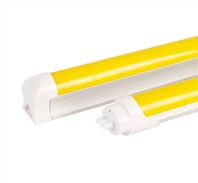
You may be wondering, what is an LED driver and do you really need them for your lights? An LED driver is an electrical apparatus that adjusts power for a LED or group of LEDs. You need to have it in your LED circuit because it can result in system failure if you operate without one.
Using this device is essential in preventing damage to your LEDs since the forward voltage (quantity of volts the LED requires to conduct electric current and light up) of a high-powered LED fluctuates with temperature. As the temperature increases, the forward voltage goes down, triggering the LED to get more power. If this continues, the LED will become hotter and draw more current until it burns itself out.
An LED driver is a self-contained power supply with similar outputs as an LED. This helps stop your lights from burning up since the LED driver compensates for the fluctuations in the forward voltage, delivering a steady flow of power.
Before you head out and buy an LED driver for your lights, ask the following questions:
What are the types of LED that you’re using and how many?
Will you need a constant voltage LED driver, or should you get a constant current LED driver?
What type of power are you using (AC, DC, batteries, etc.)?
Do you have any space limitations?
What will be the primary goal of your setup?
Is there a need for other special features (dimming, pulsing, etc.)?
Before anything else, you should know that there are two types of LED drivers, low-voltage DC input power (5-36VDC) and high voltage AC input power (90-277VAC). However, among the two, the most used are low voltage DC drivers because they’re more efficient and reliable. Even if your input is high-voltage AC, adding an additional switching supply enables you to use a DC input driver.