LED Filament Bulbs vs. Incandescent Bulbs: A Clear Comparison
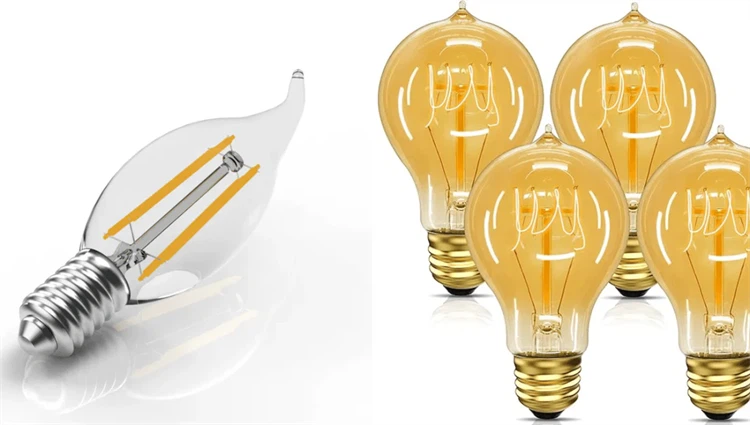
When choosing bulbs for your home or business, LED filament bulbs and traditional incandescent bulbs are two popular options that provide warm, inviting light. Despite their similar appearance and light quality, they differ greatly in efficiency, lifespan, and environmental impact. Here's a breakdown of the key differences to help you decide which is best for your needs.
🔋 Energy Efficiency
LED Filament Bulbs
LED filament bulbs are highly energy-efficient. According to the U.S. Department of Energy, they use up to 90% less energy than incandescent bulbs. For example, a 7W LED filament bulb can produce the same amount of light as a 60W incandescent bulb, leading to significant savings on electricity bills.
Incandescent Bulbs
Incandescent bulbs are very inefficient. Only about 10% of the energy they use is converted into light-the rest is wasted as heat. This makes them an energy-intensive option, especially with today's energy costs.
💡 Replacing a 60W incandescent bulb with a 7W LED filament bulb can save approximately $70 over the bulb's lifetime, based on average U.S. electricity rates.
⏳ Lifespan
LED Filament Bulbs
These bulbs are designed to last. A quality LED filament bulb can provide 15,000 to 25,000 hours of light. With typical use (about 3 hours per day), that's over 13 years of service.
Incandescent Bulbs
Incandescent bulbs have a much shorter lifespan, typically lasting only 1,000 to 2,000 hours. With the same daily use, you might need to replace an incandescent bulb in less than a year.
📅 If used 3 hours a day, an incandescent bulb may last about 333 days, while an LED filament bulb can last more than 13 years.
❄️ Heat Emission
LED Filament Bulbs
LEDs emit very little heat. Even after hours of use, they remain cool to the touch. They convert nearly all the energy they draw into light, making them safe for use in enclosed fixtures and reducing the risk of burns or fire.
Incandescent Bulbs
Incandescent bulbs become extremely hot during operation, with surface temperatures reaching up to 200°F (93°C). This makes them dangerous in certain settings, though the heat can be useful in applications like heat lamps or incubators.
🌡️ An LED filament bulb rarely exceeds 90°F (32°C), while an incandescent bulb can reach temperatures high enough to cause burns.
🌍 Environmental Impact
LED Filament Bulbs
LEDs are the more eco-friendly option. They consume less energy, last longer, and reduce waste. They contain no toxic materials like mercury and are fully recyclable.
Incandescent Bulbs
Due to their high energy consumption and short lifespan, incandescent bulbs have a larger carbon footprint. Frequent replacements also contribute to more waste.
🌱 Switching from incandescent to LED lighting can reduce a typical household's carbon dioxide emissions by nearly half a ton per year.
💡 Aesthetics and Design
LED Filament Bulbs
These bulbs combine vintage appeal with modern technology. They mimic the look of classic Edison-style bulbs with visible filaments inside clear glass, making them ideal for decorative fixtures, chandeliers, and industrial-style lighting-all while offering energy efficiency.
Incandescent Bulbs
Incandescent bulbs are known for their warm, natural glow, perfect for cozy settings. While they offer a classic look, LED filament bulbs now provide the same aesthetic without the energy waste.
💰 Cost: Initial vs. Long-Term
LED Filament Bulbs
They have a higher upfront cost (typically $5 to $15 per bulb) but offer significant long-term savings through reduced energy use and fewer replacements. Over its lifetime, an LED bulb can save around $100 compared to an incandescent bulb.
Incandescent Bulbs
These bulbs are cheap to buy (around $1 to $2 each) but cost more over time due to higher energy consumption and frequent replacements.
⚙️ Brightness and Dimming
LED Filament Bulbs
Most LED filament bulbs are dimmable, but it's important to check compatibility with your dimmer switch. Brightness is measured in lumens, and LEDs offer a wide range of options for different lighting needs.
Incandescent Bulbs
Incandescent bulbs are naturally dimmable and work smoothly with most dimmer switches, providing seamless control from bright to soft light.
🏠 Ideal Applications
LED Filament Bulbs
Perfect for both home and commercial use where style and efficiency matter. Great for living rooms, restaurants, cafes, hotels, and outdoor fixtures-especially in cold climates, as LEDs perform well in low temperatures.
Incandescent Bulbs
Best used in settings where warm light is desired and energy use is not a primary concern. Common in decorative fixtures, oven lights, and heat lamps. However, their use is declining due to energy regulations and the superior performance of LEDs.
✅ Conclusion
While both LED filament bulbs and incandescent bulbs offer warm and attractive light, LED filament bulbs are the smarter choice for most modern applications. They lead in energy efficiency, lifespan, safety, and environmental friendliness. Although incandescent bulbs have a lower upfront cost and smooth dimming capability, the long-term benefits of LEDs make them a more economical and sustainable option.
Upgrading to LED filament bulbs allows you to enjoy classic aesthetics without compromising on performance or planet-friendly values.