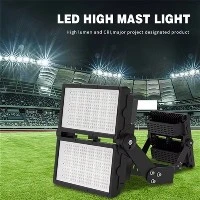
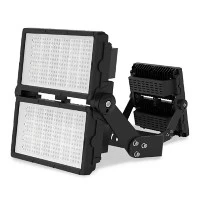
Parking Lot LED Lighting
Parking lots are crucial parts of public, residential, and commercial spaces because they act as transitional places where accessibility, safety, and visibility are crucial. In order to make these areas safe and easy to use, lighting is essential, and many property managers and designers now favor LED (Light Emitting Diode) technology. Long-term cost savings, increased safety, and energy efficiency can result from knowing the factors to be taken into account when choosing and installing LED lighting for parking lots.
Because of their exceptional illumination quality, lifespan, and energy efficiency, LED lights have completely changed outdoor lighting. However, selecting the best LED fixtures and creating a functional lighting arrangement necessitates a thorough comprehension of a number of variables, such as brightness, color temperature, light dispersion, and environmental impact. This article provides a thorough approach to maximizing LED lighting for parking lots by thoroughly examining these factors.
Compared to more conventional lighting options like incandescent or fluorescent bulbs, switching to LED lighting in parking lots not only improves visibility but also drastically lowers energy use. Up to 75% less energy is used by LEDs, which results in cheaper electricity costs and a smaller carbon imprint. Additionally, because of their extended lifespan-which frequently exceeds 50,000 hours-they require fewer replacements, which further reduces the labor and maintenance expenses related to changing bulbs. This durability is especially helpful in locations that are difficult to access, where upkeep can be expensive and time-consuming.
The versatility of LED lighting solutions is another crucial factor to take into account. Smart technology can be combined with modern LED lighting to enable features like remote monitoring, dimming, and motion sensors. By providing brighter illumination when needed, as during peak hours or when movement is detected, this not only improves the lighting system's efficiency but also makes the surroundings safer. Furthermore, remote lighting control enables property managers to react swiftly to problems and maintain a safe and well-lit parking lot at all times.
Principal Advantages of LED Parking Lot Lighting
Cost-effectiveness and Energy Efficiency
The considerable decrease in energy usage is one of the main justifications for parking lot LED lighting adoption. Compared to conventional high-intensity discharge (HID) lamps like metal halide or high-pressure sodium lights, LEDs can save up to 75% on energy consumption. This efficiency is in line with sustainability objectives and legal requirements since it results in lower electricity costs and a smaller carbon impact.
Furthermore, LEDs often last more than 50,000 hours in operation. Long-term, LEDs are a cost-effective alternative because of their lifespan, which lowers maintenance frequency and labor and bulb replacement expenses.
Enhanced Security and Safety
Parking lots with enough lighting are more visible, which is important for both pedestrian safety and crime prevention. LED lights reduce shadows and gloomy areas where dangers or criminal activity could occur by providing bright, consistent light with less flicker. Unlike certain conventional lamps that need time to warm up, their instant-on feature guarantees that lighting is accessible right away.
Effective lighting design is crucial since studies have shown that well-lit parking lots can reduce crime rates by up to 30%. LEDs are perfect for making environments safer because of their steady and adjustable lighting.
Sustainability and the Effect on the Environment
Compared to conventional lighting alternatives, LEDs emit less heat and are mercury-free, which lowers cooling expenses and environmental risks. Their energy efficiency supports larger environmental sustainability initiatives by reducing greenhouse gas emissions. LED lighting has become a top priority for many companies and governments in order to comply with green building certifications and regulations.
Design Factors for LED Parking Lot Lighting
Uniformity and Illumination Levels
Choosing the right amount of light is essential for comfort and safety. Depending on the lot's size, location, and use, the Illuminating Engineering Society (IES) recommends illumination levels for parking lots that usually range from 1 to 5 foot-candles. For instance, because of the higher volume of cars and pedestrians, a retail parking lot could need more lighting than a residential lot.
To prevent glare and shadows, it is equally necessary to distribute light uniformly. Uneven lighting can mask dangers and cause visual discomfort. Designers may adjust light distribution patterns to the parking lot layout with LED fixtures that have precision optics and beam control, guaranteeing uniform coverage.
Color Rendering Index (CRI) and Color Temperature
The look and impression of the lit area are influenced by color temperature, which is expressed in Kelvins (K). Parking lot LEDs usually fall between 3000K (warm white) and 5000K (cool white). Cooler temperatures (4000K to 5000K) are frequently used because they improve contrast and visibility, making it easier to recognize colors and details-important for recognizing obstacles, people, and cars.
In comparison to natural light, a light source's color rendering accuracy is gauged by the Color Rendering Index (CRI). It is generally advised that parking lot lighting have a CRI of 70 or greater to guarantee that colors appear clean and natural, which improves situational awareness.
Position of Fixtures and Mounting Elevation
For optimal coverage and reduced glare, LED fixtures must be positioned and mounted at the right height. Depending on the lot's size and design, parking lot lights are usually installed 15 to 30 feet above the ground. Greater light distribution is made possible by higher mounting heights, but in order to maintain sufficient illumination levels, fixtures with higher lumen output are needed.
To prevent overlapping light zones and dark areas, the distance between poles needs to be carefully considered. An ideal layout that strikes a balance between light intensity, uniformity, and energy consumption can be created with the use of lighting simulation software.
Controlling Glare and Light Pollution
Choosing LED lighting with the right shielding and optics is crucial because glare can be uncomfortable and impair vision. By directing light downward, full cutoff or totally protected bulbs reduce skyglow, a factor in light pollution, and stop light from trespassing into nearby homes.
In addition to protecting the environment, minimizing light pollution is also necessary to adhere to community norms and municipal laws. Effective parking lot illumination may be maintained while undesired light spill is greatly reduced with well-designed LED lighting.
Technical Details and Performance Indicators
Power and Lumen Output
Whereas wattage gauges energy usage, lumen output shows how much visible light a fixture emits. To get the desired brightness with the least amount of power consumption, it's critical to balance these two factors while choosing LED fixtures. Fixtures for parking lots usually have lumens ranging from 5,000 to 20,000, depending on the mounting height and use.
Lumens per watt, or lm/W, is a helpful metric for comparing the efficiency of various LED products. Lights with higher lm/W ratings are more energy-efficient and give more illumination.
Rating for Ingress Protection (IP)
Dust, dampness, and other environmental conditions must not harm outdoor lighting fixtures. The level of protection provided by enclosures is categorized using the IP rating system. An IP rating of at least IP65 is advised for parking lot LEDs to guarantee that the fixture is dust-tight and shielded against water jets coming from all directions.
Thermal Control
Effective thermal management is crucial to preserving performance and extending lifespan since LEDs produce heat at the semiconductor junction. To avoid premature LED degradation, high-quality LED lighting use materials and heat sinks that effectively dissipate heat.
Considerations for Installation and Maintenance
Comparing New Installations with Retrofitting
LED illumination is replacing conventional lighting in many parking lots. Retrofitting is the process of swapping out old lights or fixtures for LED ones, which can be less disruptive and more affordable. New installations, however, offer a chance to create lighting arrangements that are best suited for LED technology, which could improve coverage and efficiency.
When retrofitting, it's critical to evaluate the current electrical infrastructure to make sure LED drivers and controls work.
Smart Technologies and Lighting Controls
Adding lighting controls like timers, dimmers, and motion sensors can increase energy efficiency and prolong the life of fixtures. By adjusting illumination levels according to occupancy or ambient light conditions, smart lighting systems enable remote monitoring and control.
Advanced controls are a useful addition to LED parking lot installations since they can cut energy consumption by up to 50% when compared to static lighting systems.
Upkeep and Durability
Despite requiring less upkeep than conventional bulbs, LEDs nevertheless need to be inspected sometimes to guarantee peak performance. Maintaining light output and avoiding overheating can be achieved by cleaning fixtures to get rid of dirt and debris. Verifying control systems and electrical connections also helps prevent malfunctions.
Over the installation's lifetime, operational disruptions and expenses can be decreased by incorporating maintenance access into the design process.
Safety and Regulatory Requirements
Observance of regional standards and codes
Local building codes, zoning laws, and industry standards like those set forth by the International Dark-Sky Association (IDA) and the Illuminating Engineering Society (IES) must all be followed while lighting parking lots. These rules cover energy efficiency requirements, glare control, light trespass, and minimum lighting levels.
Maintaining compliance encourages environmental stewardship and community acceptance in addition to avoiding legal problems.
Safety Factors
Accidents involving cars and people are less likely when there is adequate lighting. It also enhances the quality of camera images, which helps surveillance systems. In some applications, emergency lighting and backup power may be required to ensure safety during power outages.
Parking lot LED lighting, which combines durability, improved safety features, and energy efficiency, provides a better option for parking lot illumination. However, design aspects including lighting intensity, color temperature, fixture placement, and environmental impact must be carefully considered for successful application. The lighting system will continue to function at its best for the duration of its life if technical specifications, maintenance, and regulatory compliance are followed.
Property owners and managers can design well-lit, safe, and environmentally friendly parking spaces that satisfy user demands while reducing operating expenses and their negative effects on the environment by comprehending and putting these factors into practice.