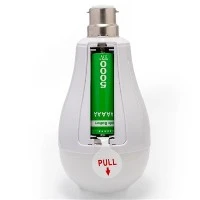
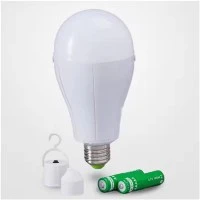
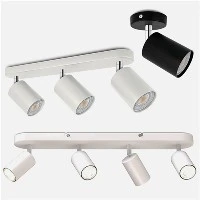
The main differences between LED (Light Emitting Diode) and halogen lights lie in their technology, efficiency, lifespan, light quality, cost, and environmental impact. Below is a detailed comparison based on key parameters:
1. Technology & Working Principle
Halogen Lights:
An advanced form of incandescent bulbs. Use a tungsten filament enclosed in halogen gas (e.g., iodine/bromine). The gas redeposits evaporated tungsten onto the filament, extending its life .
Light Generation: Heated filament emits light (similar to traditional bulbs).
Heat Output: High; ~90% of energy is wasted as heat .
LED Lights:
Use semiconductor diodes. Electrons move through a semiconductor material, emitting photons (light) directly .
Light Generation: Electroluminescence (no heating required).
Heat Management: Require heat sinks but run cooler than halogens .
2. Energy Efficiency & Power Consumption
| Parameter | Halogen Lights | LED Lights | Difference |
|---|---|---|---|
| Luminous Efficacy | 15–20 lm/W | 80–150 lm/W | LEDs: 5–8× more efficient |
| Power Consumption | 55W (typical car bulb) | 20W (equivalent brightness) | LEDs save ~65% energy |
| Heat Waste | ~90% of energy | ~20% of energy | LEDs waste less energy as heat |
Example: Replacing a 55W halogen bulb with a 20W LED reduces energy use by 64% while providing equal/better brightness .
3. Lifespan & Durability
Halogen:
Lifespan: 1,000–2,000 hours .
Failure Cause: Filament degradation or gas leakage.
LED:
Lifespan: 25,000–50,000 hours (or more) .
Failure Cause: Driver/component degradation (not diodes).
Difference: LEDs last 25× longer than halogens, reducing replacement frequency .
4. Cost Analysis
| Cost Type | Halogen | LED | Notes |
|---|---|---|---|
| Upfront Cost | $1–$2 per bulb | $5–$20 per bulb | LEDs cost 3–10× more initially |
| Long-Term Cost | Higher (energy + replacements) | Lower (energy savings + fewer replacements) | LEDs pay back in 1–3 years |
| Maintenance | Frequent replacements | Minimal maintenance | High-ceiling/automotive use favors LEDs |
Example: A $5 LED bulb vs. $1.5 halogen:
LED uses 75% less energy and lasts 20× longer → Saves $90/year/household (U.S. data) .
5. Light Quality & Performance
| Aspect | Halogen | LED |
|---|---|---|
| Brightness | Moderate (e.g., 1,500 lumens @ 55W) | High (e.g., 20,000 lumens @ 90W for automotive) |
| Color Temperature | Warm white (2,800–3,500K) | Adjustable (2,700–6,500K) |
| Color Rendering | Excellent (CRI >95) | Good (CRI 70–90) |
| Beam Focus | Requires reflectors | Directional light (less spill) |
| Fog Penetration | Better (yellow spectrum) | Poor (blue-rich light scatters) |
| Response Time | Slow (0.5–1 second) | Instant (nanoseconds) |
Automotive Example:
Halogens take ~1 second to reach full brightness; LEDs light up instantly → Critical for brake lights .
6. Automotive Applications
Halogen Pros:
Low cost, easy replacement.
Better fog/rain penetration (3000K–4300K) .
LED Pros:
600% brighter than halogens (e.g., 20W LED vs. 55W halogen) .
Longer lifespan (100,000+ hours) .
Compact size for flexible design.
Cons:
LEDs may cause glare if improperly installed .
Require CANBUS compatibility to avoid errors .
7. Environmental Impact
Halogen:
Contains halogen gases (e.g., bromine).
Higher CO₂ emissions due to energy waste.
LED:
No toxic materials (unlike CFLs/mercury).
80% lower carbon footprint over lifespan .
Regulations:
U.S./EU phased out inefficient halogens; LEDs dominate new sales .
8. Installation & Compatibility
Halogen:
Plug-and-play; universal sockets.
LED:
May need drivers/heat sinks.
Automotive: Check size/voltage compatibility
Which to Choose?
Choose Halogen If:
Budget upfront cost is critical.
Fog lights are needed (superior penetration).
Simple replacement in non-critical fixtures.
Choose LED If:
Prioritizing long-term savings and energy efficiency.
Require high brightness (e.g., headlights, security lights).
Need smart controls (dimming, automation) .
Reducing maintenance (e.g., high-ceiling fixtures) .
Key Takeaway
LEDs dominate in efficiency (85% energy savings), lifespan (25× longer), and versatility but cost more upfront. Halogens offer simplicity and warm light at low cost but waste energy and require frequent replacement. For most applications-especially automotive and architectural lighting-LEDs are the superior choice despite higher initial investment , you can know more information on http://www.benweilight.com