LED Pool Lighting: 5 Essential Factors for an Enlightened Choice
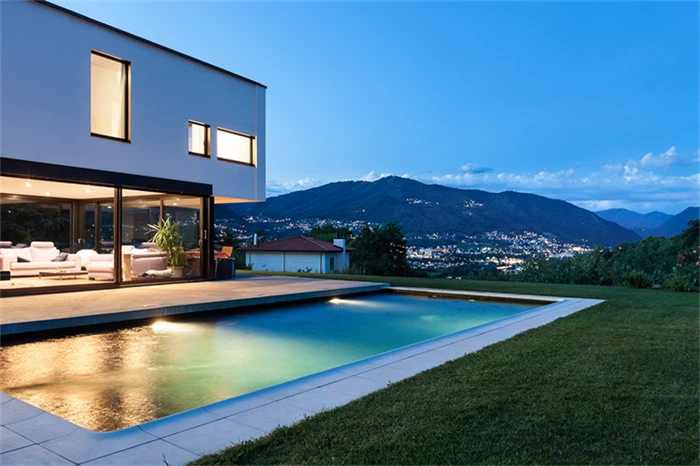
Few experiences rival an evening by a beautifully illuminated swimming pool. The combination of good company, refreshments, and the allure of a midnight swim creates an unparalleled ambiance. While traditional pool lighting often consisted of a single large terrace-side spotlight, modern LED technology has revolutionized aquatic illumination with enhanced aesthetics, superior reliability, and dramatically reduced energy consumption.
1. The Dual Purpose of Pool Lighting: Safety and Ambiance
Beyond creating visual appeal after dark, pool lighting serves crucial practical functions. Dark water not only loses its visual charm but can also evoke unease. More importantly, illumination provides significant safety benefits.
Consider hearing an unexpected splash at night. Without lighting, identifying what entered the water becomes impossible. Modern systems address this with initial high-intensity bursts to immediately illuminate the entire pool area. While most incidents involve wildlife, the capability to instantly verify pool safety-particularly regarding children-makes lighting an essential security feature rather than merely a decorative element.

2. The Evolution from Traditional to LED Lighting
Historically, pools utilized PAR56 incandescent bulbs-powerful 300W fixtures adapted from theatrical lighting. Despite their low initial cost, these systems required expensive installation due to safety-mandated low-voltage operation, necessitating heavy-gauge copper wiring and transformers.
The European Union's Eco-design Directive accelerated the transition toward energy-efficient lighting, establishing LED technology as the new industry standard. Modern equivalents like the Microbrite consume merely 12W-representing a 25-fold reduction in energy use compared to traditional options while delivering comparable or superior illumination.
3. Understanding LED Lighting Variants
LED technology excels at converting electrical energy directly into light rather than heat, enabling exceptional longevity when properly engineered. The market offers several approaches to pool lighting:
Retrofit PAR56 LEDs: Early solutions maintained traditional housings with numerous low-intensity LEDs. These cost-effective options often underperform due to inadequate thermal management in housings not optimized for LED technology.
Modern High-Intensity PAR56: Advanced fixtures like the Pentair Intellibrite utilize the standard PAR56 diameter but incorporate a minimal number of high-output LEDs. This approach represents the current performance standard for primary pool lighting.
Compact Spotlight Arrays: Smaller fixtures like the Microbrite enable multi-unit installations that minimize shadows and create welcoming environments. Their compact dimensions allow placement in constrained areas like stair risers while providing flexible design possibilities.
Despite higher initial investment, LED systems typically deliver over 10,000 hours of service life and rapid return on investment through energy savings and reduced maintenance.
4. Color Technology and Aquatic Applications
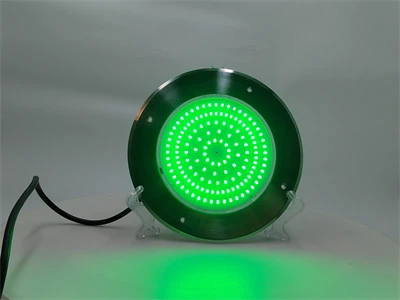
While LEDs famously enable dynamic color displays, water physics significantly impacts color performance. Water absorbs different wavelengths unevenly, with red spectrum light penetrating poorly compared to blue and green wavelengths. This makes monochromatic red lighting impractical for pools, creating murky appearance rather than vibrant illumination.
Advanced systems employ two primary color technologies:
RGB Systems: Combine red, green, and blue diodes to create color mixtures
RGBW Systems: Incorporate dedicated white LEDs alongside color diodes, producing cleaner whites and more accurate color rendition
For optimal results, select fixtures with color-changing capability rather than fixed-color diodes, as these provide better color mixing and more refined lighting effects.
5. Understanding Light Measurement in Aquatic Environments
While lumens represent standard light measurement in air, this metric requires careful interpretation for aquatic applications. Water absorbs light significantly, meaning the lumen rating of a household bulb doesn't directly translate to underwater performance.
Instead, focus on the efficacy ratio between power consumption and reported luminosity. The primary objective remains maximizing light output while minimizing energy waste as heat. High-quality LED fixtures optimize this conversion process specifically for aquatic environments.



Selecting Your Ideal LED Lighting Solution
Incandescent technology has been superseded by LED alternatives offering superior efficiency, longevity, and creative possibilities. When selecting pool lighting, consider these key factors:
Determine required light intensity based on pool size and primary usage
Evaluate the relationship between power consumption and luminous output
Remember that underwater performance differs from atmospheric specifications
Prioritize fixtures engineered specifically for aquatic applications
With appropriate LED lighting, your pool can transform into either a tranquil evening retreat or a vibrant entertainment space. The technology now exists to create precisely the ambiance you envision while providing essential safety benefits and operational economies.