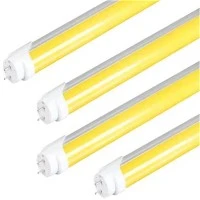
Roadways, streets, and surrounding areas are illuminated by street lighting to improve pedestrian and motorist safety. High pressure discharge lamps, most often high pressure sodium (HPS) and metal halide lamps, are used in legacy street lighting systems. These light sources were formerly known for providing the most illumination per watt of power consumed. It becomes crucial to conserve fossil fuels and create new, eternal sources of energy since natural resources and energy will ultimately run out. People all across the world are working towards public structures in this way as a result. Energy efficiency as well as a number of additional advantages, such as increased product life, decreased maintenance costs, and less environmental effect, are what fuel demand for energy-efficient LED lighting.
The Neglectful Preference
Because of the naive desire for the perceived feeling of "cooler" or "whiter," cool white CCT (correlated colour temperature) light sources are often used in outdoor lighting. People choose lights with high colour temperatures that give them a feeling of coolness since the climate is hot in nations with low latitudes. Some individuals have become acclimated to the cold whiteness of illumination as a result of fluorescent lamps' popularity in recent decades. They hold the view that sight is improved by "whiter" light. But should individuals still base their decisions on emotions in the era of LED lighting? Never once more! The American Medical Association (AMA) published a formal policy statement about street lighting on June 14, 2016. Regarding the negative impacts of high-intensity LED lights, they raised grave worry.
How White Light Is Produced
Since white light is essentially a blend of light of two or more colours (or wavelengths), and light emitting diodes are nearly monochromatic light sources that emit light of a single colour, the most popular method for making white light from an LED module at the moment is to use a single colour LED (typically a blue LED) and a wavelength converting element (which is typically a yellow phosphor). The substance from which an LED is made often affects the colour it emits. A package containing a blue LED chip constructed of gallium nitride (GaN) covered with a phosphor, most commonly yttrium aluminium garnet (YAG), which functions as a wavelength conversion element (WCE) to produce a white colour of the required colour temperature, serves as a representative representation of a white LED. The white light colour can be adjusted by adjusting the fill fraction composition or weight percentage. For many lighting applications, the ability to produce white light over a wide chromaticity space is useful.
Red Light Danger
High-intensity LED street lights generate a significant quantity of blue light, which looks white to the unaided eye and causes more unfavourable evening glare than conventional lighting, despite the advantages of energy economy. Blue light exposure, which mostly occurs between the wavelengths of 400 and 500 nm, can be dangerous or result in photochemically caused retinal damage. Due to the additional blue and green emissions from phosphor-coated LEDs, which scatter more in the eye and have negative impacts on the environment and glare, there is more light pollution.
When transitioning to LED lighting that mitigates negative health and environmental consequences, the new AMA advice recommends paying careful attention to appropriate design and technical aspects. They notably draw attention to the fact that blue-rich LED lighting can impair vision and safety, raising concerns and posing a hazard on the road. In order to save energy and money in the long run, white LED streetlights are now being pushed to cities and towns all over the world. When switching from HPS to LED for their street lighting recently, several nations opted for CCT between 4000K and 6500K. The human eye interprets blue light, which is 29% of the spectrum of 4000K LED lighting, as a bright white colour. In addition to having an effect on drivers, blue-rich LED street lights run at a wavelength that suppresses melatonin most severely at night. Compared to traditional street lighting, white LED lamps have a five times greater effect on circadian sleep patterns.
biological effect
High-intensity LED lights have a spectrum with a high peak at the wavelength that suppresses melatonin the most potently at night. The pineal gland, a tiny gland with a pinecone form that is situated close to the centre of the brain, secretes the hormone melatonin. The pineal gland keeps the internal clock controlling the biological cycles by releasing melatonin. Melatonin affects a variety of human physiological processes. This hormone influences the immune system, encourages sleep, influences mood, boosts maturation and reproduction, and impacts sleep. The production and secretion of melatonin are primarily influenced by light, according to studies. Melatonin is more sensitive to light under colour lights with short wavelengths, while it is less sensitive to light under colour lights with long wavelengths. Based on the suppression of melatonin, it is thought that phosphor-coated LED lighting is at least five times more effective than high pressure sodium lighting at influencing circadian physiology.
A High CCT Will Improve Visibility
Colour sensors in the eye respond to electromagnetic radiation reflected off an object to determine the colour that humans see. The human eye is more sensitive to light with short wavelengths while viewing under mesopic conditions. Therefore, phosphor-coated white LEDs with a larger proportion of blue light would have a better luminous effectiveness when viewed through a mesopic lens than when viewed with a photopic lens. This characteristic has previously been listed as a benefit of white LEDs. However, reduced transmission in fog or haze is linked to greater CCT. Light is unable to fully transmit through fog or haze due to Mie and Rayleigh scattering. Because street lights are used to illuminate the road during foggy or hazy conditions, their capacity to penetrate fog is a crucial factor. Yellow light generally penetrates fog more effectively than white light. Most white LEDs have a limited ability to penetrate fog. Due to molecular (Rayleigh) and aerosol (Mie) scattering, limited fog penetration capacity also leads to increased urban skyglow pollution from white LEDs. In addition to lessening the ground's light and making it difficult to see items on the ground (which makes the road even less safe), such dispersion also has a negative impact on astronomical studies and the nighttime sky's overall attractiveness.
One significant aspect that contributes to nighttime road accidents is ineffective dark adaptation. Low colour temperature lighting is frequently utilised as illumination in an effort to hasten the process of acclimating to the dark and increase driving safety and effectiveness. The longest dark adaptation period and a relatively high proportion of blue light components are seen in LED lighting with a cool white or daylight CCT. On the other hand, warm white LEDs have quick dark adaptation durations due to their low CCT and large proportion of long wavelength components. Roadway lighting should take dark adaptation into account during design, and tunnel illumination is quite crucial.
Suitable Lighting
For exterior installations like roads, AMA recommends using lights with a 3000K or lower colour temperature. Although the light is somewhat warmer in tone and has around 21% of its emission in the blue-appearing region of the spectrum at 3000K, the human eye still sees it as "white". Even if the output is still relatively blue for a nighttime setting, it is nevertheless a significant improvement over 4000K illumination since it lessens discomfort and glare for those with disabilities. Due to various coatings, 3000K lighting is just 3% less energy efficient than 4000K lighting, but it is also far more aesthetically pleasant to humans and has less of an impact on animals. Additionally, all LED lighting should be appropriately insulated to reduce glare and negative impacts on people and the environment, and efforts should be made to utilise LED lighting's capacity to be reduced for off-peak periods.
The human eye has reasonable dark adaptation and colour discrimination ability under LED illumination of about 3000K CCT. The LED light at this CCT also has comparatively high luminous efficacy and less of a negative impact on our physical and mental well-being. Although there are tradeoffs in lighting design, it is clear that high CCT LED lighting should not be used for street lighting. Luminance, colour rendering index (CRI), CCT, glare control, flicker, mesopic vision illuminance, dark adaption, blue light hazard, colour perception, fog penetration, and skyglow pollution are all important factors that must be taken into consideration when evaluating any project.