Have you ever wondered how light emitting diodes (LEDs) and metal halide lights compare? Here is a side-by-side comparison of the two, followed by a thorough analysis of each technique separately.
A Metal Halide Light: What Is It?
When metal and halogen elements come together, compounds known as metal halides are created. These consist of uranium hexafluoride (the fuel used in nuclear energy reactors) and sodium chloride (salt). An electric current is passed through a mixture of metal halide gas and mercury to create light in metal halide lamps. They work fairly similarly to other gas-discharge lamps (like mercury vapor), with the main distinction being the gas's composition. The efficiency and quality of the light are typically enhanced by the addition of metal halide vapor.
What Benefits Do Metal Halide Lights Offer?
Metal halide lights offer a far greater quality of light and are three to five times more efficient than incandescent bulbs. They frequently have a very high color temperature (up to 5500K), depending on the specific mixture of metal halides. Accordingly, metal halide bulbs can be highly effective for high-intensity uses such as headlights on cars, lighting in sports facilities, or lighting for photography. The superior light that metal halides produce is by far their greatest advantage.
What are Metal Halide Lights' Main Drawbacks?
The following are some of the shortcomings of metal halide lighting:
Of all the lights available on the market, metal halide lights have the longest warm-up time. It takes 15 to 20 minutes for many metal halide lights used in sports facilities and warehouses to achieve their typical working temperature. This is a serious problem for multiple reasons:
Since they don't turn on and off when needed, they need to be used for longer lengths of time than LEDs.
You have to know when you'll need light.
To avoid requiring a warm-up when they are turned back on, lights may be turned on when they are not needed, such as during a 30-minute downtime.
When metal halide lamps are operated at less than full power, their efficiency decreases. The typical lifespan of a lightbulb is between 6,000 and 15,000 hours. You may initially spend around the same amount on metal halides and LEDs, depending on the specific bulb. The issue is that, in order to match the lifespan of a single LED, you will eventually need to buy a large number of metal halides (2–5). Over time, that translates into extremely high maintenance expenses.
Which Metal Halide Lights Have Minor Drawbacks?
The following are some of the minor flaws in metal halide lighting:
Lights made on metal halides are omnidirectional. 360-degree light is produced by omnidirectional lighting. Because at least half of the light must be reflected and redirected to the desired area being lighted, this is a significant system inefficiency. Because omnidirectional lights require light to be reflected and redirected, their output is significantly less efficient due to losses than it would be if the light were directional by nature.
Where Do Metal Halide Lights Get Used Most Often?
Metal halide lighting is frequently used in high bay lighting for warehouses and other large indoor spaces, as well as in large sports venues like stadiums or hockey rinks.
LEDs
A Light Emitting Diode (LED): What is it?
The acronym for light-emitting diode is LED. With two electrodes (an anode and a cathode), a diode is an electrical device or component that allows electricity to flow through it in only one direction, usually inward through the anode and outward through the cathode. Semi-conductive materials like silicon or selenium, which are solid state substances that conduct electricity under specific conditions but not under others (e.g. at certain voltages, current levels, or light intensities), are typically used to make diodes. Visible light is released by the gadget when current flows through the semiconductor material. It is the exact opposite of a photovoltaic cell, which is a device that generates electricity from visible light.
You can study the history of LED lighting or read more about the technical aspects of how an LED operates here.
What Is LED Lighting's Main Advantage?
LED lighting offers four main benefits:
Compared to all other lighting technologies, including fluorescent and LPS lights, but particularly to metal halide lights, LEDs have a remarkably long lifespan. New LEDs have a lifespan of at least 50,000 to 100,000 hours. In contrast, a metal halide bulb's lifespan is typically 12–30% longer at best (usually between 6,000 and 15,000 hours).
When compared to all other commercially available lighting technologies, LEDs are incredibly energy efficient. They emit light directionally (over 180 degrees as opposed to 360 degrees, which means there are significantly less losses from the need to redirect or reflect light), and they waste very little energy in the form of infrared radiation (heat).
Excellent quality of light
Very little trouble and maintenance
What are LED lights' minor advantages?
LED lights have a number of minor benefits in addition to the main ones. These consist of the following:
Accessories: LEDs require far fewer parts for their accessory lamps.
Color: Without the need for the conventional color filters that conventional lighting solutions require, LEDs may be made to produce the whole range of visible light hues.
directed: LEDs emit light in a 180-degree radius by default, making them naturally directed.
Size: Compared to conventional lights, including incandescent ones, LEDs can be substantially smaller.
Warm-Up: LEDs switch on and off more quickly and don't require a warm-up or cool-down time.
Read here for a comprehensive summary of LEDs' many benefits.
What Drawbacks Do LED Lights Have?
You might assume that LED lights are a no-brainer given the benefits. Even while this is becoming more and more the case, choosing LED still requires some tradeoffs:
LED lights in particular are really pricey. An LED lighting installation usually has higher upfront expenses than the majority of the options. This is by far the most significant drawback to take into account. Nevertheless, the cost of LEDs is falling quickly, and this trend will continue as more people adopt them. All things considered, the initial cost of LEDs is actually rather similar to that of metal halide lamps. Both lights usually retail for between $10 and $30 per luminaire, depending on the type and features. Naturally, depending on the specific light, this can vary in both situations.
Is the expense of your LED lighting project preventing you from getting it approved? Take advantage of our value engineering service.
Where Do LEDs Get Used Often?
Computer circuit boards were the first real-world application for LEDs. Since then, their uses have progressively grown to encompass lighted signs, traffic lights, and, more recently, indoor and outdoor lighting. For business buildings, schools, warehouses, and gymnasiums, LED lights are an excellent option. Additionally, they can be used for parking lots, road illumination (which provides notable color advantages over low and high pressure sodium lights), and big public places (which need strong, effective lighting over a wide area). Read here for a fascinating look into the development of street lighting in the US.
Additional Qualitative Comparison
What Makes Metal Halide and LED Lights Different?
The two technologies use very different processes to generate light. LEDs are a solid state semiconductor technology, whereas metal halide lamps contain metals that evaporate into inert gas inside the glass shell. The light produced by both methods is of extremely high quality. LEDs are a less maintenance-intensive, more energy-efficient technology that often lasts a lot longer. Metal halides are among the most efficient lights for very cool color temperature outputs, but they have a lower lifespan and lengthy warm-up times. Nevertheless, they generate very high-quality light.
Why will metal halide lamps become obsolete due to LEDs?
When the light is first turned on or if the power source is cut off, certain metal halide lamps have lengthy warm-up times (15–20 minutes). Furthermore, there is a slight chance that a metal halide bulb will blow up. There is still a chance of harm or damage even if this is uncommon and there are risk-reducing precautions. Changing bulbs before their anticipated end of life and collectively (as opposed to spot changing individual bulbs that fail) are common preventive methods. In addition to drastically reducing the light's usable lifespan, this can raise prices.
Furthermore, metal halide light bulbs use a lot of energy inefficiently. Furthermore, because of the warm-up need, they must be run for far longer lengths of time than are actually necessary. All of this adds up to expenses, which typically show up as higher utility bills. Metal halide bulbs are roughly the same price as LEDs, but because of their inefficient operation and frequent replacement needs, they will continue to add costs over time. This inefficiency will be particularly noticeable in a large structure (such as a stadium, warehouse, or hockey rink).
Comparison of Metal Halides and LEDs
Associated Temperature of Color
LEDs come in a variety of color temperatures, which typically fall between 2200K and 6000K (from "warm" yellow to light or "cool" blue).
The white light produced by metal halide lamps is quite cold. Color temperatures as low as 3000K are available for them. Up to 20,000K, some metal halides have incredibly low color temperatures.
WINNER:
CRI
The specific light in question has a significant impact on CRI for LEDs. Nevertheless, a wide range of CRI values, typically between 65 and 95, are accessible.
The best source of high CRI white light available is probably metal halides.
Metal Halide won.
Cycling (Switching On and Off)
Because LEDs react almost instantly (there is no warm-up or cool-down phase), they are perfect for purposefully turning lights on and off. They provide constant, flicker-free illumination.
The warm-up time for metal halide lights is infamously lengthy. Metal halide lights have long been used in many stadiums, although it can take the bulbs 15 to 30 minutes to reach maximum power.
WINNER: LED
Dimming
LEDs are really simple to dim, and you may use them at any percentage of the light, from 100% to 0.5%. Either reducing the forward current or varying the pulse duration is how LED dimming works. You must also buy LED dimmer switches if you wish to dim your LED lights because they are incompatible with conventional incandescent dimmers, which reduce the voltage applied to the light.
Different electric or magnetic ballasts can be used to dim metal halide lights, however doing so alters the voltage supplied to the light and may modify its properties. When operated at less than full power, metal halide lamps are often less efficient. Dimming can occasionally also result in the light going out too soon.
WINNER: LED
Directionality
LEDs have a 180-degree light spectrum. Since light is normally needed across a target region (rather than all 360 degrees around the bulb), this is usually advantageous. Learn more about a metric known as "useful lumens" or "system efficiency" to gain a better understanding of the effects of directional lighting.
Because metal halide lights are omnidirectional, they may emit light in all directions. Losses and decreased system efficiency result from the need to reflect and/or redirect a large portion of these emissions.
WINNER: LED
Effectiveness
When compared to all other lighting options available on the market, LEDs are incredibly efficient, especially when compared to incandescent bulbs. Source efficiency typically falls between 37 and 120 lumens/watt. However, system efficiency-the quantity of light that truly reaches the target area after all losses are taken into consideration-is where LEDs truly shine. The majority of LED system efficiency figures are higher than 50 lumens/watt.
The effectiveness of metal halide lights ranges from 75 to 100 lumens per watt. The main reason they fall short of LEDs is that their system efficiency is significantly poorer (less than 30 lumens/watt) because of all the losses involved in omnidirectional light production and the requirement to reroute it to a desired location.
WINNER: LED
Drooping Efficiency
As current rises, LED efficiency decreases. Additional current also results in an increase in heat output, which shortens the device's lifespan. With an output of about 80% being typical at the end of life, the overall performance decline is comparatively small over time. Researchers that have recently discovered the causes of LED droop are working to further minimize losses.
As the device ages and more power is needed to produce the same lighting output, metal halide lights also lose efficiency. Metal Halides have shorter deterioration times and higher efficiency losses than LEDs.
WINNER: - (Note: New developments in LED technology may probably make them more droopy.)
(Invisible Spectrum) Emissions
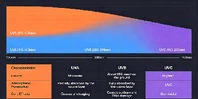
The majority of the energy used by the light source is transformed straight into visible light since LEDs create a relatively narrow spectrum of visible light without the heat or losses to unnecessary radiation types (IR, UV) that come with conventional lighting.
Both infrared and ultraviolet radiation are produced in significant quantities by metal halide lights.
WINNER: LED
Infrared and ultraviolet
LEDs: NOT ONE
For routine illumination, metal halide lights lose energy by emitting infrared radiation.
In order to prevent UV radiation from being released into the atmosphere, metal halide lamps need to have a filter integrated into the lightbulb. These filters are necessary to stop dyed surfaces from fading when exposed to metal halide light; otherwise, light fixtures, people, and even animals may sustain severe injuries (such as severe sunburn or arc eye).
WINNER: LED
Features of Failure
LEDs steadily fade over time, which is how they fail. The loss of one or two diodes does not necessarily indicate that the entire luminaire will fail because LED lights usually use numerous light emitters in a single luminaire.
When metal halide lights reach the end of their useful lives, they can experience a phenomena called cycling, in which they turn on and off without human intervention until eventually breaking completely. Because of this, metal halide lights in many settings (like a stadium) need to be replaced before their useful lives are up.
WINNER: LED
Candles for the feet
Instead of measuring the overall quantity of light emanating from a source (luminous flux), a foot candle measures the amount of light that reaches a given surface area.
Compared to all other types of lighting available on the market, LEDs are incredibly efficient. Source efficiency typically falls between 37 and 120 lumens/watt. However, system efficiency-the quantity of light that truly reaches the target area after all losses are taken into consideration-is where LEDs truly shine. The majority of LED system efficiency figures are higher than 50 lumens/watt.
Compared to incandescent lights, metal halide lights have a source efficiency of 75–100 lumens/watt. The main reason they fall short of LEDs is that their system efficiency is significantly poorer (less than 30 lumens/watt) because of all the losses involved in omnidirectional light production and the requirement to reroute it to a desired location.
WINNER: - (Note: It is challenging to measure relative performance because foot candle ratings are highly application-specific and case-by-case.)
Emissions of Heat
LEDs don't produce a lot of forward heat. There is really only one possible drawback to this: using LEDs for outdoor lighting during the winter. When snow falls on conventional lights, such as HID lights, it will melt upon contact with the light. With LEDs, this is typically avoided by facing the light downward toward the ground or covering it with a visor.
A substantial amount of heat is released by metal halide bulbs; around 10–15% of the energy used is converted to heat. Although this could be advantageous in certain situations, heat losses are often a bad thing because they indicate energy inefficiency. The device's ultimate goal is to emit light, not heat.
WINNER: LED
Duration of Life
Compared to other commercially accessible light sources, LEDs have a longer lifespan. Although lifespans vary, they usually fall between 25,000 and 100,000 hours or more before a light or fixture needs to be replaced.
While metal halide lights last longer than outdated technologies like incandescent lights, they are not as long-lasting as LED lights. The average lifespan of a lightbulb is between 6,000 and 15,000 hours before it needs to be replaced. Note: In order to prevent major degradation effects like color changes or cycling, metal halide lamps may need to be replaced before the end of their useful lives.
WINNER: LED
Cost of Life
LED lighting offers low lifetime costs and comparatively expensive starting expenditures. Over time (the payback period), the technology reimburses the investor. Over time, lower maintenance expenses (which are based on labor costs) and energy efficiency gains (which are dependent on electricity costs) provide the largest payback.
Although they are reasonably priced to buy, metal halide lights require a lot of upkeep. To achieve the same lifespan as a single LED light, metal halide bulbs will probably need to be bought multiple times and the labor costs involved will need to be covered.
WINNER: LED
Costs of Maintenance
LEDs are by far the best on the market in terms of lifetime costs because of their operating lifetimes and how frequently bulbs need to be replaced.
In addition to the labor cost of monitoring and replacing aging or expired lights multiple times over the expected lifespan of a single LED, metal halide lamps require routine relamping and ballast replacement.
WINNER: LED
Initial Expenses
The price of LED lights varies based on the specs, however they are generally high. The average cost of a 100W-equivalent LED bulb is between $10 and $20.
Depending on the specs, a 100W Metal Halide light bulb might cost anywhere from $10 to $30.
WINNER:
Resistance to Shock
Solid state lights (SSLs), like LEDs, are hard to break with physical shocks.
Bulb metal halide is comparatively brittle. More significantly, because many metal halide lamps contain dangerous substances like mercury, broken bulbs need to be handled and disposed of carefully.
WINNER: LED
Dimensions
LEDs can be scaled to a much bigger size and can be incredibly small (less than 2mm in some circumstances). All things considered, this greatly expands the range of applications for LEDs.
Although they can be tiny, metal halide bulbs are usually not made any smaller than about a centimeter across. The wattage and light output needed for a particular application determine the bulbs' maximum size.
WINNER: LED
Tolerance for Cold
LEDs: They will activate instantly at temperatures below 40 degrees Celsius.
Minus 40 degrees Celsius for metal halide
WINNER: LED
Tolerance for Heat
100°C. LEDs work well in both indoor and outdoor environments at all typical operating temperatures. However, they need a lot of heat sinking and function worse at very high temperatures, particularly when near other delicate parts.
We were unable to locate any unbiased information regarding the performance of metal halide bulbs at high temperatures. Please get in touch with us if you have any information.
WINNER:
Time to Warm Up
There is almost no warm-up period for LEDs. Their brightness reaches its peak very instantly.
Depending on the brightness, metal halide lamps need a noticeable warm-up period. It may take 15 to 20 minutes for metal halide lights in athletic venues to reach their full brilliance.
WINNER: LED
Guarantee
LEDs: Usually 5–10 years
Metal Halide: usually one to two years
WINNER: LED