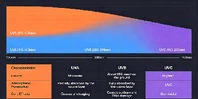
Some industry sources assert that LEDs don't emit UV rays. Actually, this is untrue. There is some UV produced by LEDs, but it is very little. This is so that the phosphors inside the lamp can turn the quantity of light generated into white light.
Why are UV emissions important, then?
mostly because UV radiation is found in the region of the electromagnetic spectrum that makes us use sunscreen when the sun is at its strongest. UV radiation can lead to skin cancer, cataracts, and sunburns at large amounts. Most artificial light sources won't cause you to experience these effects, but a recent decision to phase out incandescent lamps in Canada prompted one federal government agency to examine whether UV radiation from CFLs surpassed the recommended levels of exposure. Even though the study by Natural Resources Canada concluded that "at a distance of 30 cm, (and by extension greater distances), the bulbs do not pose a significant risk of acute injury to the eyes or skin, as compared to traditional incandescent lamps," it also makes the following recommendation: "...that single envelope CFLs not be used at distances less than 30 cm to avoid any long-term health effects in the general population."
The biggest issue with some lighting types, notably CFLs and high-intensity discharge (HID) lights, is that they release enough UV to eventually harm textiles and artwork, unless you're illuminating your house, workplace, or factory with tanning-bed lamps. Due to their low UV emissions, high-quality LEDs are currently the preferred lighting option for museums looking to safeguard priceless antiques and preserve their unique hues and patina. LEDs protect carpets, window coverings, and painted surfaces from the deteriorating effects of UV radiation in commercial and residential applications.
LEDs provide respite from an additional bothersome issue: insects. Bugs are attracted to UV light. If you've ever witnessed or heard a bug zapper in action, you are aware of the peculiar control that UV radiation appears to have on insects. Since LEDs emit almost little UV, they do not attract insects, making them a popular choice for external installations, commercial food-service settings, and homes with kitchens where it is crucial to reduce the attraction of small flying pests.
Before choosing a lighting technology, do you take your application into account? Has the UV radiation from different lighting technologies affected your decision to buy?

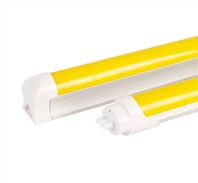
Benwei UV 120cm led tube black light Product Specification:
|
Item |
UV led light tube bulb T8 |
|
Input Volt |
AC85-265V |
|
Power |
10W,18W,24W |
|
Length |
60cm/2ft, 120cm/4ft, 150cm/5ft |
|
Bean Angle |
120°, 180° |
|
Lifespan |
50000 hrs |
|
Wavelength |
365nm 395nm 254nm 280nm |
|
Warranty |
3-5 years |