Linear lighting for contemporary spaces has evolved with the introduction of T8 LED Tubes

The T8 tube is one of the few fixtures that has persisted over the years in the landscape of commercial and industrial lighting. As a result of their linear design, homogeneous light distribution, and comparatively low energy consumption in comparison to incandescent bulbs, fluorescent T8 tubes were the choice of choice for warehouses, offices, retail stores, and educational buildings for a number of decades. T8 LED tubes, on the other hand, have arisen as a superior option with the development of light-emitting diode (LED) technology. These tubes combine the familiar form factor of classic T8s with the efficiency, lifespan, and adaptability of LEDs. For the time being, these tubes are revolutionizing linear lighting by providing a smooth transition for areas that are upgrading from fluorescent lighting systems while simultaneously bringing considerable increases in performance and sustainability. The design, advantages, uses, and concerns of T8 LED tubes are discussed in this article. The article also highlights the reasons why these tubes have become the preferred option for contemporary lighting projects.
One must begin with the fluorescent T8 tube, which is the forerunner of the T8 LED tube, in order to comprehend the relevance of the T8 LED tube. T8 fluorescent tubes, which were introduced in the 1980s, swiftly supplanted the larger T12 fluorescent tubes, which had been established as the norm for several decades. Because the "T" in T8 stands for "tubular," and the number represents the diameter in eighths of an inch, this means that a T8 tube has a diameter of 1 inch (25.4 millimeters), which is smaller than the T12 tube, which has a diameter of 1.5 inches. An ultraviolet (UV) light is produced by fluorescent T8s by the use of a mercury vapor arc. This UV light then interacts with a phosphor coating that is included within the tube, resulting in the emission of visible light. Although they are more efficient than T12s, they still have several limitations, such as the fact that they require ballasts to regulate the electrical current, that it takes some time for them to achieve maximum brightness, that they show a detectable hum or flicker, and that they contain hazardous mercury, which makes disposal more difficult.
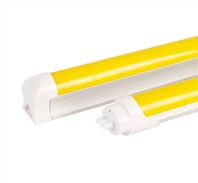
T8 LED tubes are a drop-in replacement for the majority of current fixtures since they maintain the same linear form and 1.5-inch diameter as their fluorescent equivalents. This is a significant benefit for retrofitting projects. However, their internal technology is essentially distinct from that of their competitors. Arrays of light-emitting diodes, which are tiny semiconductor devices that convert power directly into light, are used in T8 LED tubes when mercury and phosphors are not used. This change not only removes flicker and noise, but it also eliminates the necessity for ballasts in many situations (although there are certain LED tubes that are intended to operate with existing ballasts and are referred to as "ballast-compatible" types). While giving higher performance, the end result is a lighting system that can be effortlessly integrated into existing infrastructure.
The fact that T8 LED tubes are efficient in terms of energy consumption is one of the most persuasive advantages they provide. In order to generate the same or higher light output (measured in lumens), fluorescent T8 tubes generally use between 32 and 40 watts per tube, whereas LED counterparts utilize just 18 to 25 watts. The result is a decrease in energy consumption of between forty and sixty percent, which is a considerable reduction for areas that include hundreds or thousands of tubes. This would amount to around 657,000 kilowatt-hours (kWh) per year if, for instance, a warehouse that had 500 fluorescent T8 tubes and operated for 12 hours every day. If those were replaced with LED T8s, the consumption would be reduced to 344,250 kWh, which would result in a savings of approximately 312,000 kWh annually. This would be sufficient to power thirty typical households for an entire year. Not only do these reductions bring down the amount of money spent on utilities, but they also lessen the dependency on fossil fuels, which in turn reduces the carbon footprint of the structures that make use of them.
The longevity of T8 LED tubes is yet another characteristic that sets them apart. Phosphor deterioration, frequent on-off cycles, and ballast failures are all factors that can limit the lifespan of fluorescent T8s, which typically ranges from 20,000 to 30,000 hours. The lifespan of T8 LED tubes, on the other hand, is between 50,000 and 100,000 hours, which is more than twice as long. Because of its longer lifespan, the amount of money spent on maintenance is significantly reduced because fewer replacements are required. Just the decrease of ladder time and personnel charges can be enough to cover the initial investment in LED tubes for buildings that have high ceilings or fixtures that are difficult to access, such as gymnasiums, warehouses, or manufacturing factories. In addition, longer lifespans result in fewer tubes eventually being disposed of in landfills, which is in line with the objectives of sustainability.
In every lighting application, light quality is an essential factor to take into account, and T8 LED tubes offer exceptional performance in this regard. The color rendering index (CRI) of fluorescent T8s is typically between 70 and 80, which can produce color distortion and eye strain. Fluorescent T8s emit a harsh, chilly white light. On the other hand, T8 LED tubes provide a variety of color temperatures and greater CRI values, which normally range from 80 to 90, with some luxury versions reaching more than 95. They are therefore perfect for environments where color perception is important, such as retail stores, art studios, or medical institutions, because they portray colors more precisely than other types of displays. T8 LED tubes come in a range of color temperatures, from warm white (2700K–3000K), which produces an ambiance that is pleasant and inviting, to cool white (5000K–6500K), which simulates natural daylight and makes it easier to concentrate in places like workplaces or schools. Lighting may be adapted to meet the individual requirements of a place thanks to the adaptability of the lighting.
T8 LED tubes are distinguished from fluorescent versions by their flickering and dimming capabilities, among other characteristics. There is a tendency for fluorescent tubes to flicker, which is a subtle but potentially hazardous issue that has been related to headaches, eye strain, and decreased productivity. This tendency is more prevalent when fluorescent tubes age or when they have ballasts that are incompatible with another. A more pleasant atmosphere is created when T8 LED tubes are used in conjunction with high-quality drivers because they operate at a high frequency that avoids any noticeable flickering. There are also several LED tubes that offer dimming, which is a function that is not commonly accessible with fluorescent T8s. Users are able to alter the light levels to fit the activity, brightening for detailed work and lowering for presentations. This helps users to reduce energy use even further while also improving the atmosphere. The flexibility of these facilities, such as auditoriums, conference rooms, and multi-purpose halls, makes this an especially significant tool.
Although it is intended to be a basic operation, the retrofitting procedure for T8 LED tubes can be somewhat complicated depending on the type of LED tube that is used. A hybrid, a ballast-compatible (also known as "plug-and-play"), and a ballast-bypass (also known as "direct wire") are the three primary varieties. It is not necessary for customers to make any modifications to their wiring in order to utilize ballast-compatible tubes because they are compatible with the fluorescent ballasts that are already in place. The ballast still uses some energy, therefore this is the choice that is the quickest and easiest to use, but it may result in a minor decrease in efficiency. The ballast must be removed or disconnected before the fixture may be wired directly to the mains power supply in order to use ballast-bypass tubes. Choosing this alternative allows for more efficiency and avoids the possibility of ballast failure; nevertheless, it necessitates additional installation time and electrical skill. In order to accommodate uncertain or varied fixture configurations, hybrid tubes provide flexibility by functioning either with or without a ballast.
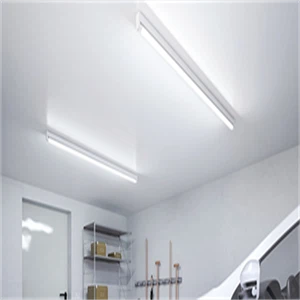
Because of its versatility, T8 LED tubes are excellent for a broad variety of applications, both in commercial and industrial settings, as well as in residential one. They create a more productive workstation by reducing glare and shadows in offices, which is made possible by their uniform dispersion of light. Warehouses and manufacturing facilities benefit from their resilience and extended lifetime in high-usage conditions, while retail stores utilize them to showcase items with realistic colors. Retail stores also use them to display merchandise. Healthcare facilities respect their easy maintenance and clean, bright illumination, while educational institutions appreciate their flicker-free light, which ensures that students are able to concentrate and maintain eye comfort. In addition to lowering energy expenditures and improving light quality, the change may also be beneficial for home garages, basements, or workshops, which are typically equipped with fluorescent lighting fixtures.
Another significant benefit of T8 LED tubes is their extremely long lifespan. LED tubes, on the other hand, are manufactured using sturdy materials such as shatterproof plastic or reinforced glass, in contrast to fluorescent tubes, which are inherently weak and prone to shattering, thereby releasing mercury. Because of this, they are resistant to vibration, impact, and variations in temperature, making them an excellent choice for warehouses, garages, and other spaces that get a lot of foot traffic. There are additional variants that have dustproof and waterproof ratings (IP65 or higher), which enables them to be utilized in moist situations such as car washes, cold storage facilities, or outside covered areas. These are a few examples of applications that would soon fail fluorescent tubes.
T8 LED tubes are compatible with green efforts in a number of different ways, which is particularly relevant given the increased concern that businesses and homeowners have regarding environmental responsibility. As was noted, the energy efficiency of these plants helps to lower the amount of carbon emissions produced by power plants. Furthermore, in contrast to fluorescent tubes, they do not contain any mercury or other potentially harmful compounds, which makes disposal and recycling process much simpler. Additionally, a significant number of LED tubes are constructed from recyclable materials, which further lessens their influence on the environment. With the use of T8 LED tubes, businesses that are working toward obtaining sustainability certifications such as LEED (Leadership in Energy and Environmental Design) or BREEAM may earn points that are associated with energy efficiency and the quality of the interior environment.
T8 LED tubes often have a return on investment (ROI) that is substantial, despite the fact that their initial cost is typically two to three times greater than that of fluorescent tubes. Many business customers are able to return their investment within one to two years because to the combination of energy savings, lower maintenance expenses, and a longer lifespan. An example of this would be a small office that has fifty fluorescent T8 tubes and pays $0.12 per kWh. If they switched to LED tubes, they would save around $650 yearly, which would rapidly offset the difference in total cost. The return on investment (ROI) durations for larger facilities are typically less than a year, which results in even more significant cost reductions. T8 LED tubes are becoming a more economically sensible alternative as the cost of energy continues to grow, which is expected to result in a shorter timeframe.
When picking T8 LED tubes, there are crucial elements to take into account, despite the fact that they provide a multitude of benefits. Checking the manufacturer's specs is absolutely necessary since not all LED tubes are compatible with all ballasts or fixtures. Compatibility is of the utmost importance. It is possible to produce flickering, a reduction in longevity, or even failure by using a ballast-compatible tube with a ballast that is not compatible with. Wiring that is done correctly is essential for ballast-bypass installations, as it guarantees both safety and performance. It is advised that you use a skilled electrician for this purpose. Users should purchase tubes with lumen ratings that meet or surpass their existing fluorescent tubes in order to retain brightness. This is because light output, which is measured in lumens, varies from model to model. Mismatched lighting can produce an environment that is inconsistent or uncomfortable, therefore color temperature and color rendering index (CRI) should also be set based on the application.
T8 LED tubes are well positioned to reap the benefits of continuous developments in LED technology, which are expected to continue in the future. The reduction of energy usage is anticipated to be further reduced by improvements in chip efficiency, and the extension of lifespans beyond 100,000 hours may be possible with improved heat management. Integration with lighting controls, motion sensors, or Internet of Things (IoT) systems, which enables automatic dimming, scheduling, or energy monitoring, may potentially become more commonplace. There is also the possibility that smart features may become more abundant. Through the implementation of these advances, the functionality of T8 LED tubes will be improved, so rendering them even more responsive to the ever-changing requirements of contemporary places.
In conclusion, T8 LED tubes provide a significant contribution to the development of linear lighting. These tubes are based on the well-known shape of fluorescent T8s, but they offer higher efficiency, lifetime, and light quality. As a result of their drop-in compatibility, retrofitting is made simple, and their wide range of applications, which includes anything from offices to warehouses, ensures that they can accommodate the requirements of virtually any environment. It is a tempting alternative for anybody who is wanting to replace their lighting system to consider using T8 LED tubes since they reduce the amount of energy used, minimize the costs of maintenance, and improve the environmental sustainability.
T8 LED tubes will continue to replace fluorescent tubes as the norm for linear lighting as more corporations and homeowners become aware of the advantages that LED technology offers. It is not simply a replacement; rather, it is a transformation because of its capacity to combine performance, practicability, and sustainability. This demonstrates that even the most established lighting solutions can be redesigned for a brighter and more efficient future.
https://www.benweilight.com/lighting-tube-bulb/t8-led-tube-double-ended-connection-10w-15w.html
Together, we make it better.
Shenzhen Benwei Lighting Technology Co.,Ltd
Mobile/Whatsapp :(+86)18673599565
Email:bwzm15@benweilighting.com
Skype: benweilight88
Web: www.benweilight.com
Add:F Building,Yuanfen Industrial Zone,Longhua,Bao'an District,Shenzhen, China