Regulations for the Recycling of Discarded LED Products: Global Frameworks and Implementation Challenges
Abstract
With the rapid global adoption of LED lighting products, the issue of waste disposal has become increasingly prominent. This paper systematically analyzes the recycling regulatory systems for discarded LED products in the EU, North America, and major Asian countries, including specific requirements under key regulations such as the EU's WEEE Directive, the U.S. Universal Waste Rule, and China's Regulations on the Recycling and Treatment of Waste Electrical and Electronic Products. The study reveals current technical challenges in LED recycling - difficult product disassembly, low rare earth element recovery rates (less than 20%), and mercury contamination risks (despite minimal content). The article further proposes solutions including improving extended producer responsibility systems, establishing standardized recycling processes, and developing efficient separation technologies, providing policy recommendations for building a sustainable full-lifecycle management system for LED products.
1. Introduction: The Coming Wave of LED Waste
1.1 Market Scale and Waste Growth
The global LED lighting market reached $72 billion in 2023, with annual growth rates maintaining 12-15%. According to IEA statistics, there are currently over 50 billion LED products in use worldwide. Given an average lifespan of 8-10 years, the industry will face an annual wave of 800,000 to 1 million tons of LED waste post-2025. Unlike incandescent bulbs, LED products contain semiconductor materials (GaAs, GaN), rare earth phosphors (YAG:Ce), and trace heavy metals (averaging 0.2-0.5% lead content), with improper disposal leading to resource waste and environmental pollution.
1.2 Urgency of Regulatory Development
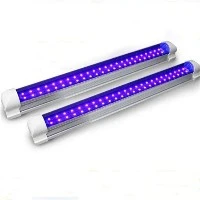
The composite material structure of LED products (Figure 1) presents unique recycling challenges:
Electronic components: Driver circuits containing PCBs and electronic elements
Optical components: Lenses and reflectors using polycarbonate (PC) and PMMA plastics
Thermal management materials: Aluminum heat sinks and thermal conductive silicone
Sensitive substances: Some models contain trace cadmium (<0.01%) and mercury (<0.1mg)
This complexity far exceeds traditional lighting products, urgently requiring specialized recycling regulations.
2. Comparative Analysis of Global LED Recycling Regulations
2.1 EU Framework: Extended Application of WEEE Directive
The Waste Electrical and Electronic Equipment Directive (2012/19/EU) explicitly includes LED products under "lighting equipment" (Category 5), requiring:
Recycling rate targets: Minimum 80% recovery rate and 70% material reuse rate from 2023
Producer responsibility: Mandatory registration and cost coverage (€400-600 per ton processing fee)
Collection systems: Establishment of 12,000 public collection points achieving 45% collection rate by 2022
Design orientation: Ecodesign regulations require LED products to display disassembly symbols
Case example: Netherlands' LightRec system achieves 87% LED recycling rate through "visible fee" mechanisms (including recycling costs in product prices).
2.2 North American System: Fragmented Regulation
The U.S. employs federal-state two-tier regulation:
Federal level: EPA's Universal Waste Rule classifies LEDs as "universal waste," requiring:
Three-year retention of transportation records
Classification as hazardous waste if breakage exceeds 20%
State innovations:
California's SB-212 requires producers to pay recycling fees ($0.3-0.5/unit)
Maine implements "convenience recycling fee" (retail collection)
Canada's Extended Producer Responsibility (EPR) framework requires provinces to develop LED recycling plans, with British Columbia achieving 62% recycling rate.
2.3 Asian Model: Government-Led Approach
China's Catalog of Waste Electrical and Electronic Products for Disposal (2014) includes LEDs under "other electronic appliances," requiring:
Processor licensing: Requires MEE-issued qualification certificates (only 109 nationwide)
Subsidy fund: ¥85/ton subsidy based on actual processing volume (2023 standard)
Technical specifications: GB/T 36571-2018 stipulates rare earth phosphor recovery processes
While Japan's Home Appliance Recycling Law doesn't directly cover LEDs, the Act on Promotion of Effective Utilization of Resources requires:
Material composition disclosure by manufacturers
Mandatory retailer take-back services (covering 92% municipalities)
3. Technical Challenges and Breakthroughs in LED Recycling
3.1 Disassembly and Separation Difficulties
Low automation: Primarily manual disassembly (<200 units/person/day)
Adhesive challenges: Thermal conductive silicone complicates aluminum substrate separation
Miniaturization barriers: COB-packaged LED chips (<1mm²) prone to damage during mechanical separation
Innovative solution: Laser Zentrum Hannover's laser debonding technology achieves 95% chip recovery rate.
3.2 Rare Earth Element Recovery Bottlenecks
Typical rare earth distribution in LEDs:
| Element | Content (mg/unit) | Current Recovery Rate | Primary Form |
|---|---|---|---|
| Yttrium (Y) | 15-20 | 18% | YAG:Ce phosphor |
| Cerium (Ce) | 0.5-1.2 | 12% | Same |
| Europium (Eu) | 0.05-0.1 | <5% | Red phosphor dopant |
ETH Zürich's supercritical CO₂ extraction improves Y recovery to 73%, albeit at €120/kg cost.
3.3 Hazardous Substance Control
Although LED mercury content is merely 1/1000 of CFLs:
EPA requires <0.025mg/m³ mercury vapor concentration during crushing
China's GB 30452-2013 mandates <5mg/L lead leaching
Solution: Korea's KIST developed low-temperature (<80°C) vacuum pyrolysis meeting emission standards.
4. Policy Recommendations for Regulatory Improvement
4.1 Tiered Management System
Class A (>50W): Mandatory closed-loop recycling
Class B (5-50W): Standardized collection
Class C (<5W): Simplified process
4.2 Technological Innovation Incentives
Establish LED recycling R&D funds (recommended 0.5% industry revenue)
VAT reduction for high recovery rate (>80%) enterprises
4.3 Global Coordination Mechanisms
Develop unified material declaration standards (reference IPC-1754A)
Establish transnational recycling certification (e.g., TÜV RECYCLE)
5. Conclusion and Outlook
Current regulations inadequately address LED technical characteristics, requiring enhancements in:
Precision control: Differentiate environmental risk levels by LED specifications
Technology integration: Apply blockchain for waste tracing (e.g., Philips' GreenCycle)
Value extraction: Develop rare earth reuse business models
By 2030, with breakthroughs in chemical recycling, full-component LED recovery rates could rise from 35% to 75%, truly achieving "green lighting" closed-loop management.
Shenzhen Benwei Lighting Technology Co.,Ltd,a professional manufacturer in producing LED lighting products,integrates design,development,production and sales of high-tech products as a whole.Our factory was founded in 2010,is located in shenzhen. We are specialized in innovative and durable solutions for commercial, industrial, and agricultural applications.
Our address
F Building, Yuanfen Industrial Zone,Longhua,Shenzhen,China
Phone Number/Whatsapp
+86 19972563753
bwzm12@benweilighting.com