Solar Road LED Street Lamps: Sustainable Illumination for Smart and Eco-Friendly Cities


In the global push toward sustainability and smart urban development, solar road LED street lamps have emerged as a transformative solution for public lighting. Unlike traditional street lamps that rely on grid electricity-contributing to high energy costs and carbon emissions-these innovative fixtures harness solar energy to power high-efficiency LED lights, offering a self-sufficient, eco-friendly alternative. Designed to withstand harsh outdoor conditions, adapt to varying sunlight levels, and integrate with smart city systems, solar road LED street lamps are reshaping how cities, towns, and rural areas approach public lighting. From reducing municipal energy budgets to minimizing environmental impact and enhancing road safety, these lamps deliver a host of benefits that align with modern urban planning goals. This article explores the technical components, key advantages, practical applications, installation considerations, and future innovations of solar road LED street lamps, highlighting why they have become a cornerstone of sustainable infrastructure development worldwide.
To understand the functionality of solar road LED street lamps, it is essential to break down their core components, which work together to capture, store, and convert solar energy into reliable illumination. At the heart of the system is the solar panel-typically made of monocrystalline or polycrystalline silicon-responsible for absorbing sunlight and converting it into direct current (DC) electricity. Monocrystalline panels are preferred for most street lamp applications due to their higher efficiency (18–22% vs. 15–18% for polycrystalline) and compact size, making them ideal for mounting on lamp poles without excessive space requirements. The size of the panel varies based on the lamp's power needs: a standard 30W LED street lamp might require a 60W–100W solar panel to ensure sufficient energy capture, even on cloudy days.
Next is the energy storage system, usually a lithium-ion or lead-acid battery that stores excess electricity generated during the day for use at night. Lithium-ion batteries are increasingly common due to their longer lifespan (5–7 years vs. 3–5 years for lead-acid), lighter weight, and higher energy density-meaning they can store more power in a smaller space. The battery capacity is calibrated to match the lamp's energy consumption: for example, a 30W lamp that operates for 10 hours per night (standard for street lighting) would require a 12V/100Ah battery to ensure reliable performance, even during 2–3 consecutive days of low sunlight.
The LED light source is the third critical component, chosen for its efficiency, longevity, and brightness. Most solar road LED street lamps use high-power LED modules (10W–60W) that produce 1000–6000 lumens-sufficient to illuminate roads, sidewalks, and parking lots. These LEDs offer a color temperature of 5000K–6500K (cool white), which enhances visibility by improving contrast between objects (e.g., pedestrians, potholes) and the road surface. They also have a long lifespan (50,000–100,000 hours) and low energy consumption, using 70–80% less power than traditional high-pressure sodium (HPS) street lamps.
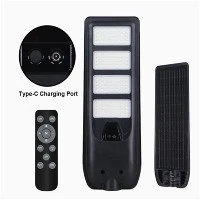
Finally, the controller acts as the "brain" of the system, managing the flow of electricity between the solar panel, battery, and LED light. It prevents overcharging of the battery during the day and over-discharging at night, extending battery life. Many modern controllers also include smart features: dusk-to-dawn sensors that automatically turn the lamp on at sunset and off at sunrise, motion sensors that increase brightness when pedestrians or vehicles are detected (and dim when the area is empty), and remote monitoring capabilities that allow operators to check battery levels, adjust brightness, and troubleshoot issues via a smartphone app or cloud platform.
The advantages of solar road LED street lamps over traditional grid-powered street lamps are both environmental and economic, making them a compelling choice for municipalities and private developers. One of the most significant benefits is zero energy costs. Once installed, solar street lamps generate their own power, eliminating monthly electricity bills-a major savings for cities, where street lighting can account for 20–30% of municipal energy budgets. For example, a city with 1,000 traditional 100W HPS street lamps (operating 10 hours per day) would spend approximately \(45,000 per year on electricity (based on \)0.15/kWh). Replacing these with 30W solar LED street lamps would eliminate this cost entirely, saving $450,000 over a decade.
Reduced carbon emissions are another key environmental benefit. Traditional HPS street lamps rely on fossil fuel-generated electricity, contributing to greenhouse gas emissions. A single 100W HPS lamp emits approximately 0.5 tons of CO₂ per year; 1,000 such lamps would emit 500 tons annually. Solar road LED street lamps, by contrast, produce zero operational emissions, helping cities meet carbon reduction targets set by initiatives like the Paris Agreement. Additionally, their long lifespan (5–10 years for the entire system) reduces waste from frequent replacements, further minimizing environmental impact.
Easy installation and flexibility are practical advantages that set solar road LED street lamps apart. Unlike traditional lamps, which require digging trenches for power cables and connecting to the grid-an expensive and time-consuming process-solar lamps are self-contained. They can be installed on existing lamp poles or new poles in just a few hours, with no need for grid access. This makes them ideal for remote areas (e.g., rural roads, national parks) where grid connectivity is limited or non-existent, as well as for temporary projects (e.g., construction sites, event venues) that require portable lighting.
Enhanced reliability and safety are also notable benefits. Solar road LED street lamps are designed to withstand extreme weather conditions: their enclosures have an IP65–IP67 ingress protection rating, making them resistant to rain, snow, dust, and high winds. The LED light source is also more durable than HPS bulbs, which are prone to breaking from vibration or temperature changes. Many models include backup batteries that can power the lamp for 2–5 days without sunlight, ensuring continuous illumination even during cloudy weather. For road safety, the cool white light of LEDs improves visibility, reducing the risk of accidents by making pedestrians, cyclists, and road hazards more visible to drivers.
Solar road LED street lamps are versatile enough to be used in a wide range of applications, from urban roads to rural pathways. Their most common uses include:
Urban Roads & Highways: Installed along main roads, highways, and ring roads to illuminate lanes, sidewalks, and intersections. Motion sensors in these lamps can adjust brightness based on traffic volume-dim to 30% during low-traffic hours (e.g., 2–5 AM) to save energy, and brighten to 100% when vehicles or pedestrians are detected.
Residential Neighborhoods: Used in residential streets, cul-de-sacs, and 小区 to provide soft, consistent lighting that enhances safety for residents (especially children and the elderly) while avoiding light pollution that disrupts sleep. Warm white (4000K) LED options are available for neighborhoods where a softer glow is preferred.
Rural Areas & Remote Locations: Deployed in rural roads, farm lanes, and national park trails where grid electricity is unavailable. Their self-sufficient design ensures these areas have access to reliable lighting, improving safety for residents and visitors alike.
Parking Lots & Public Spaces: Installed in parking lots, parks, plazas, and playgrounds to illuminate large areas. Solar lamps in these spaces often include motion sensors to increase brightness when people are present, reducing energy waste during empty periods.
Temporary & Emergency Lighting: Used in construction sites, disaster relief areas, and outdoor events (e.g., festivals, fairs) where temporary lighting is needed. Their portability and easy installation make them ideal for these short-term applications.
Installing solar road LED street lamps requires careful planning to ensure optimal performance and longevity. The first step is a site assessment to evaluate sunlight availability, road width, and traffic volume. Solar panels need unobstructed access to sunlight for 4–6 hours per day, so sites with tall trees, buildings, or other shadows should be avoided, or panels should be mounted at a height/angle to minimize shading. The road width determines the required brightness: a narrow residential street may need a 20W–30W lamp, while a wide highway may require a 50W–60W lamp with a wide beam angle (120–150 degrees) to cover multiple lanes.
Next is pole selection and placement. Solar street lamps can be mounted on existing poles (if they can support the weight of the solar panel and battery) or new poles. The pole height is typically 5–12 meters, depending on the application: 5–8 meters for residential streets, 8–12 meters for highways. Poles should be placed 30–50 meters apart to ensure uniform illumination without dark spots. For roads with sidewalks, poles are often placed on the sidewalk edge to avoid interfering with traffic.
Battery and solar panel sizing is another critical step. The battery capacity should be sufficient to power the lamp for 10–12 hours per night, plus a 2–3 day backup for cloudy weather. The solar panel size is determined by the lamp's power consumption and local sunlight hours: a 30W lamp in an area with 5 hours of daily sunlight would require a 80W solar panel to fully charge the battery each day. Manufacturers often provide sizing calculators that use local sunlight data (from sources like the National Renewable Energy Laboratory) to recommend the right panel and battery combination.
Finally, installation and testing should be performed by trained professionals to ensure safety and compliance with local codes. The process involves mounting the solar panel on the pole (typically at a 30–45 degree angle to maximize sunlight absorption), securing the battery (either in a pole-mounted box or underground), connecting the controller, and installing the LED light. After installation, the system is tested to verify that the solar panel charges the battery correctly, the lamp turns on/off automatically at dusk/dawn, and motion sensors (if included) function properly.
When selecting a solar road LED street lamp, several key factors should be considered to ensure the product meets your needs:
Solar Panel Efficiency: Choose monocrystalline panels for higher efficiency (ideal for areas with limited sunlight) or polycrystalline panels for lower cost (suitable for sunny areas).
Battery Type and Capacity: Opt for lithium-ion batteries for longer lifespan and higher energy density, especially in areas with extreme temperatures. Ensure the battery capacity is sufficient for local weather conditions (e.g., larger capacity for areas with frequent cloudy days).
LED Power and Beam Angle: Select the LED power based on road width and brightness requirements, and choose a beam angle that covers the desired area (narrow for focused illumination, wide for large areas).
Durability and Weather Resistance: Look for lamps with an IP65–IP67 rating to ensure they withstand rain, snow, and dust. The solar panel and battery should also be rated for extreme temperatures (-30°C to 60°C) to avoid performance issues in harsh weather.
Smart Features: Consider lamps with dusk-to-dawn sensors, motion sensors, and remote monitoring capabilities for added energy savings and convenience. Remote monitoring allows operators to track performance and troubleshoot issues without on-site visits.
Warranty and After-Sales Support: Choose reputable brands that offer a 5–10 year warranty on the entire system (solar panel, battery, LED, controller). Good after-sales support is essential for addressing maintenance issues (e.g., battery replacement) down the line.
The future of solar road LED street lamps is shaped by ongoing innovations in solar technology, battery storage, and smart city integration. One emerging trend is the use of bifacial solar panels, which capture sunlight from both sides (front and back) by reflecting light off the ground or nearby surfaces. Bifacial panels can increase energy capture by 10–30%, making them ideal for snowy areas (where snow reflects sunlight) or roads with light-colored surfaces.
Another innovation is energy storage upgrades, including the use of solid-state batteries that offer longer lifespans (10–15 years) and faster charging times than traditional lithium-ion batteries. These batteries are also safer, as they are less prone to overheating or catching fire-a key advantage for public lighting systems.
Smart city integration will continue to expand, with solar street lamps serving as nodes in IoT (Internet of Things) networks. Future lamps may include sensors for air quality monitoring, traffic counting, and weather tracking, sending real-time data to city management systems. For example, a solar lamp with an air quality sensor could alert authorities to high pollution levels, while a traffic-counting sensor could help optimize traffic flow. Some models may even include Wi-Fi hotspots, providing free internet access in public spaces-turning street lamps into multi-functional smart infrastructure.
In conclusion, solar road LED street lamps represent a sustainable, cost-effective, and forward-thinking solution for public lighting. Their ability to generate their own power, reduce carbon emissions, and integrate with smart city systems makes them a key component of modern urban development. Whether illuminating a busy highway, a quiet residential street, or a remote rural trail, these lamps deliver reliable, efficient lighting that enhances safety, reduces costs, and protects the environment. As technology advances, their capabilities will only grow, solidifying their place as an essential part of the transition to eco-friendly, smart cities.
https://www.benweilight.com/industrial-lighting/led-street-light/solar-road-led-street-lamp.html
Together, we make it better.
Shenzhen Benwei Lighting Technology Co.,Ltd
Mobile/Whatsapp :(+86)18673599565
Email:bwzm15@benweilighting.com
Skype: benweilight88
Web: www.benweilight.com
Add:F Building,Yuanfen Industrial Zone,Longhua,Bao'an District,Shenzhen, China