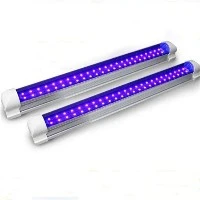
Special Requirements for the LED Spectrum in Plant Growth Lights
|
1. The Science Behind Plant Light Absorption 2. Critical Spectral Requirements for LED Grow Lights 3. Practical Applications and Industry Standards 4. Emerging Trends and Innovations |
Introduction
Plant growth lights, particularly LED-based systems, have revolutionized modern agriculture by enabling year-round cultivation in controlled environments. Unlike traditional lighting, LED grow lights must provide specific spectral outputs tailored to plant physiology. This article explores the unique spectral requirements for plant growth LEDs, supported by scientific principles, practical examples, and comparative data.
1. The Science Behind Plant Light Absorption
Plants primarily absorb light through pigments like chlorophyll a, chlorophyll b, and carotenoids, each responding to different wavelengths:
| Pigment | Peak Absorption Wavelength (nm) |
|---|---|
| Chlorophyll a | 430 (blue), 662 (red) |
| Chlorophyll b | 453 (blue), 642 (red) |
| Carotenoids | 400–500 (blue/green) |
Key Insight:
Blue (400–500 nm): Drives vegetative growth and stomatal regulation.
Red (600–700 nm): Enhances flowering and fruiting via phytochrome activation.
Far-Red (700–800 nm): Influences shade avoidance and germination.
2. Critical Spectral Requirements for LED Grow Lights
2.1 Optimal Wavelength Ratios
Different growth stages demand varying blue:red ratios:
| Growth Stage | Recommended Blue:Red Ratio | Effect |
|---|---|---|
| Seedling | 3:1 | Promotes compact, strong stems |
| Vegetative | 1:1 | Balanced leaf and root growth |
| Flowering | 1:3 | Boosts bloom and yield |
Case Study:
A 2022 trial by Horticulture Lighting Group showed that tomato plants under a 1:3 blue:red spectrum yielded 27% more fruit than those under white LEDs.
2.2 Inclusion of Far-Red and UV
Far-Red (730 nm):
Triggers the "shade avoidance" response, stretching stems for better light capture.
Used in greenhouses to accelerate flowering (e.g., cannabis cultivation).
UV-A (315–400 nm):
Stimulates secondary metabolite production (e.g., anthocyanins in purple basil).
Example:
Fluence Bioengineering's VYPR X Series integrates 5% UV-A to increase terpene levels in medicinal plants.
2.3 Avoiding Harmful Spectra
Green/Yellow (500–600 nm):
Minimally absorbed by plants (only 5–10% efficiency).
Excessive green light can cause etiolation (weak, elongated stems).
Data:
A 2021 NASA study found that leafy greens under red/blue-only LEDs grew 40% faster than under full-spectrum white light.
3. Practical Applications and Industry Standards
3.1 Commercial Grow Light Spectra
| Brand/Model | Spectrum Focus | Crop Target |
|---|---|---|
| Philips GreenPower | 450nm blue + 660nm red | Lettuce, herbs |
| Osram Oslon Square | 730nm far-red + UV | Cannabis, tomatoes |
| Samsung Horticulture | Tunable white + red | Strawberries |
3.2 Energy Efficiency Considerations
Photon Efficacy (μmol/J): Measures how well LEDs convert electricity into plant-usable light.
Top-tier LEDs: Achieve 2.8–3.2 μmol/J (e.g., Signify's GreenPower LED).
Traditional HPS: Only 1.5–1.8 μmol/J.
Table: Energy Use Comparison for 1,000 μmol/m²/s PPFD
| Light Type | Power Consumption (W/m²) |
|---|---|
| LED (Red/Blue) | 300–350 |
| HPS | 600–700 |
4. Emerging Trends and Innovations
4.1 Dynamic Spectrum Tuning
Smart systems (e.g., Heliospectra ELIXIA) adjust spectra in real-time via sensors:
Increase blue during seedling phase.
Shift to red during flowering.
4.2 Beyond PAR: Far-Red and Green Light
Recent research (University of Essex, 2023) shows:
10% green light improves canopy penetration, aiding lower-leaf photosynthesis.
Far-red + red combinations can reduce growth cycles by 15%.
Conclusion
LED plant growth lights require precision-tuned spectra to maximize photosynthesis, yield, and energy efficiency. Key takeaways:
Blue-red ratios must align with growth stages.
Far-red and UV play niche but critical roles.
Avoid wasted spectra (e.g., excessive green/yellow).
Energy-efficient LEDs outperform traditional lighting.
With advancements in smart controls and full-spectrum tuning, LED grow lights are set to redefine sustainable agriculture.